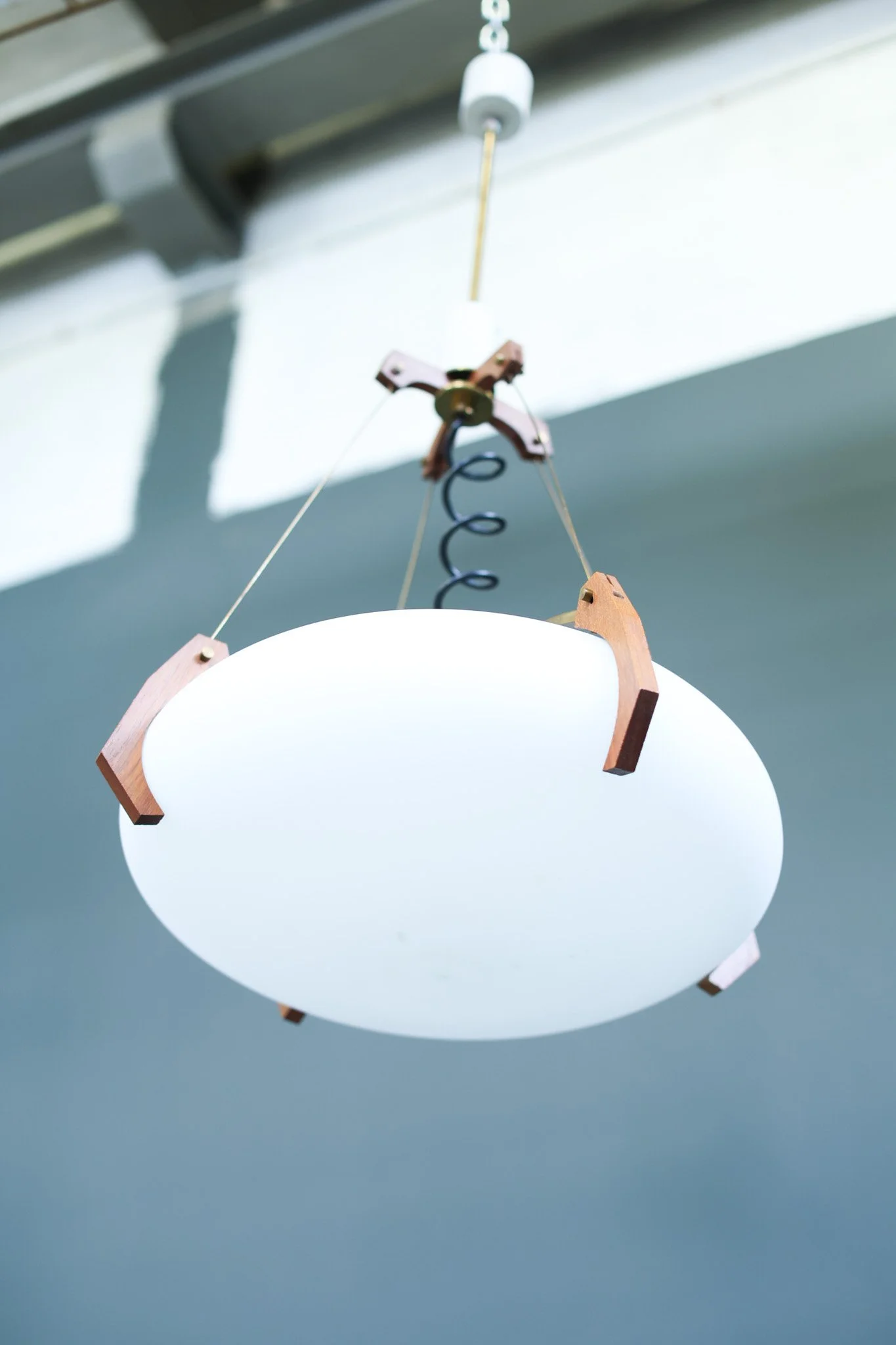
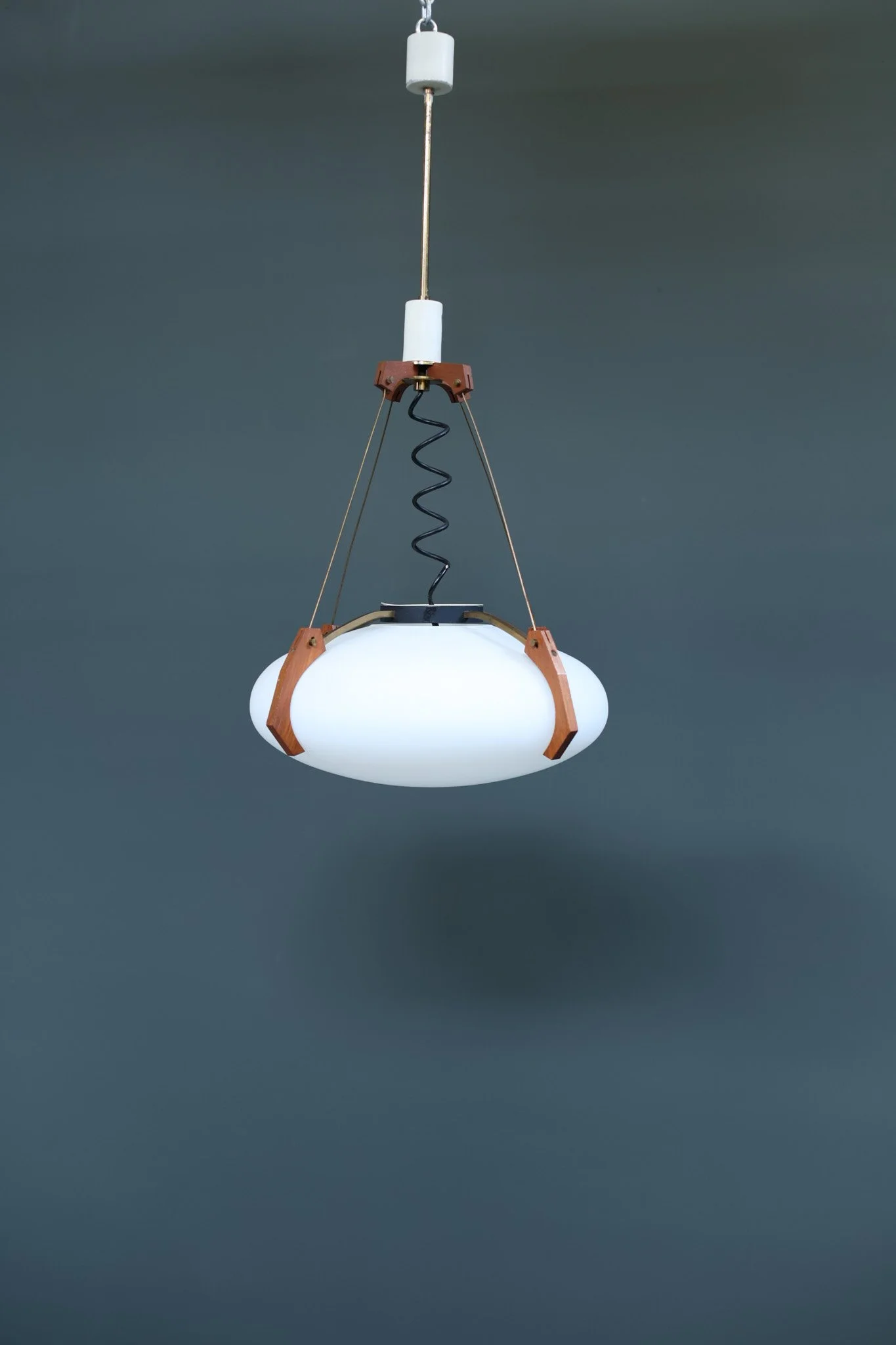
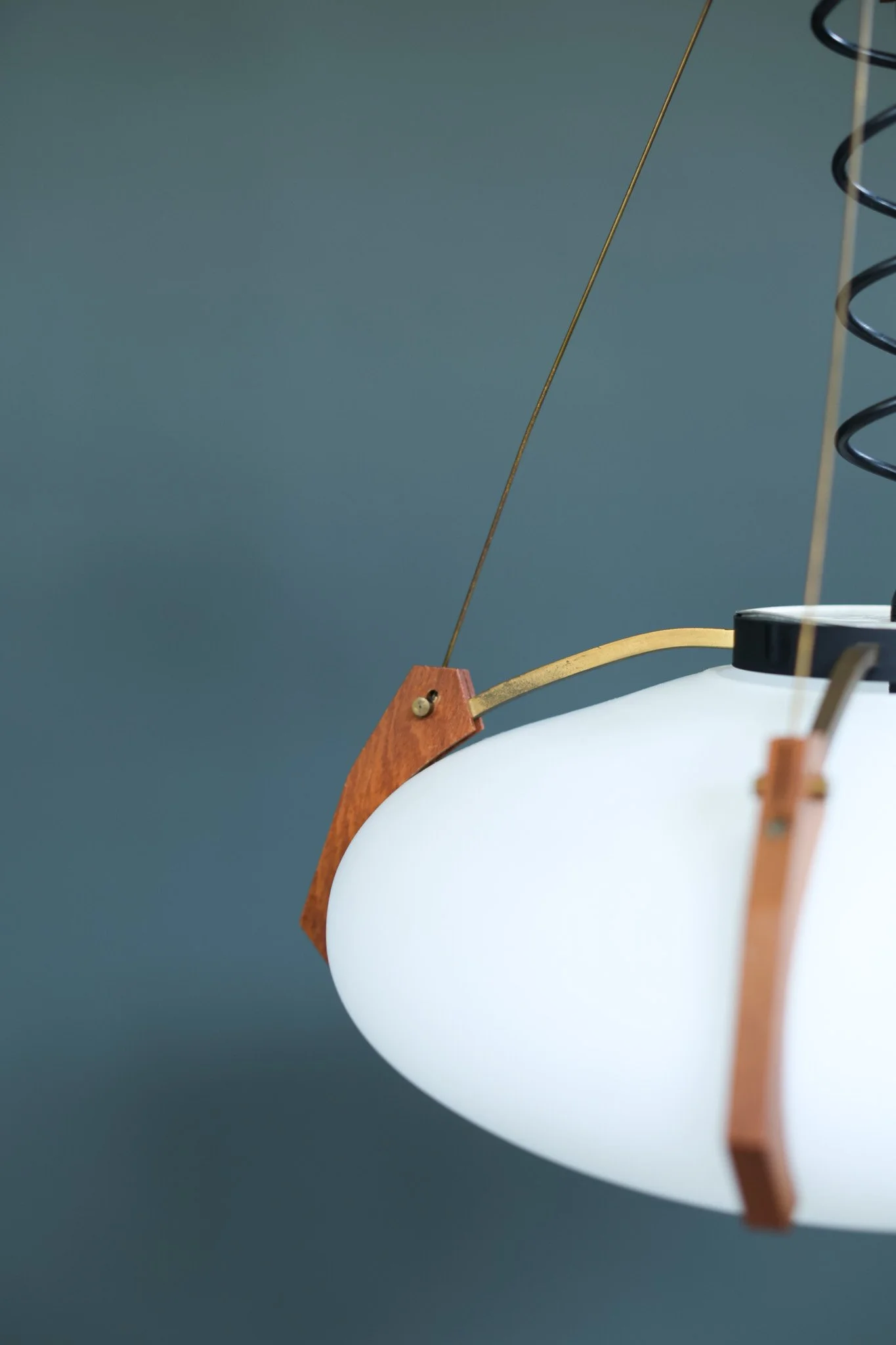

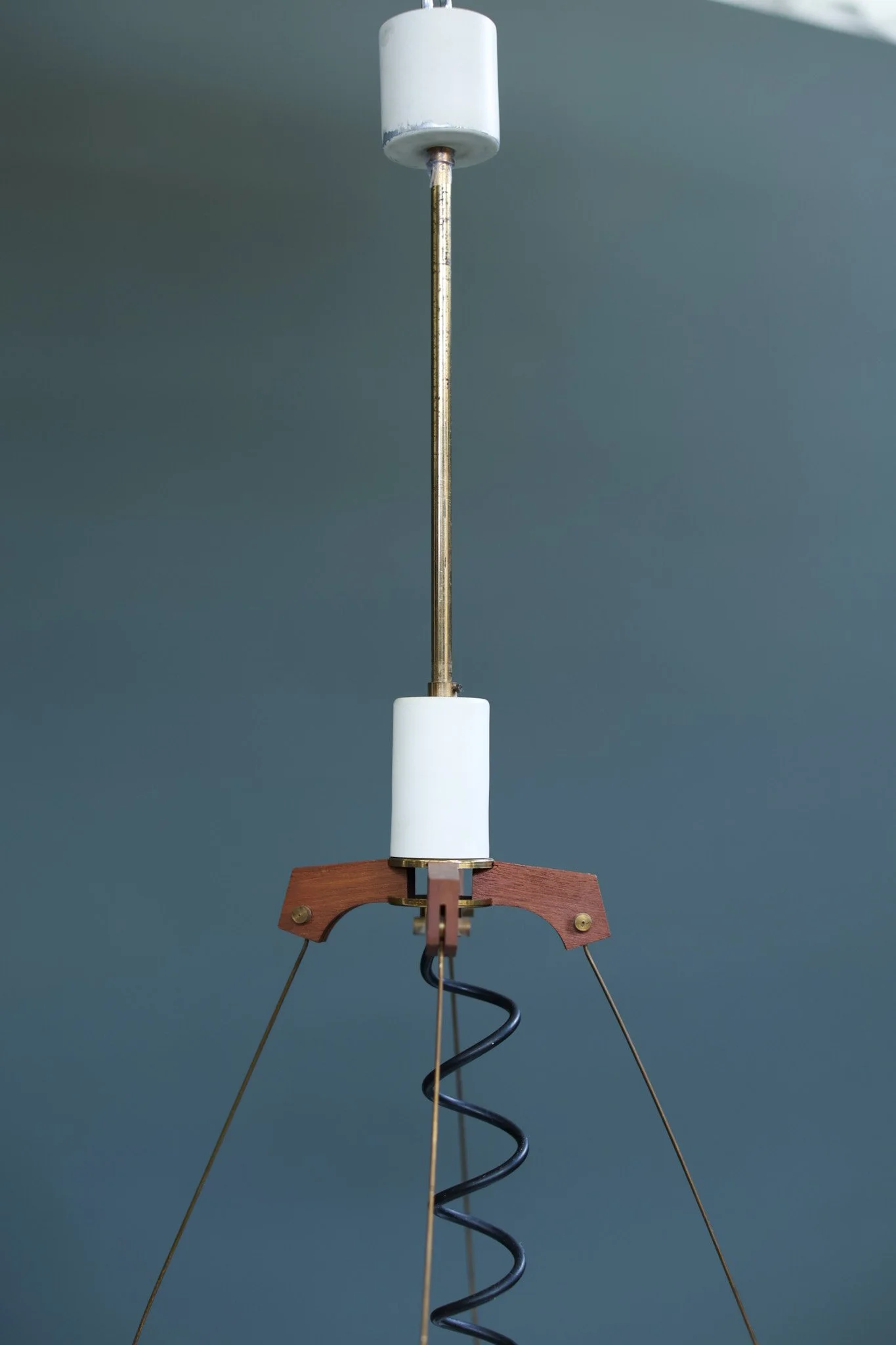
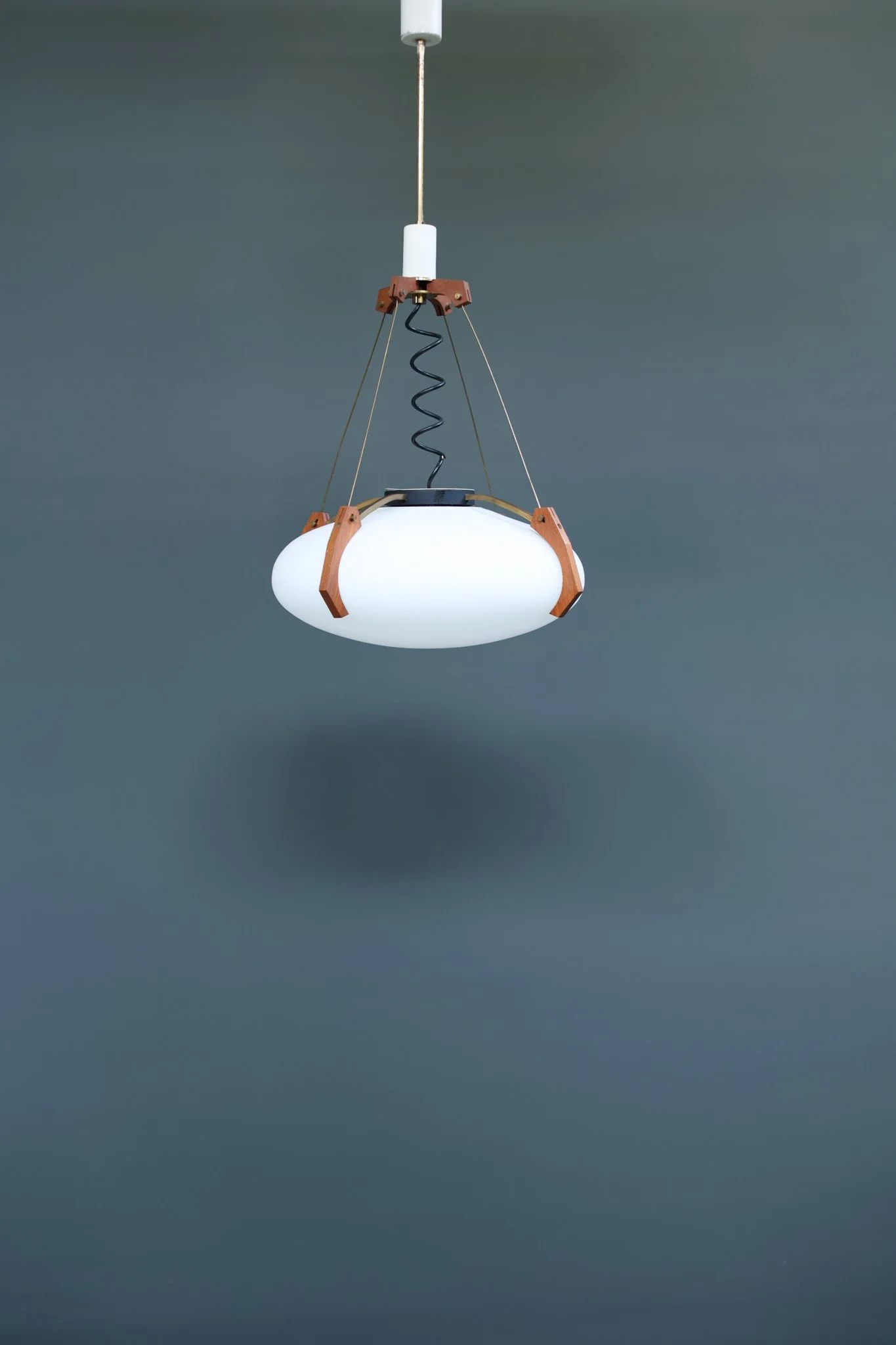
Bruno Chiarini Chandelier in Opaline Glass and Wood
Sold
★★★★★ 5.0 · 14 reviews on Etsy
Ref: A-065
- Designer
- Bruno Chiarini
- Manufacturer
- Bruno Chiarini
- Period
- 1958
- Origin
- Italy
- Materials
- Opaline glass, Wood, Metal
- Color
- White / Natural wood
- Condition
- Good — vintage condition, fully functional
- Height
- 95 cm
- Width
- 50 cm
- Depth
- 50 cm
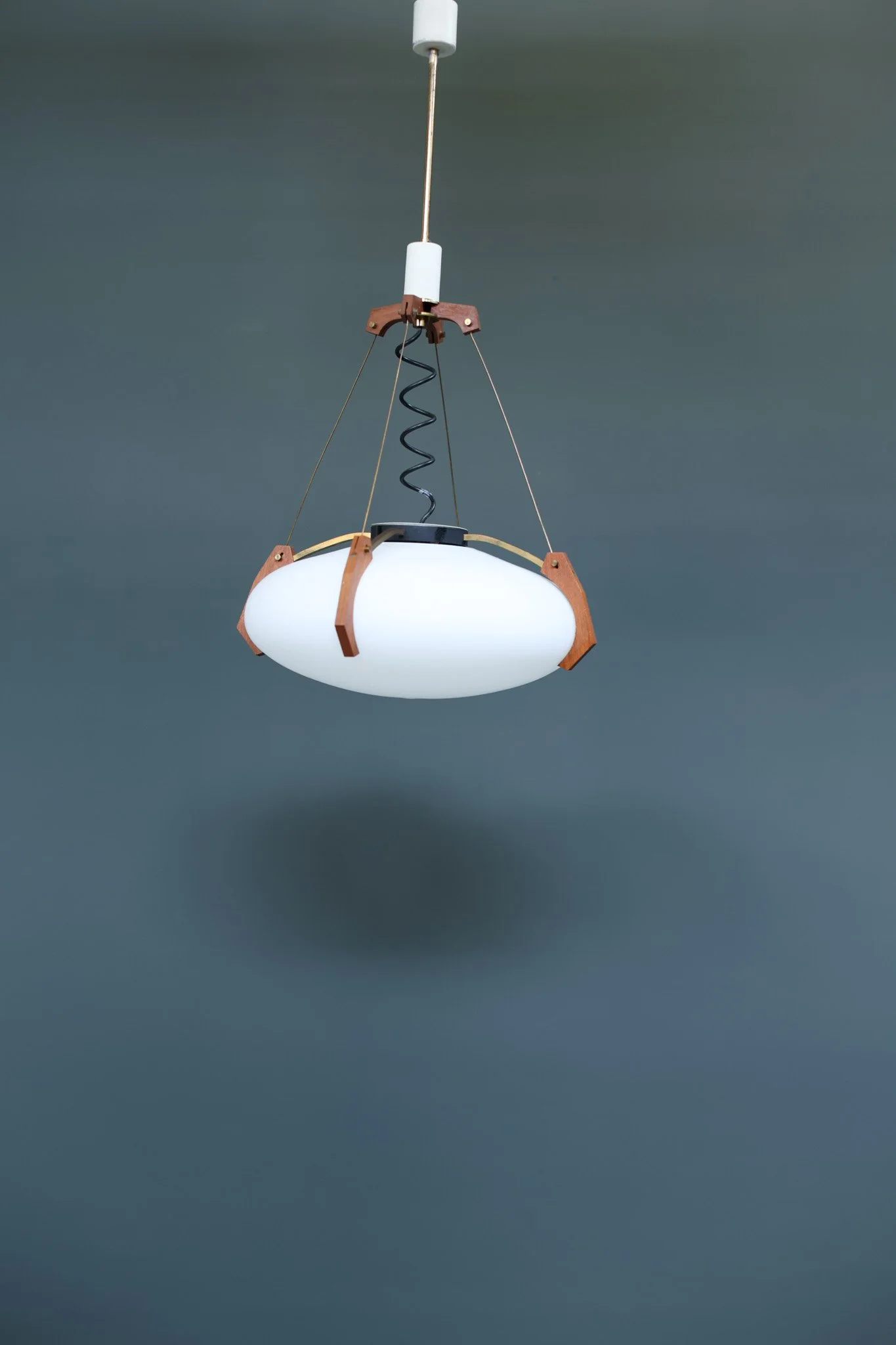
Italian mid-century lighting is full of dramatic gestures — bold brass, Murano extravagance, Space Age chrome. Bruno Chiarini took a quieter path. His chandeliers speak in a softer register, and this 1958 example might be his most eloquent.
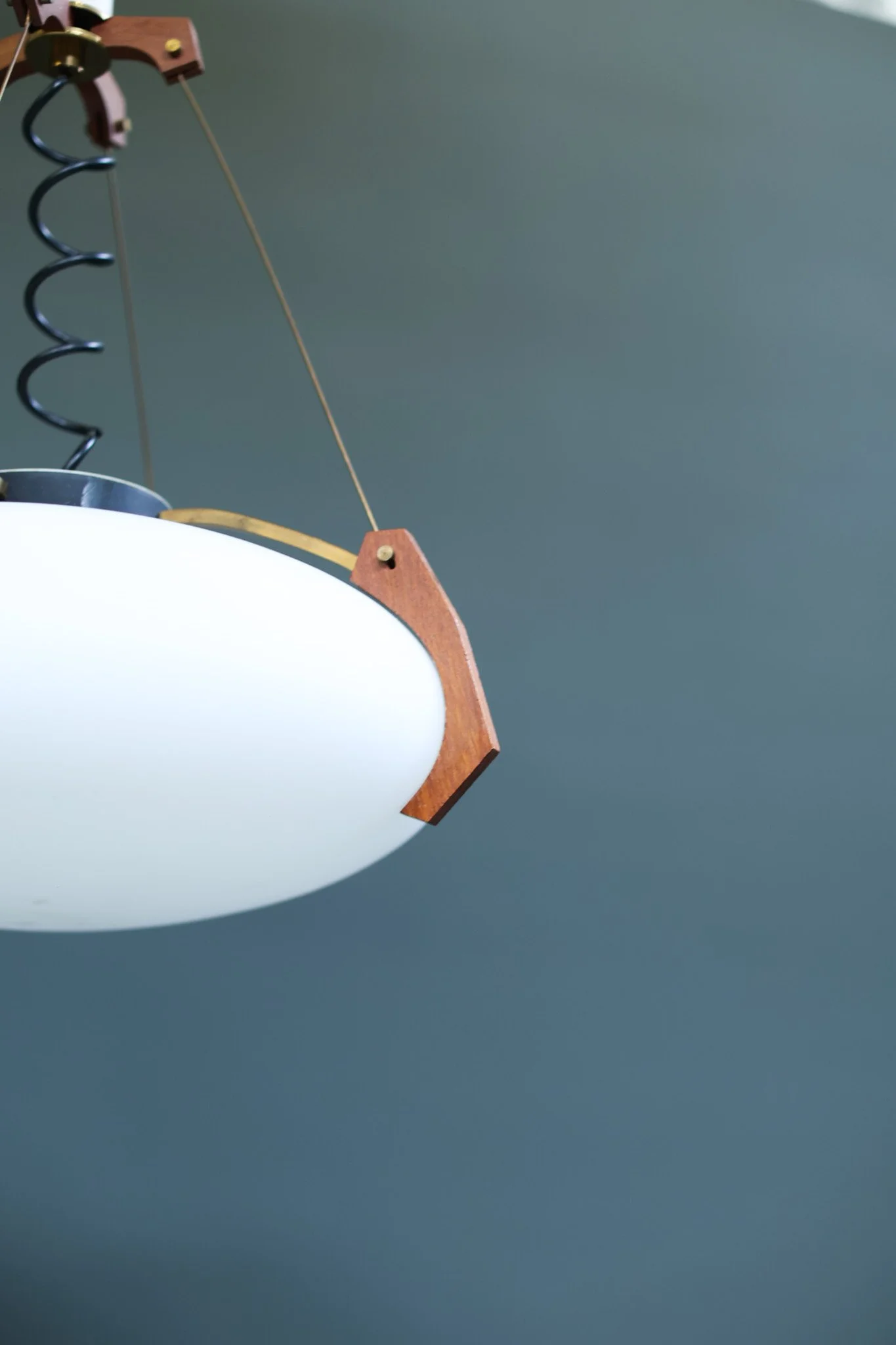
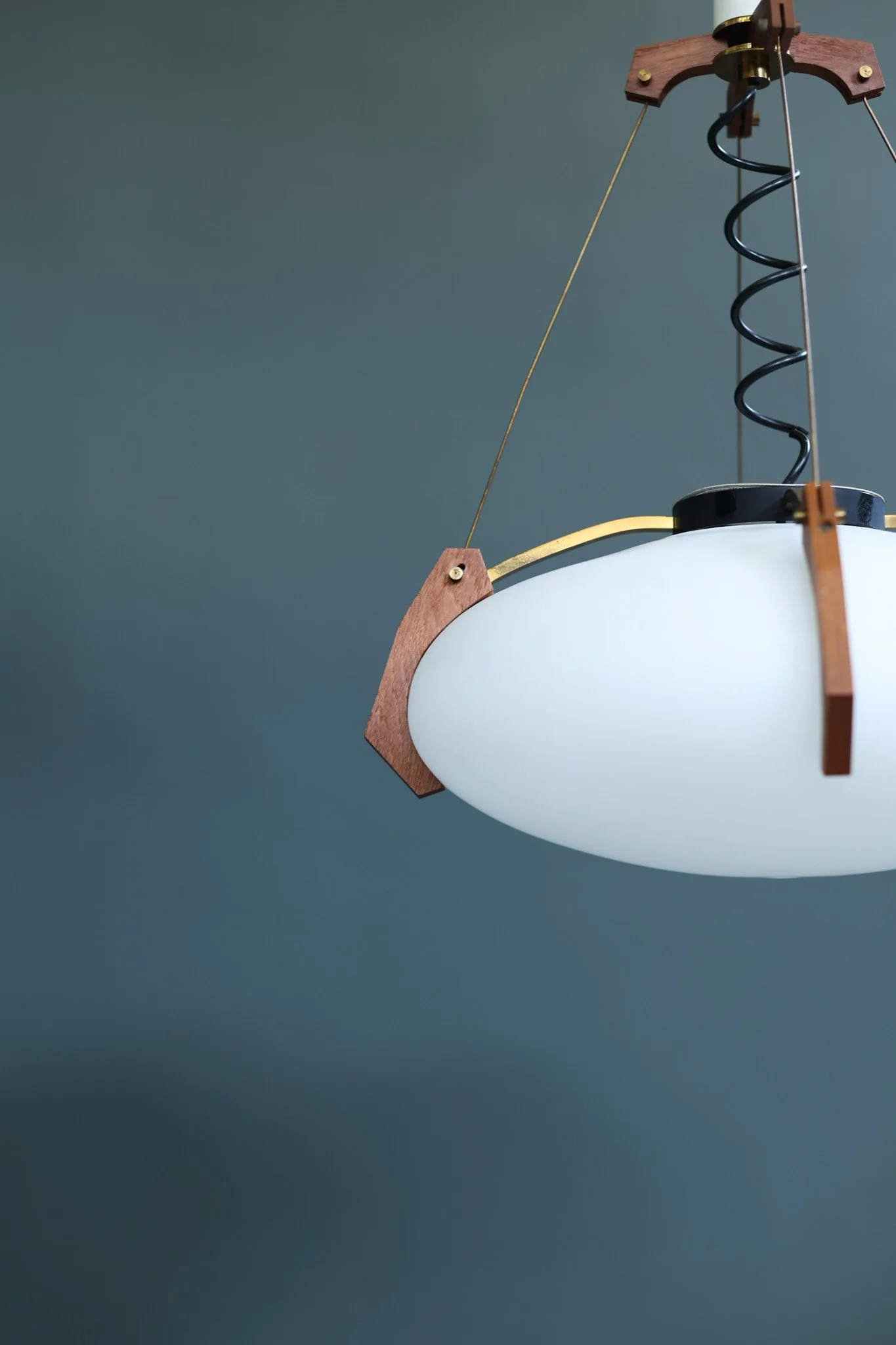
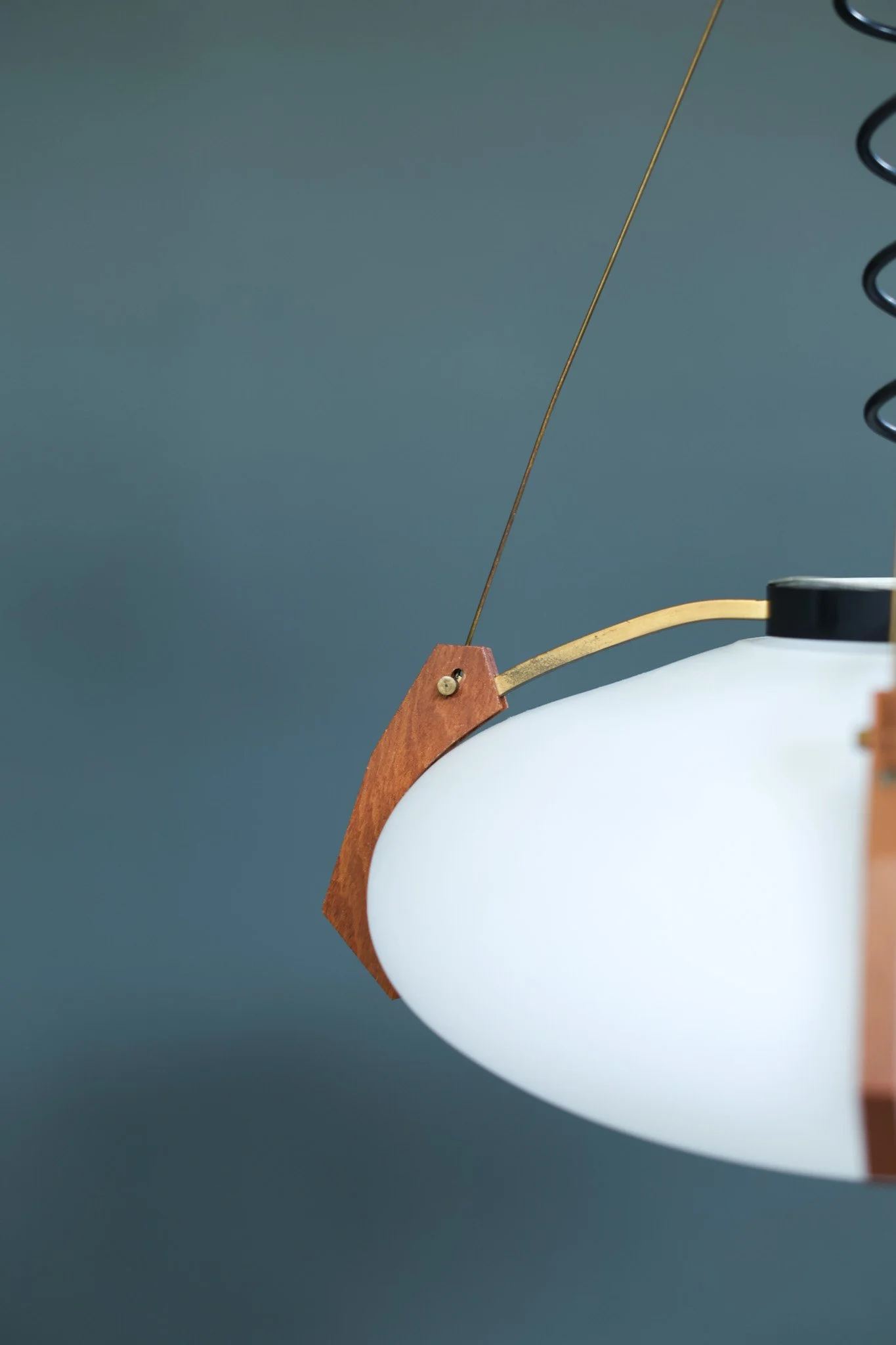
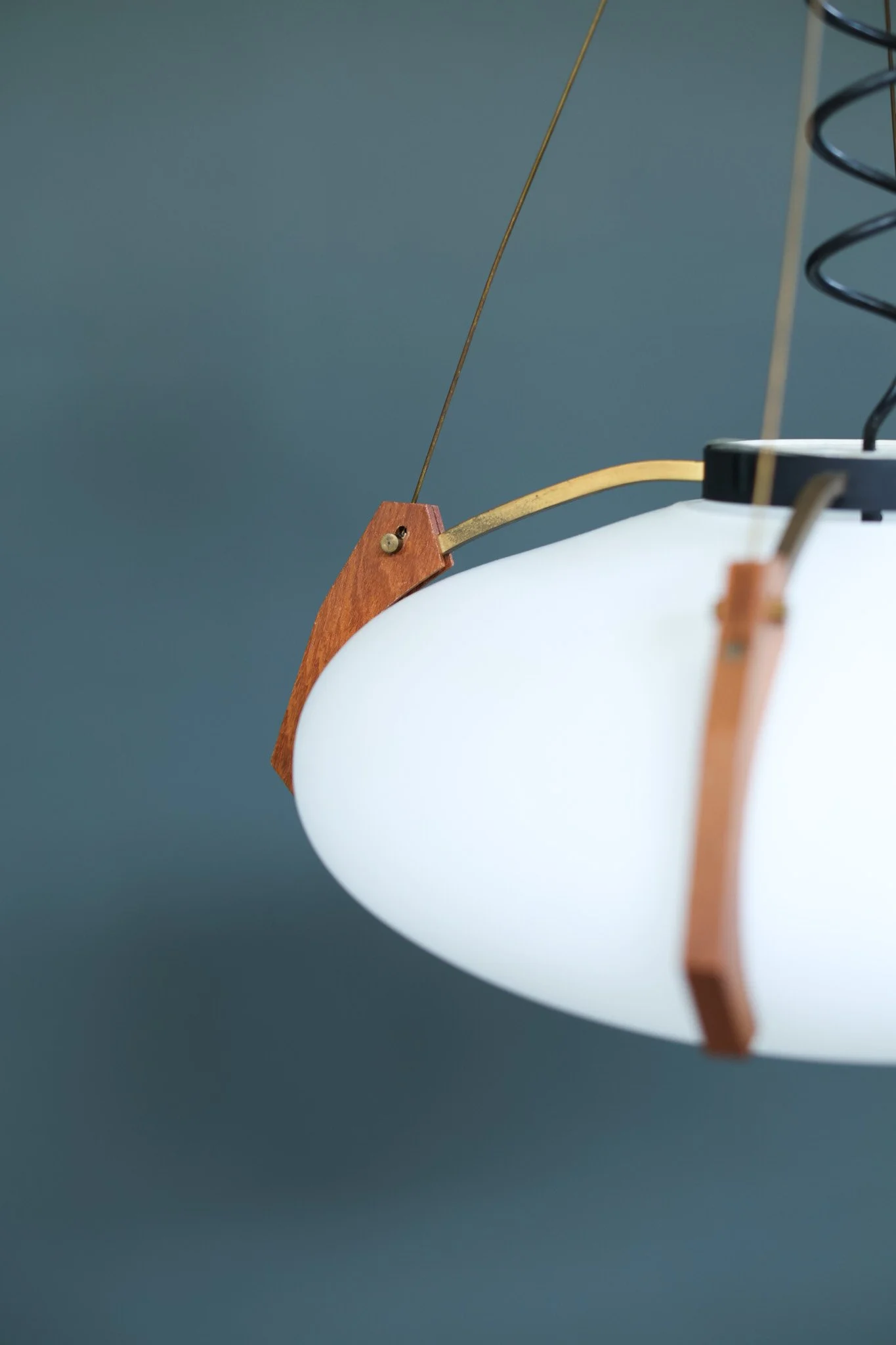
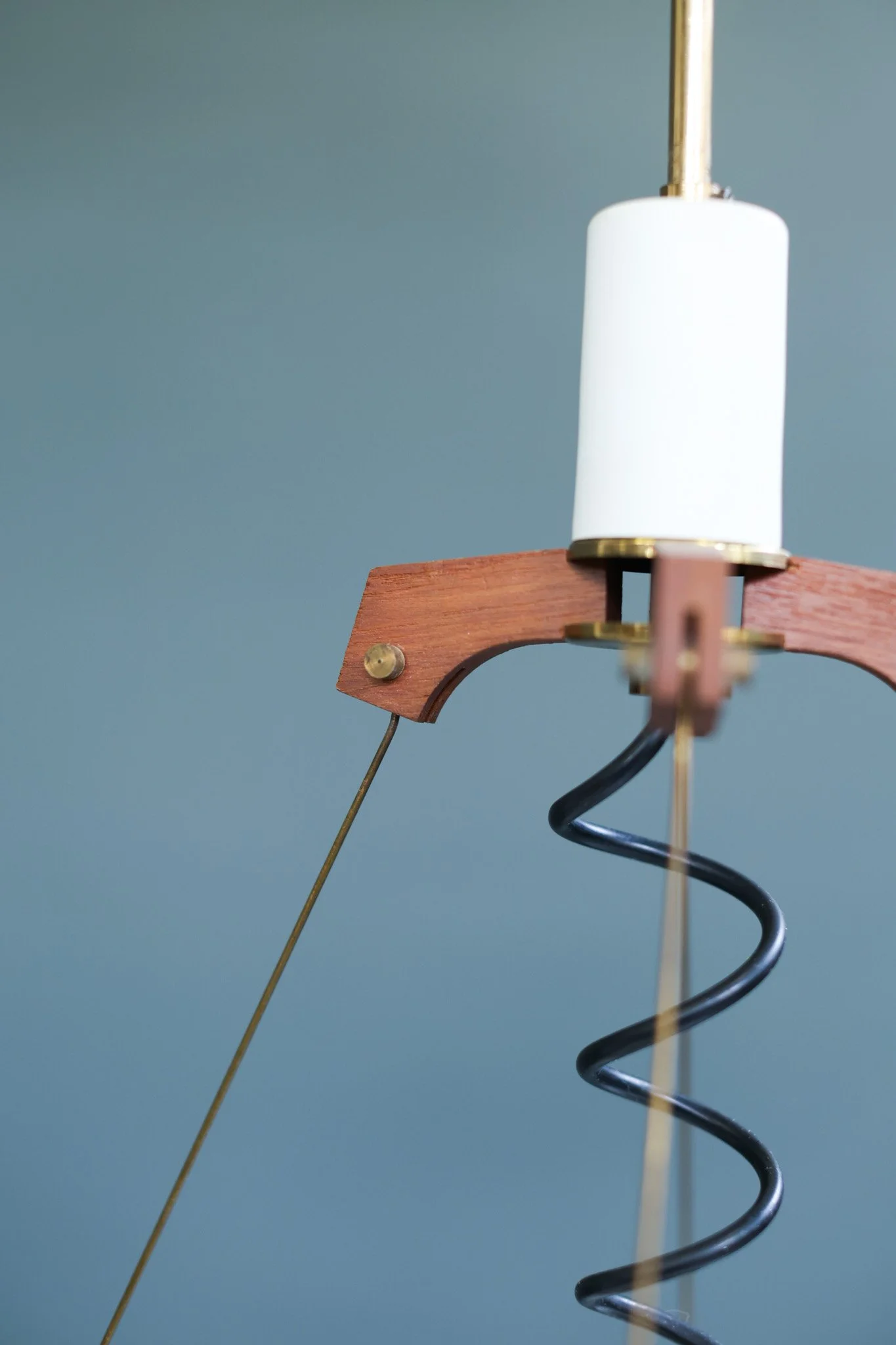
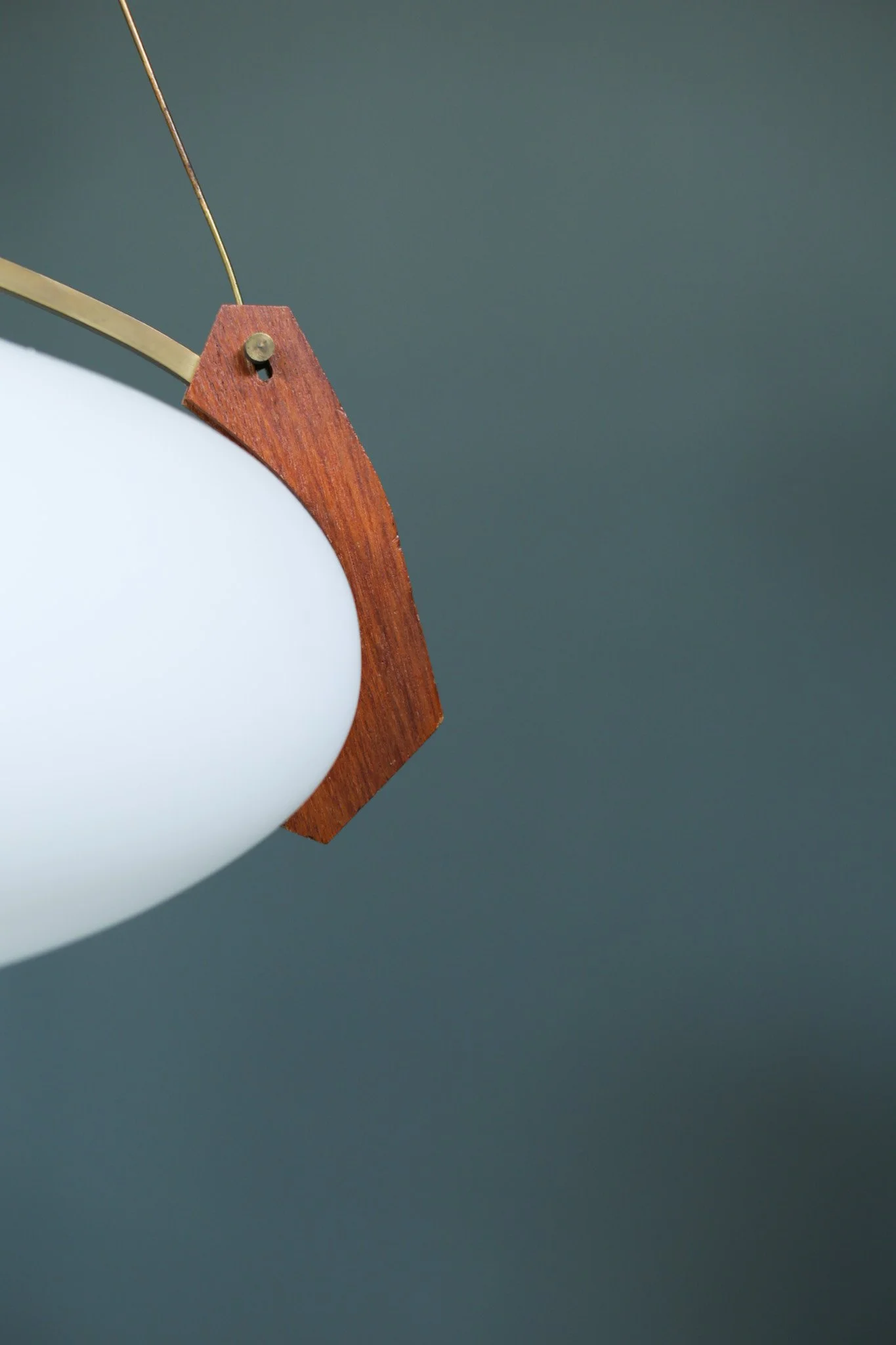
The design plays on a single, beautiful tension: glass wants to float; wood wants to stay grounded. Chiarini lets both materials do exactly what they want, and the result is a chandelier that feels suspended between weightlessness and warmth. The opaline glass shades diffuse light into a soft, milky glow — never harsh, never clinical — while the wooden structure provides an organic counterpoint that keeps the piece from drifting into cold modernism.
What makes Chiarini's work especially interesting to collectors is its rarity. Unlike the large Italian lighting houses — Arredoluce, Stilnovo, Fontana Arte — Chiarini operated on a smaller scale, producing pieces that were more artisanal than industrial. Finding documented examples today requires patience and a fair amount of luck.
The late 1950s were a pivotal moment for Italian design. The country was in the midst of its economic miracle, and a generation of designers — Gio Ponti, Franco Albini, the Castiglioni brothers — were redefining what everyday objects could look and feel like. Chiarini shared their ambition but not their appetite for attention. His work stayed closer to the tradition of Venetian glass craft, filtered through a distinctly modern sensibility. The opaline glass used here — mouth-blown, translucent, with that characteristic milky warmth — connects this piece to centuries of Italian glassmaking.
This particular chandelier has the quiet confidence of something that knows exactly what it is. It doesn't compete with the room — it completes it. The proportions are generous enough to hold their own above a dining table, yet refined enough to work in a hallway or reading nook. It's the kind of piece you notice more the longer you live with it.