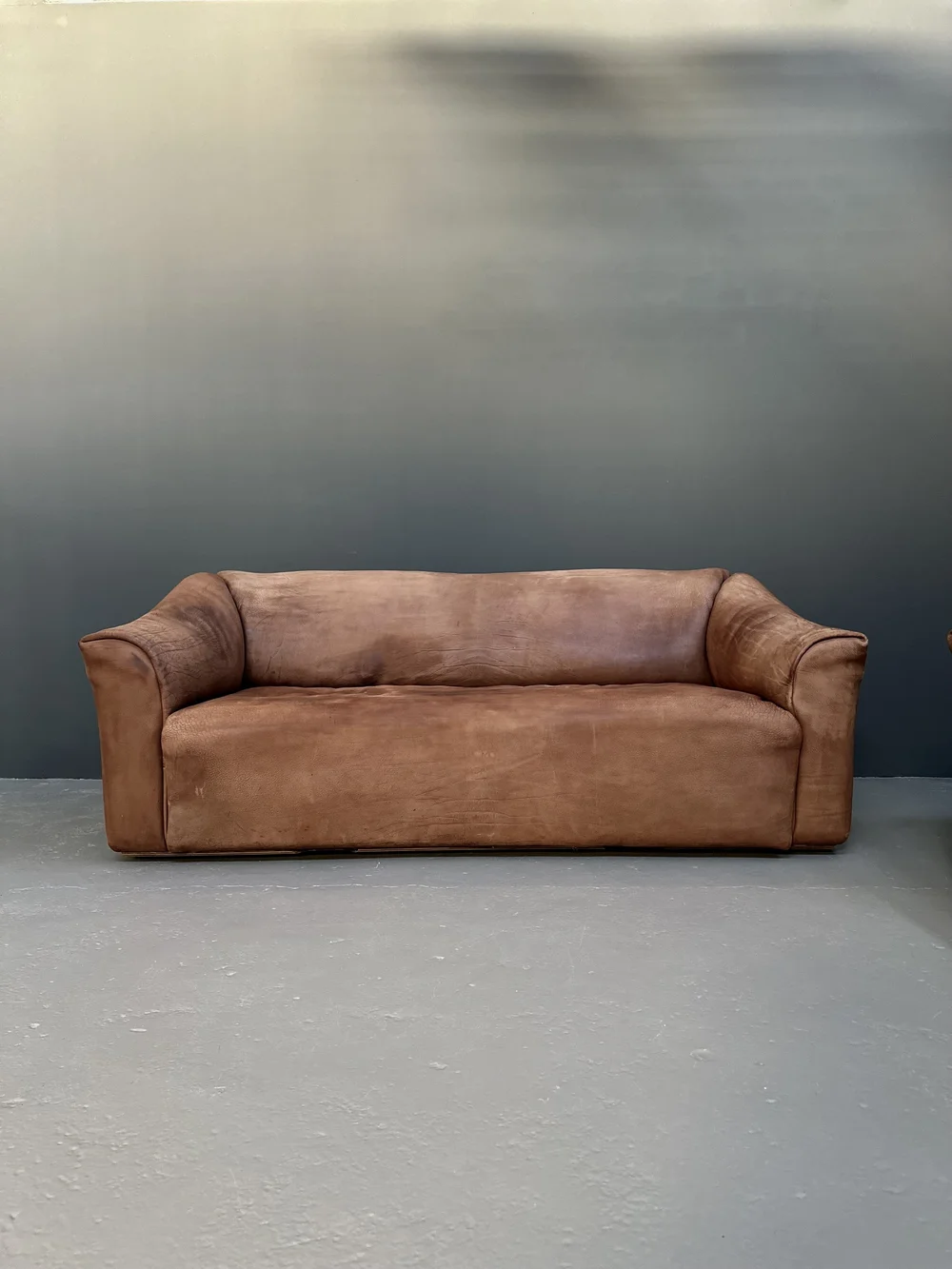
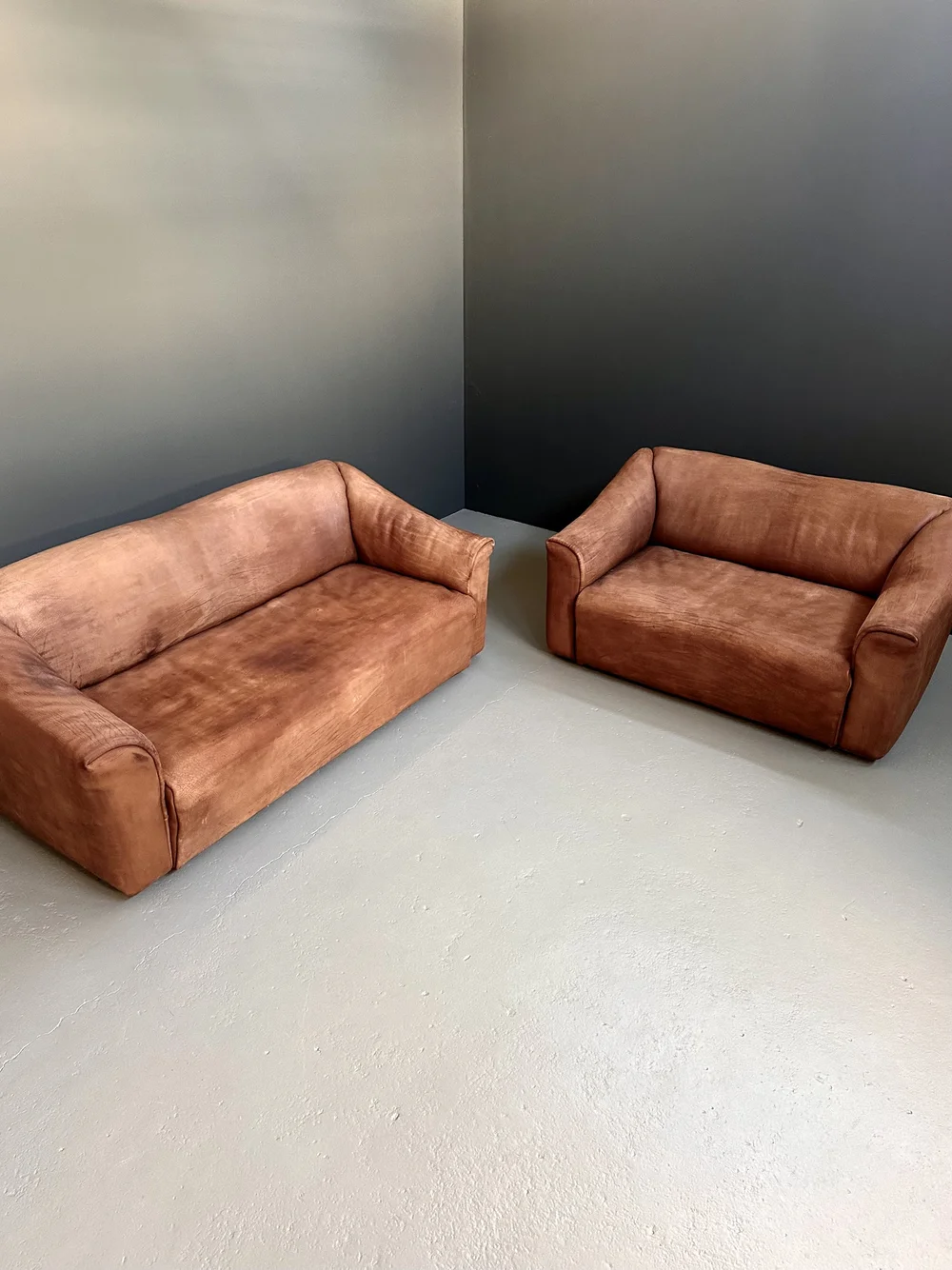
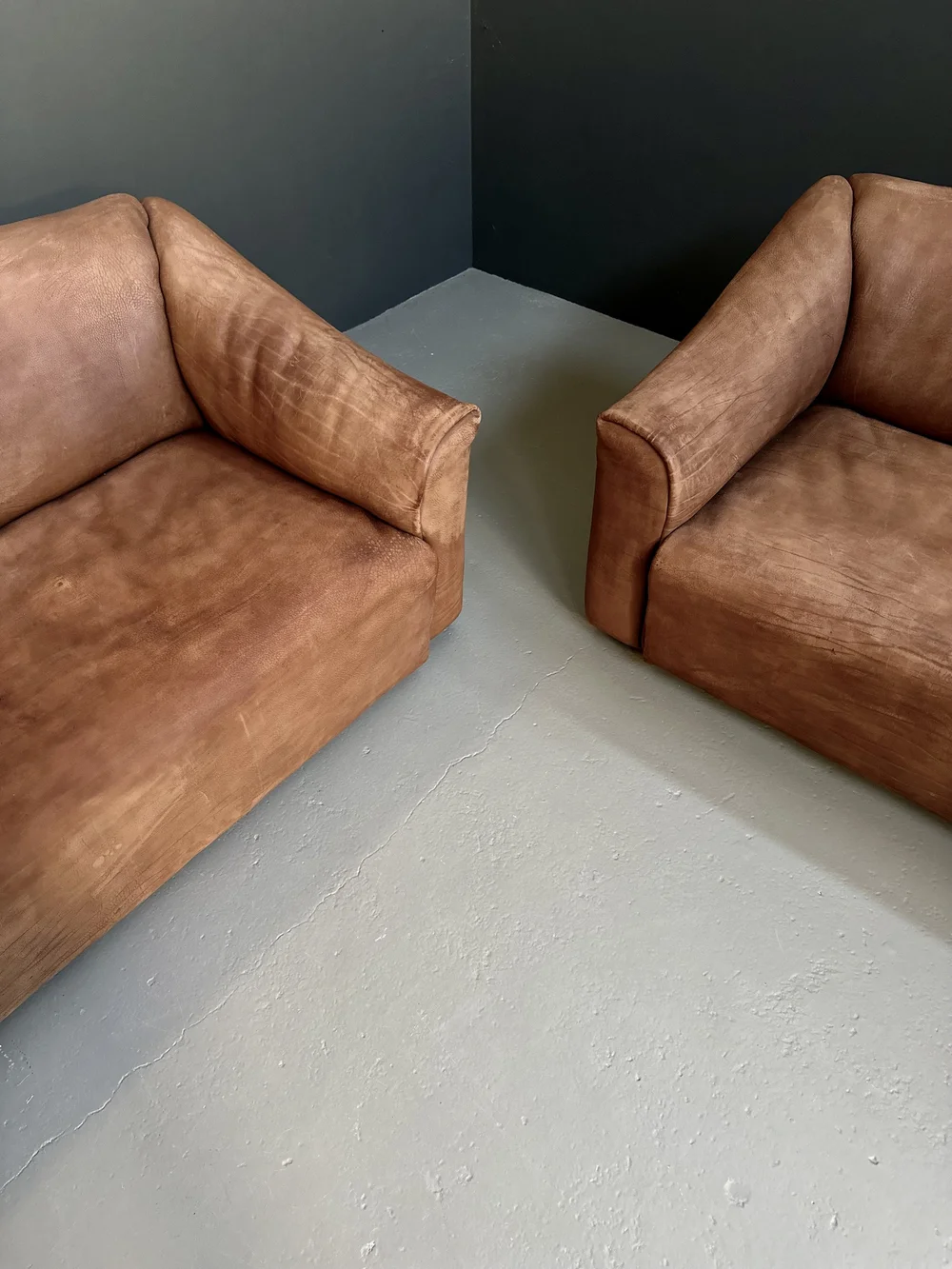
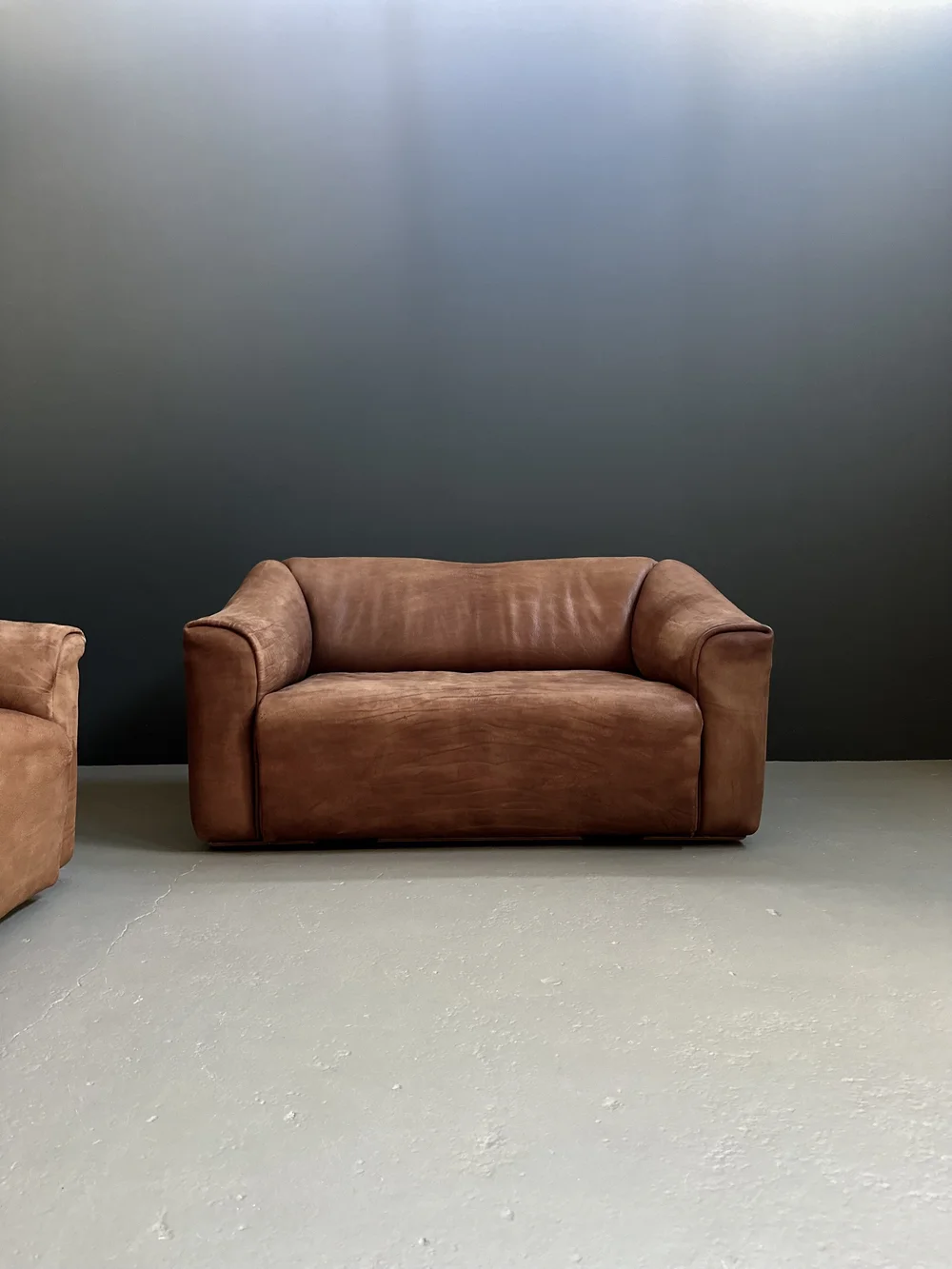
De Sede DS-47 Three-Seater Sofa in Bull Neck Leather
Sold
★★★★★ 5.0 · 14 reviews on Etsy
Ref: A-013
- Manufacturer
- De Sede
- Period
- 1976
- Origin
- Switzerland
- Materials
- bull neck leather
- Color
- brown
- Condition
- Good — vintage patina with some staining
- Height
- 72 cm
- Width
- 180 cm
- Depth
- 90 cm
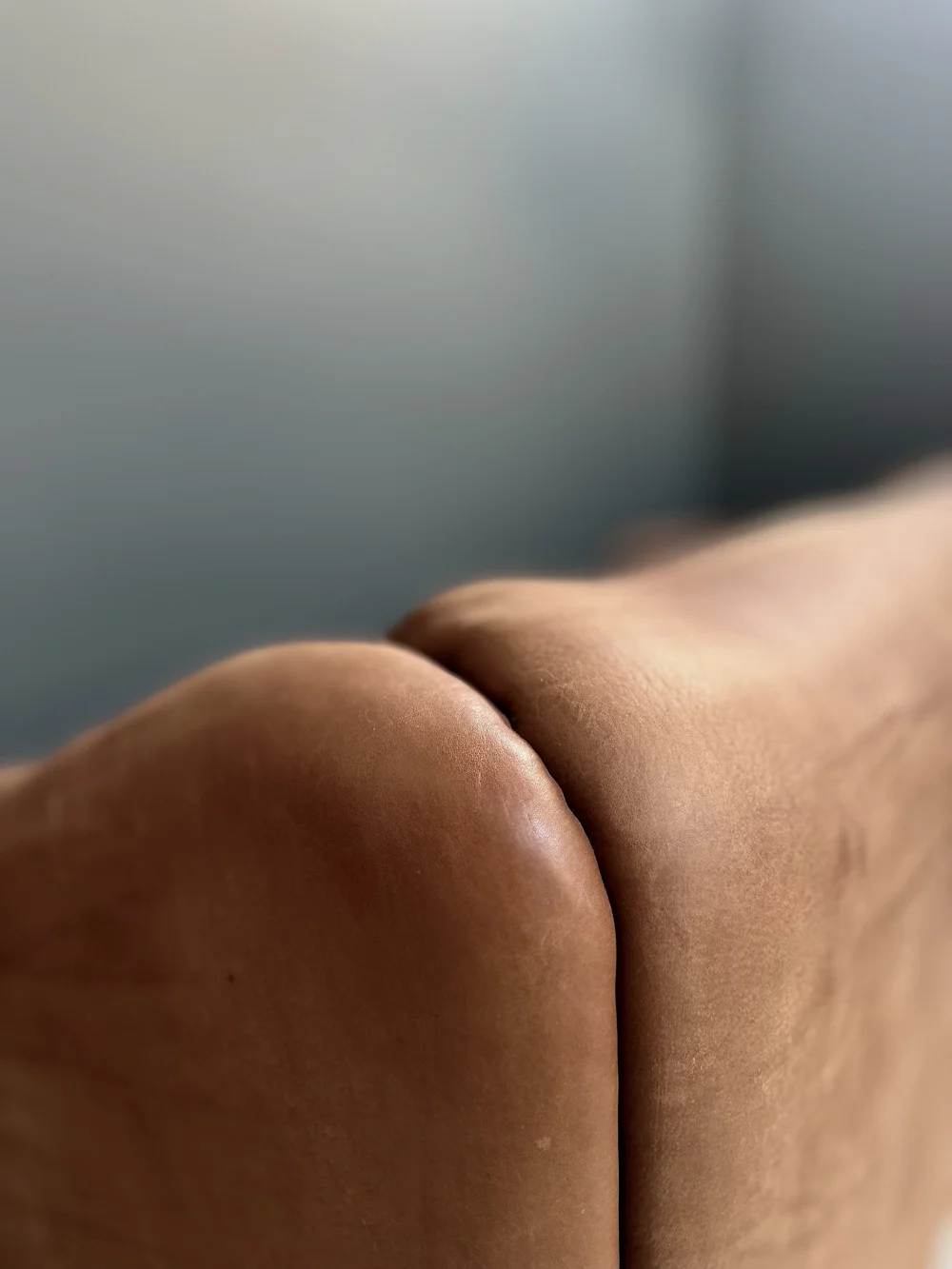
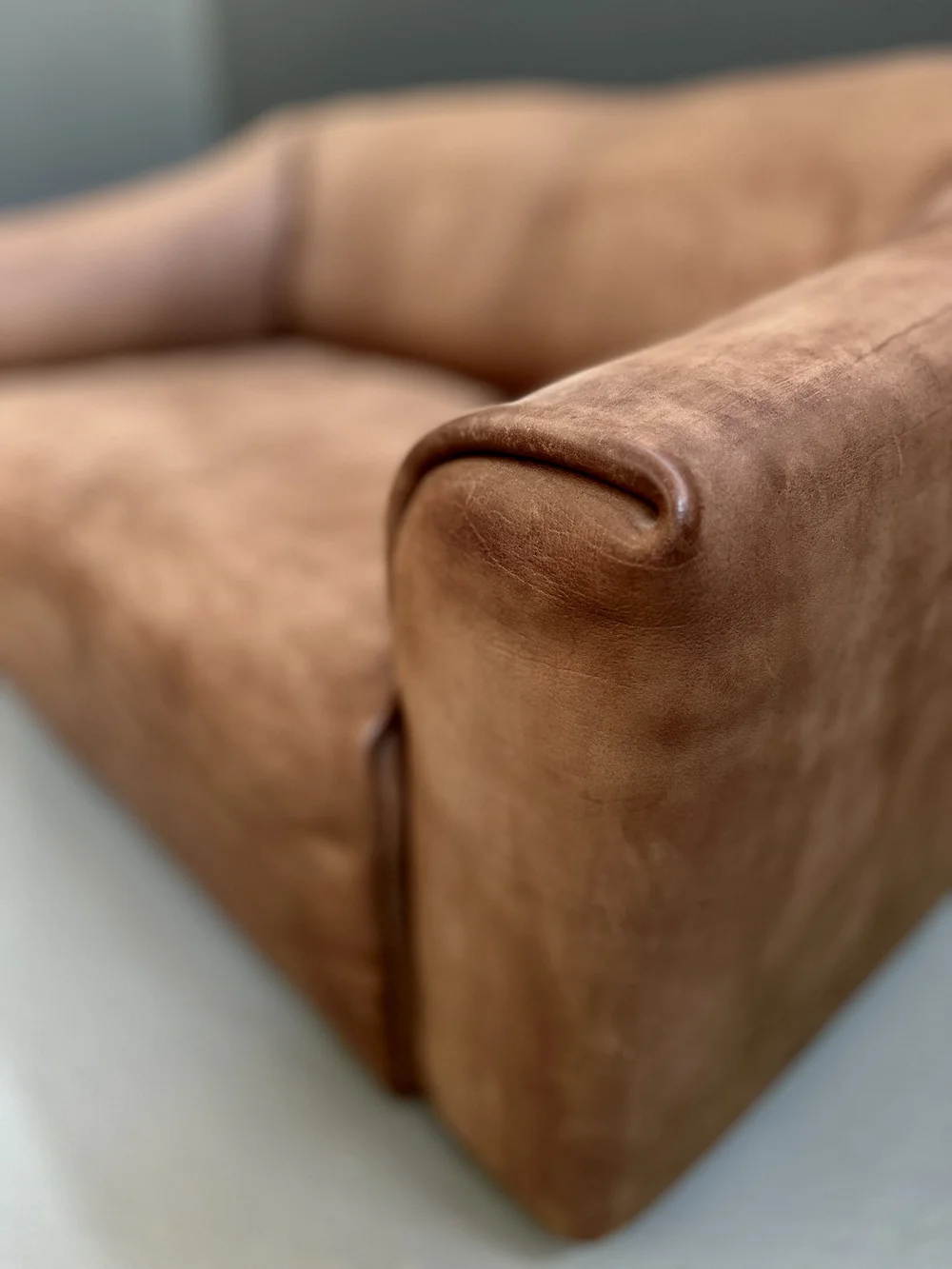
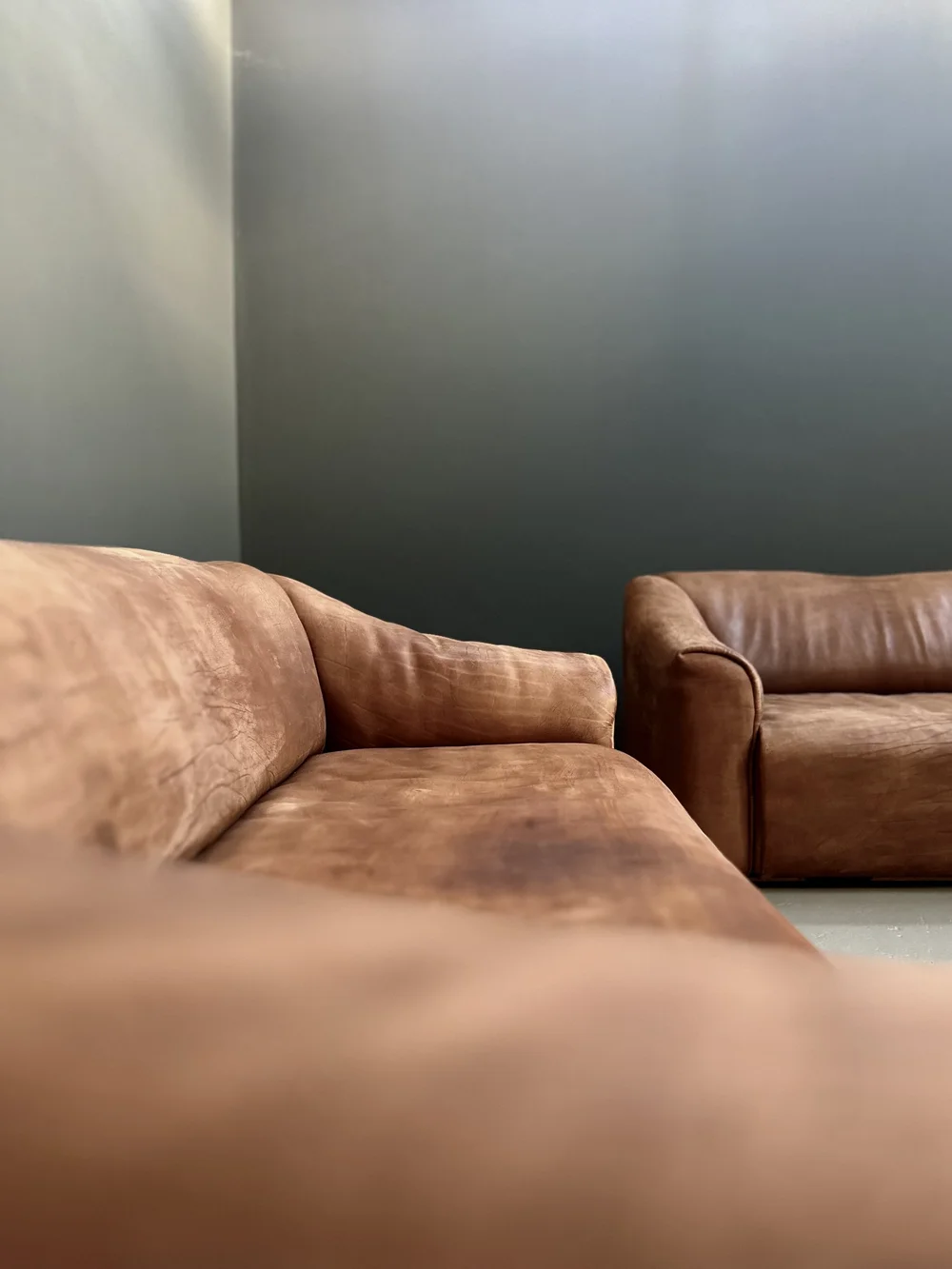
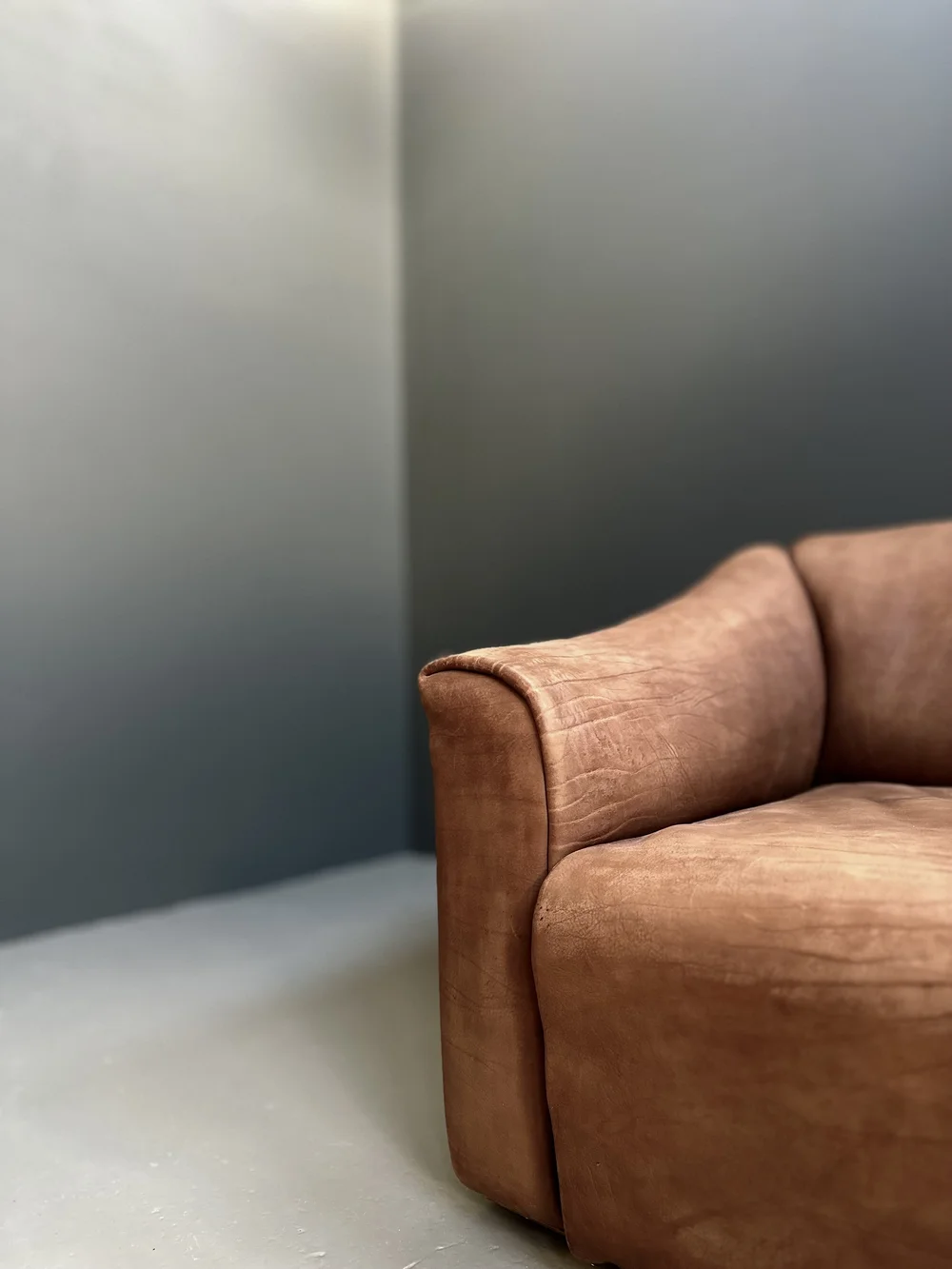
The three-seater DS-47 is De Sede's 'Bull' at its most expansive. At 180 centimetres wide, this 1976 sofa stretches the legendary five-millimetre-thick neck leather across a generous seating surface, creating sculptural folds and creases that no other furniture material can produce.
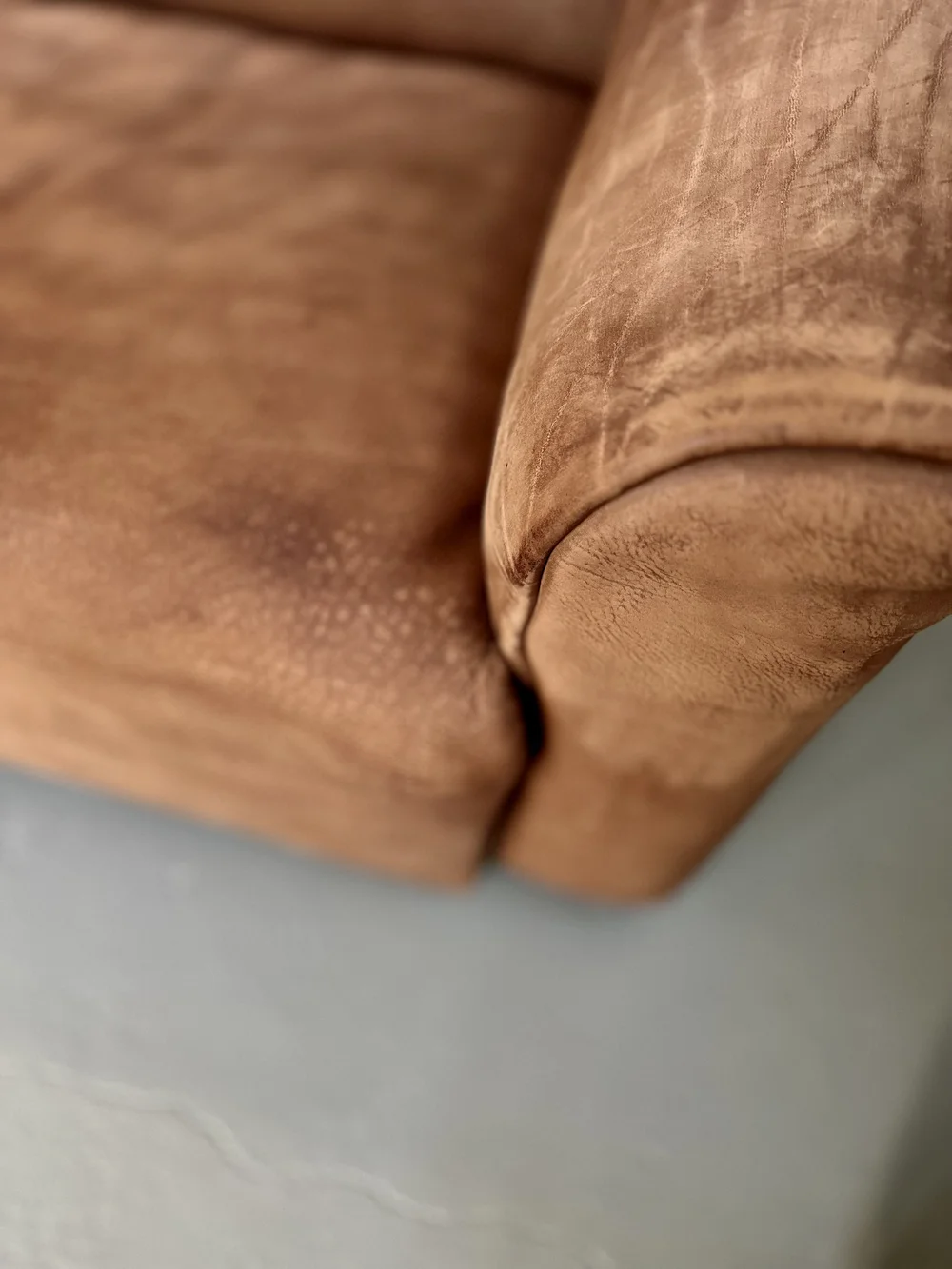
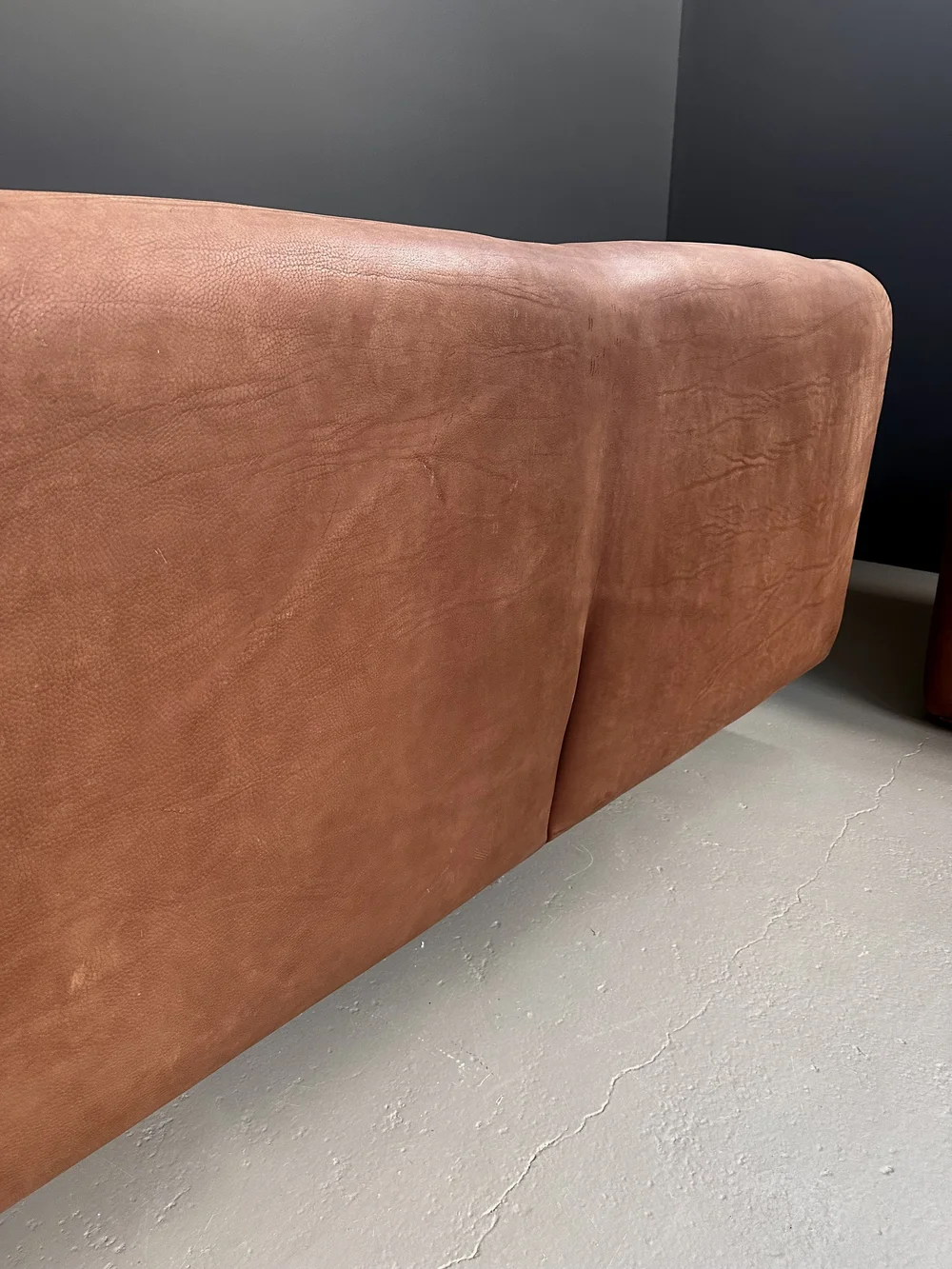
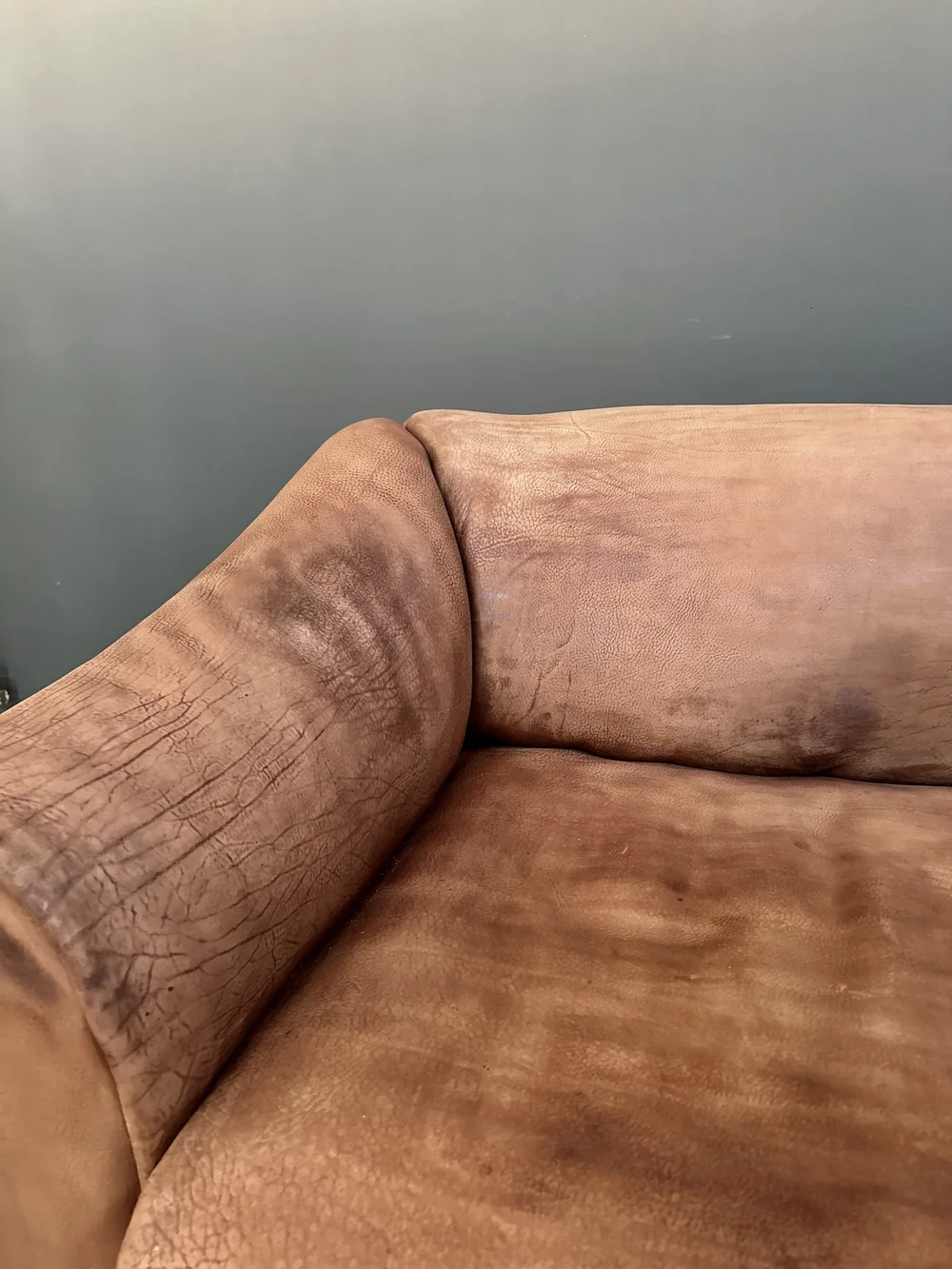
The bull neck leather — sourced from the thickest, strongest part of the buffalo hide — is what sets the DS-47 apart from every other sofa of its era. It does not simply cover the frame; it becomes the form. Deep, rolling creases follow the sofa's gently curved silhouette, each fold casting subtle shadows that shift throughout the day. The surface has a weight and warmth that you feel immediately through your clothes — substantial, reassuring, unmistakably real. Nearly fifty years of life have given this hide a rich patina with natural tonal variations across its surface.
This three-seater is in good vintage condition. The leather shows honest wear including some surface staining — entirely consistent with the nature of thick, natural hide that was designed to develop character over time. The structure is solid and the proportions are true, with a seat height of 40 centimetres and a backrest rising to 72.
De Sede's 1976 introduction of the neck leather programme was a watershed moment in furniture manufacturing. While competitors were moving toward thinner, more uniform hides, the Swiss firm invested in the thickest, most characterful material available. The DS-47 became the signature expression of this philosophy — a sofa that treated leather not as a covering but as a statement of intent.
Living with a DS-47 means accepting that your sofa will change over time — developing deeper patina, softer folds, richer character. For those who understand that this is a feature rather than a flaw, there is simply no substitute.