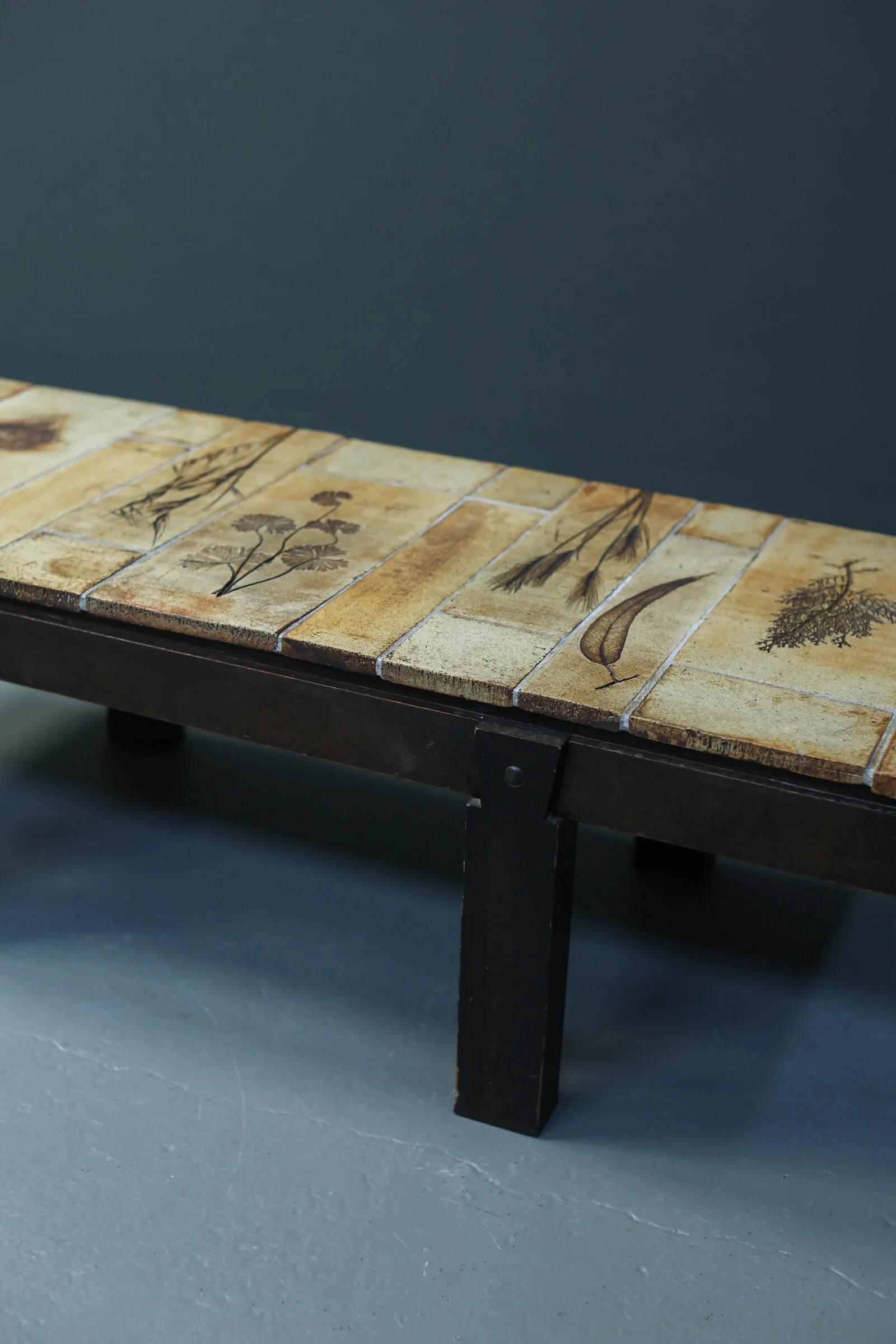
Roger Capron Herbarium Coffee Table
Sold
★★★★★ 5.0 · 14 reviews on Etsy
Ref: A-071
- Designer
- Roger Capron
- Manufacturer
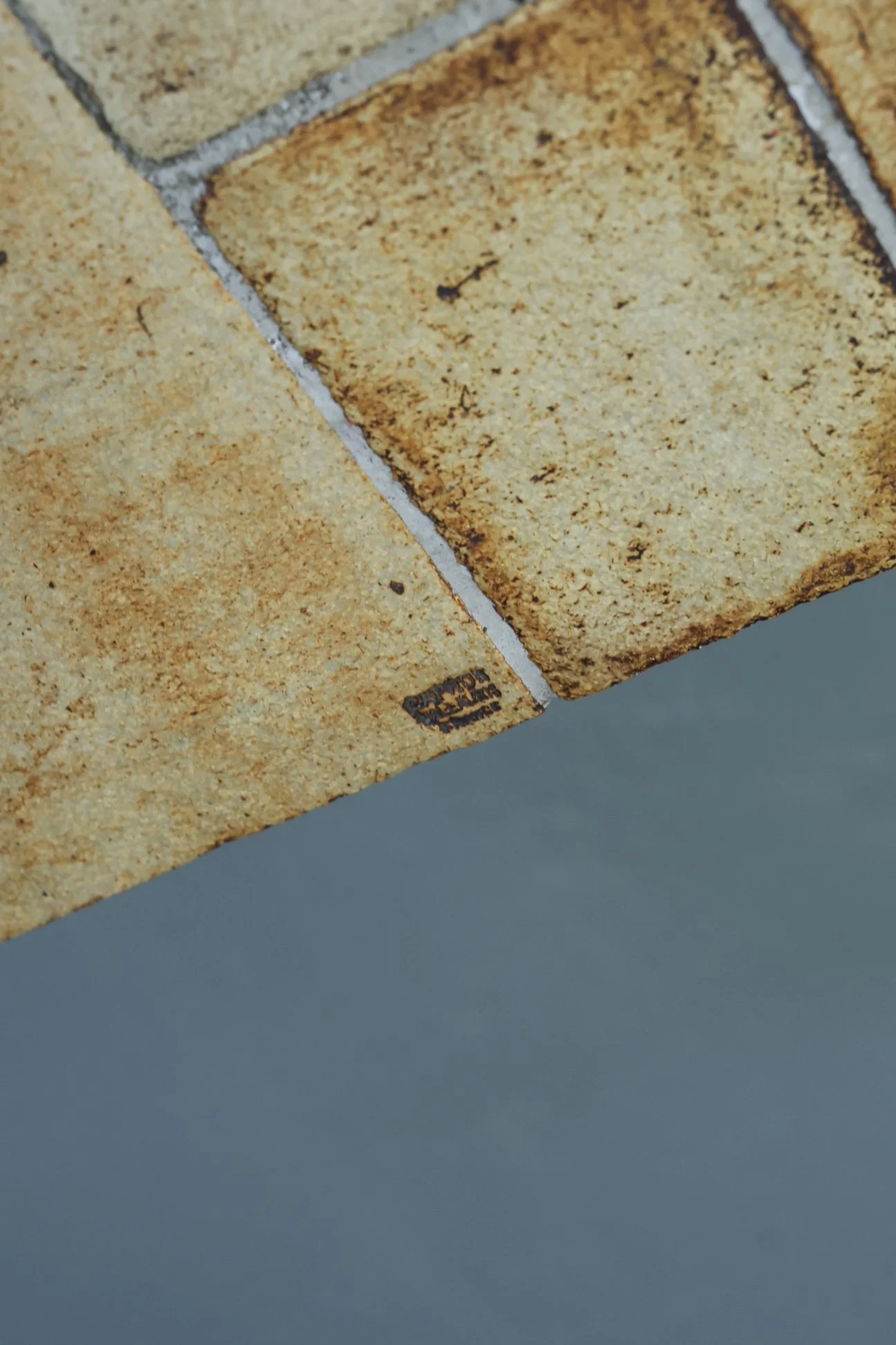
- Atelier Capron, Vallauris
- Period
- 1970s
- Origin
- France
- Materials
- Ceramic tiles, Wood
- Color
- Earth tones
- Condition
- Good — wear consistent with age and use
- Height
- 30 cm
- Width
- 118 cm
- Depth
- 45 cm
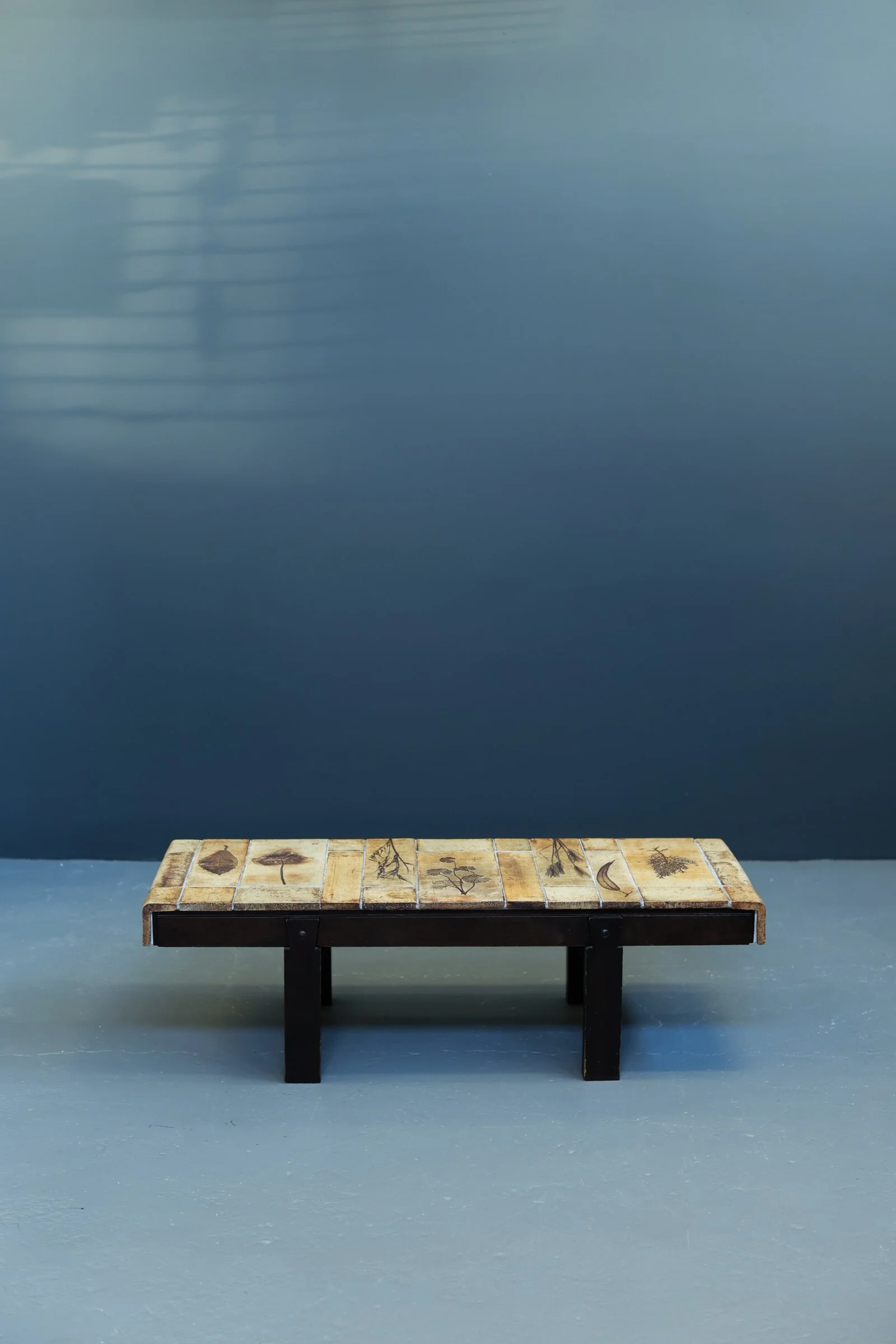
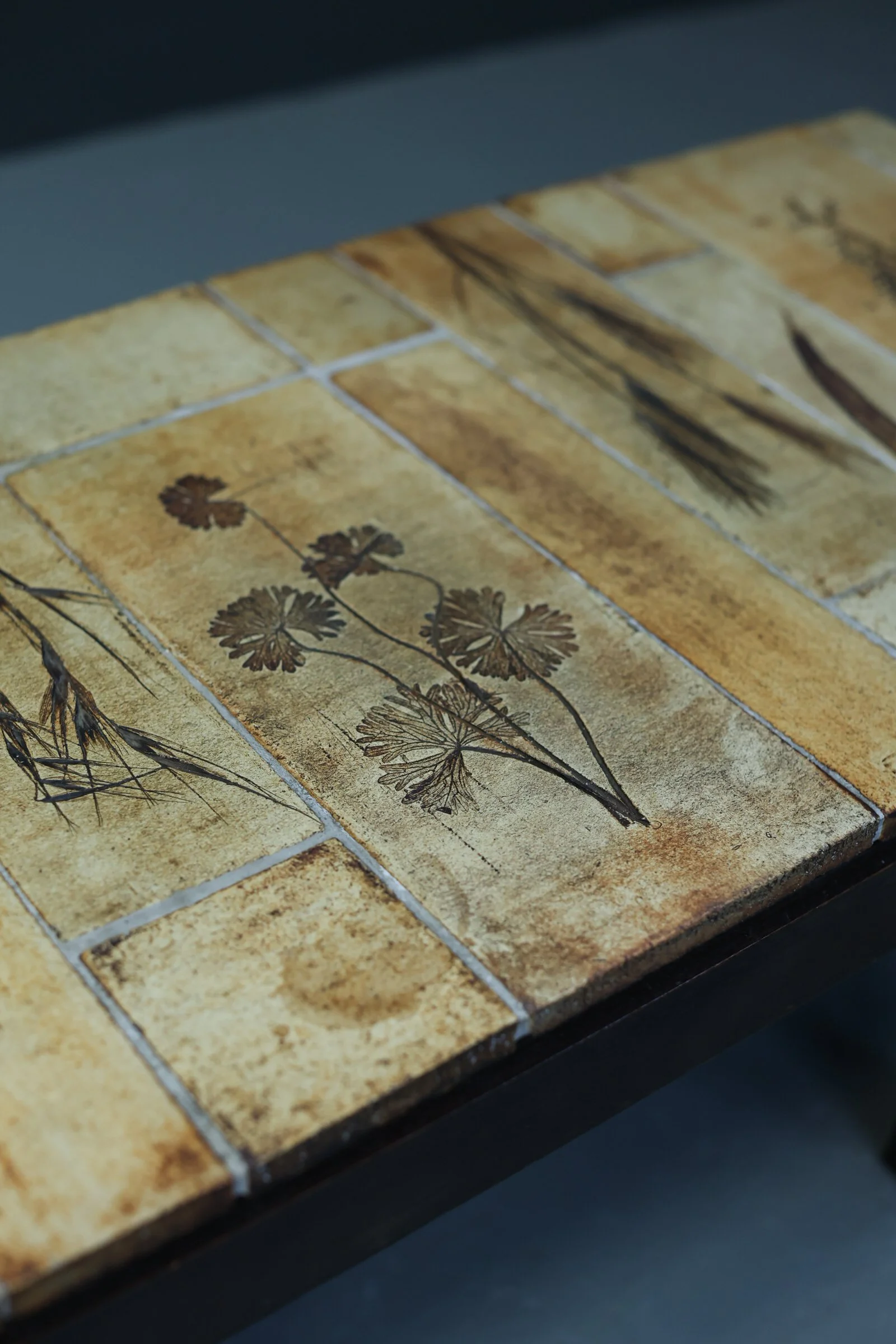
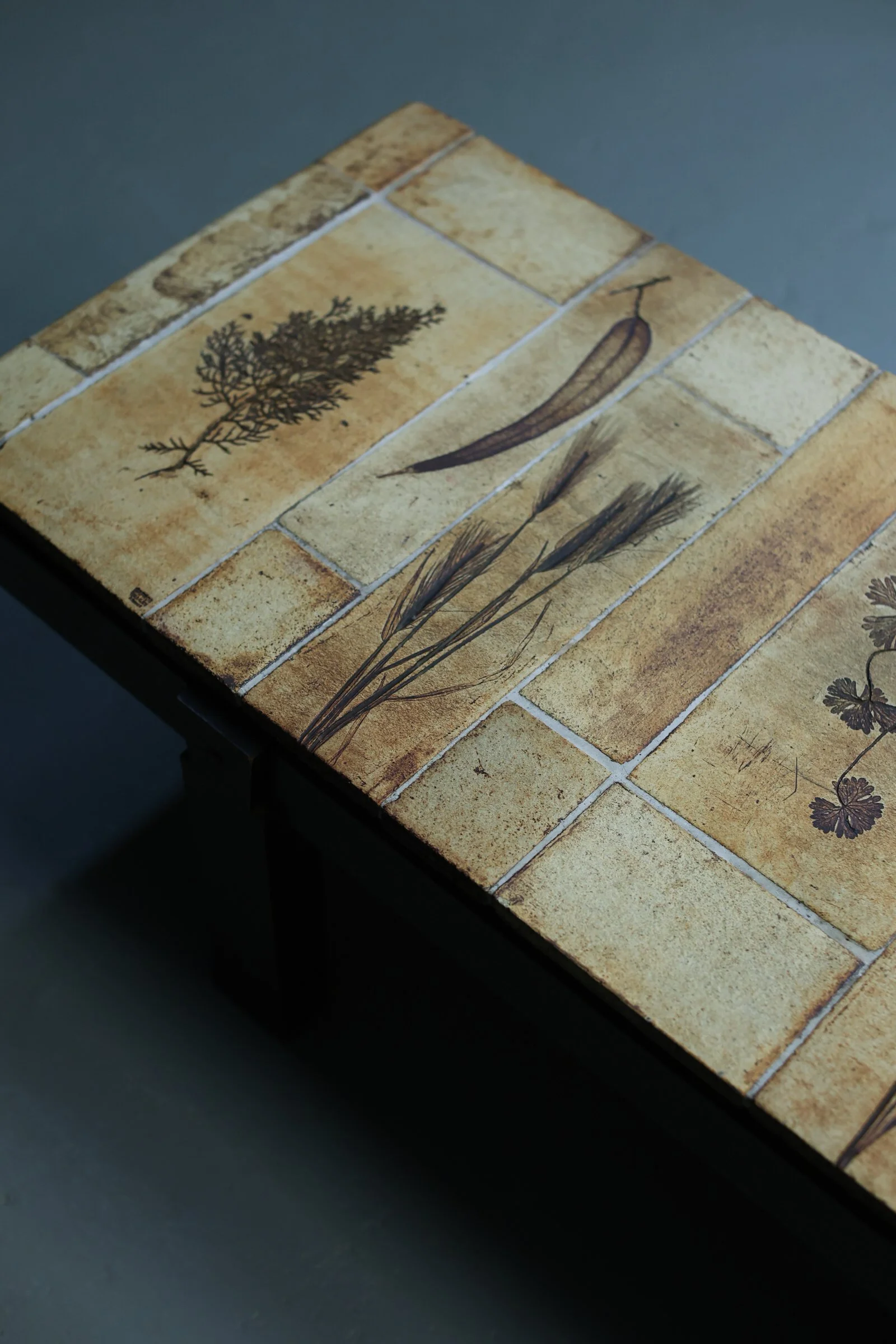
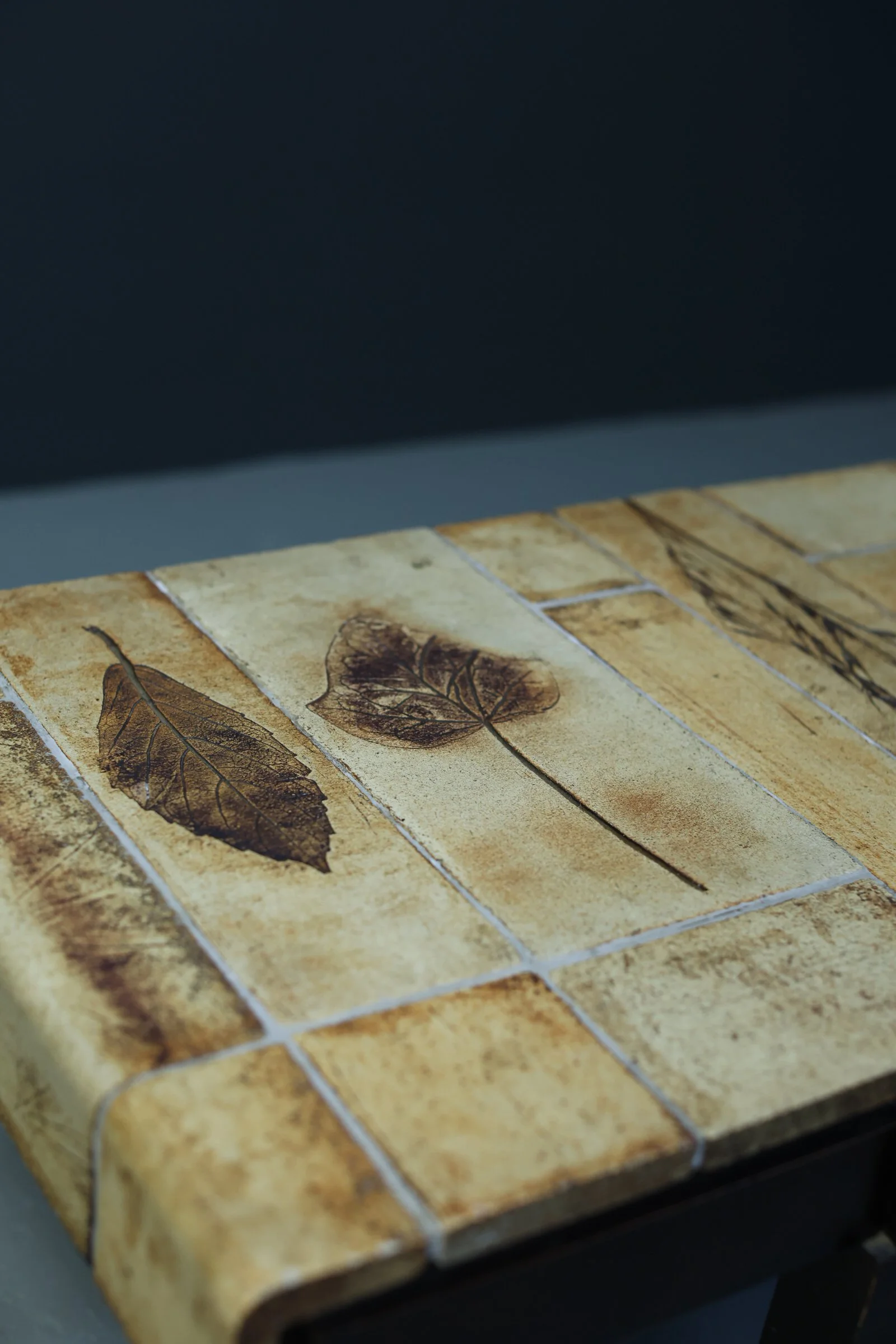
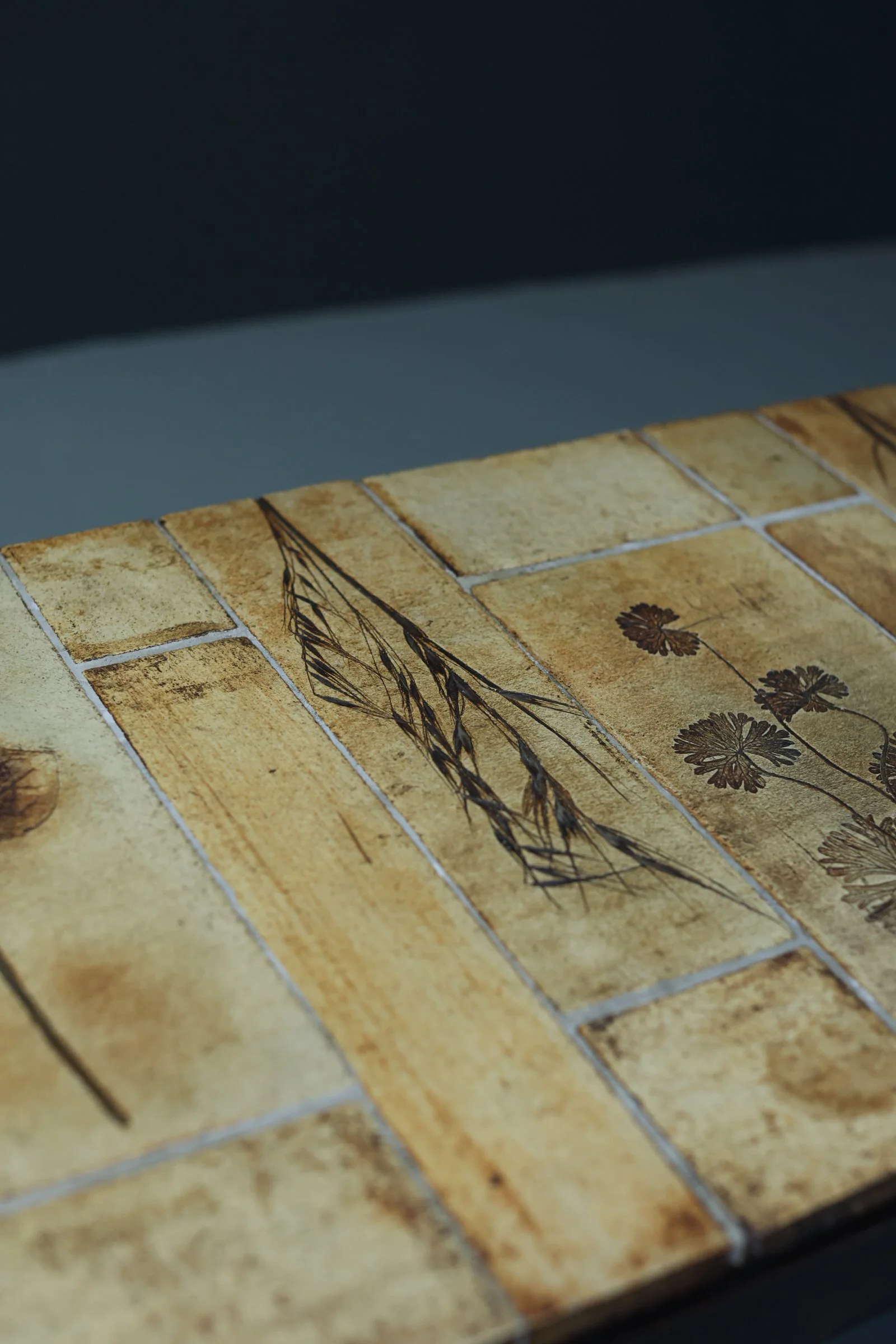
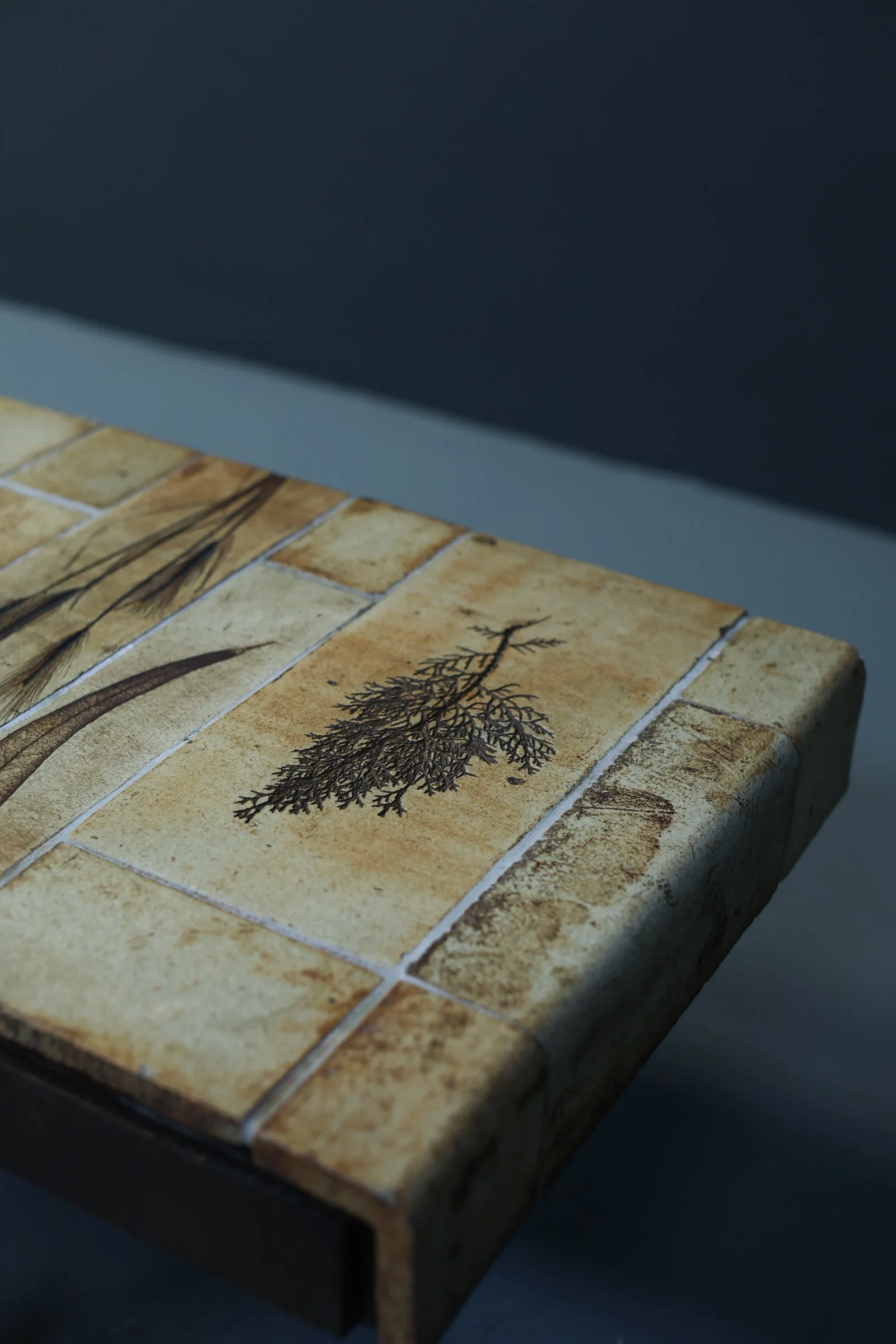
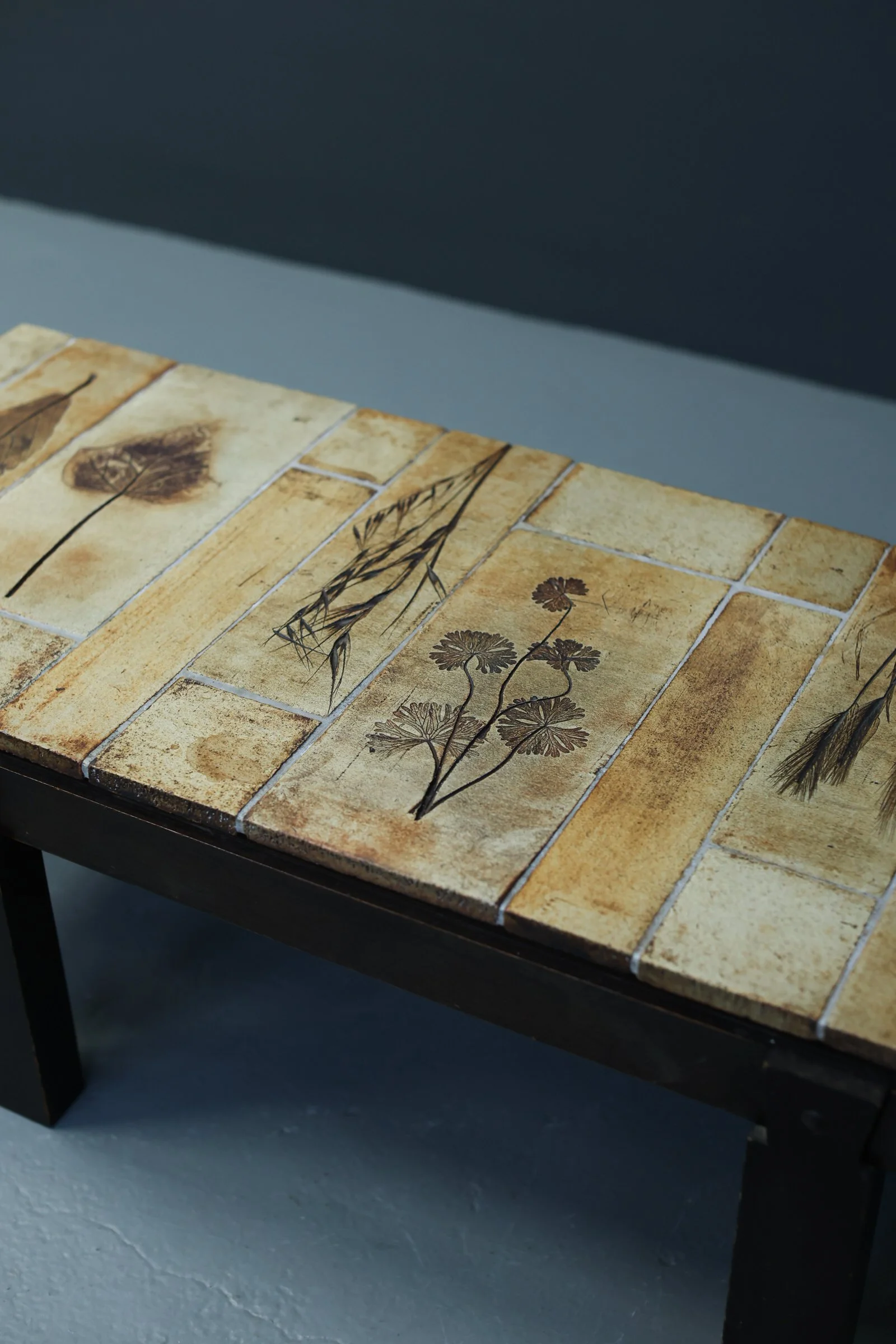
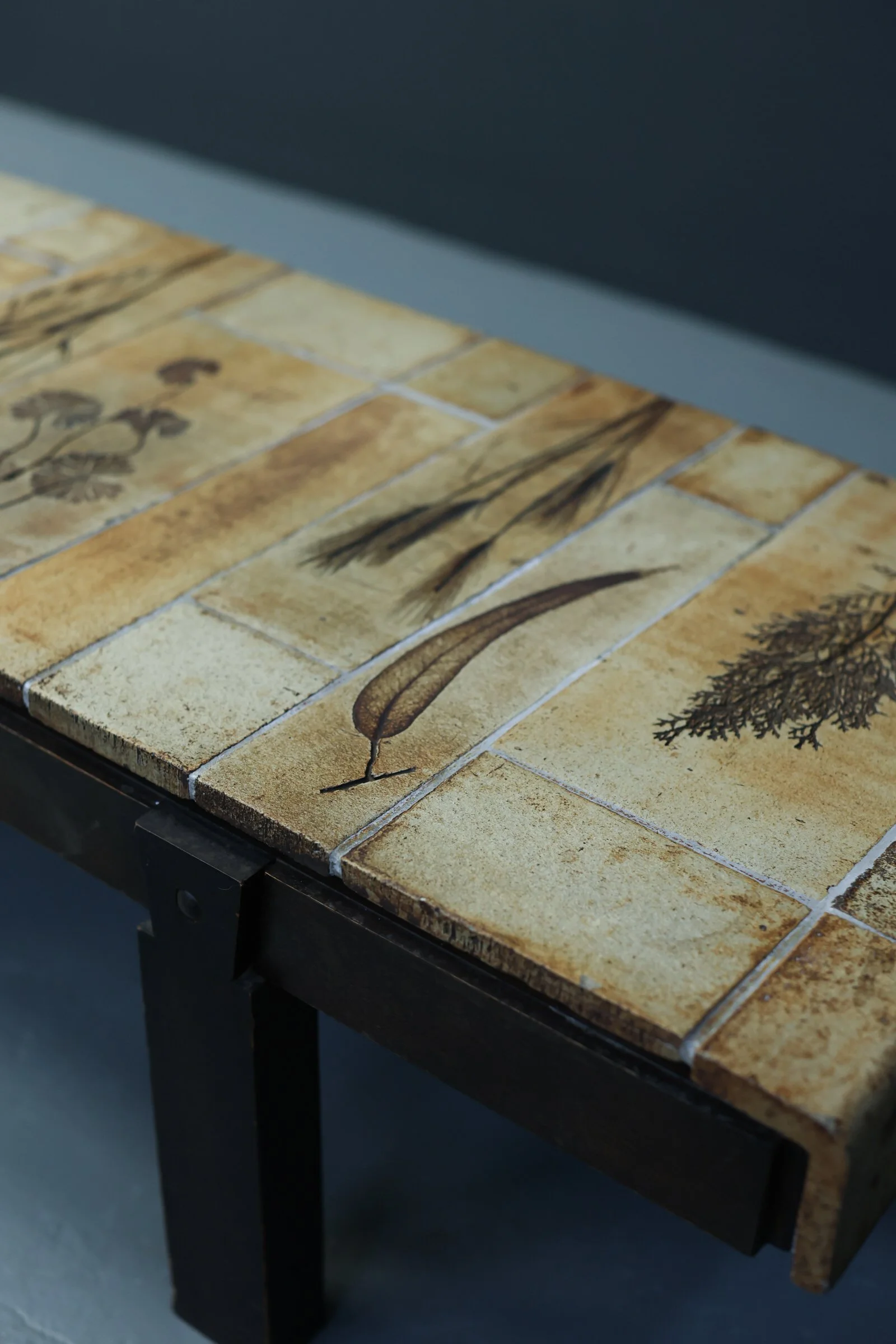
Roger Capron had a beautifully simple idea: let nature do the decorating. For his Herbarium series, he gathered leaves and plants from the hills around Vallauris, pressed them into wet clay, and fired the tiles. What emerged were ghostly botanical imprints — each one unique, each one a collaboration between the artist and whatever happened to be growing that season.
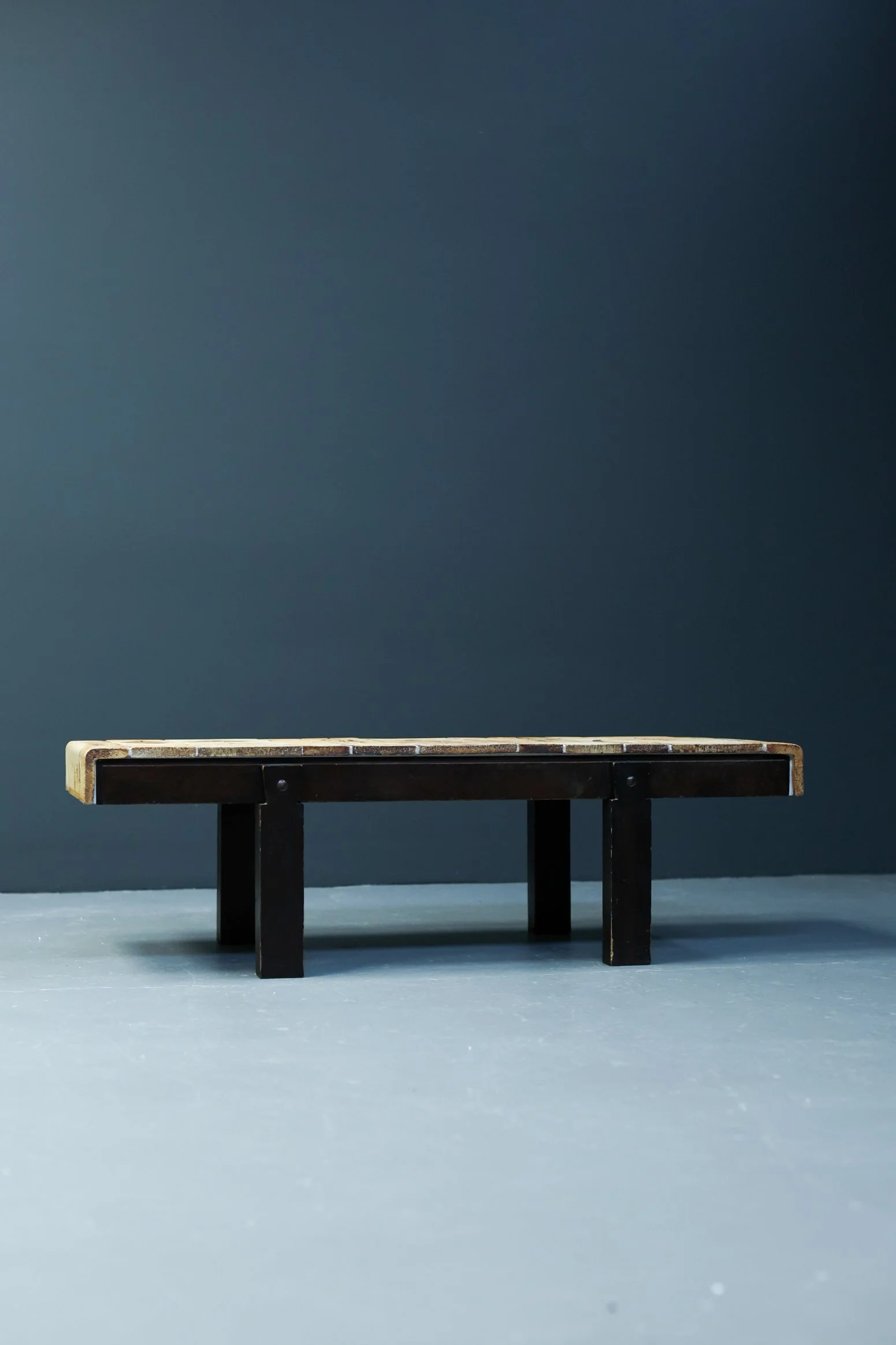
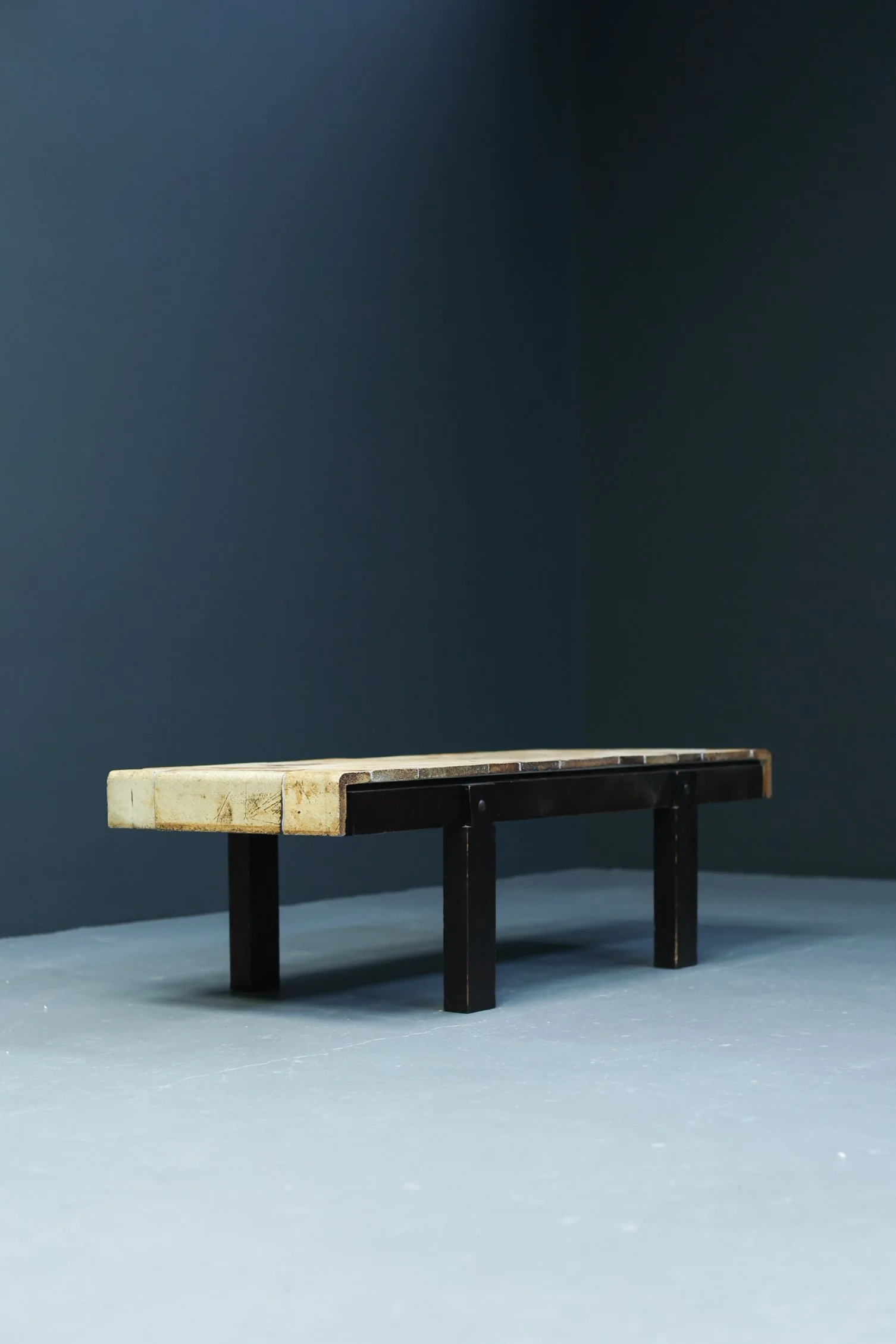
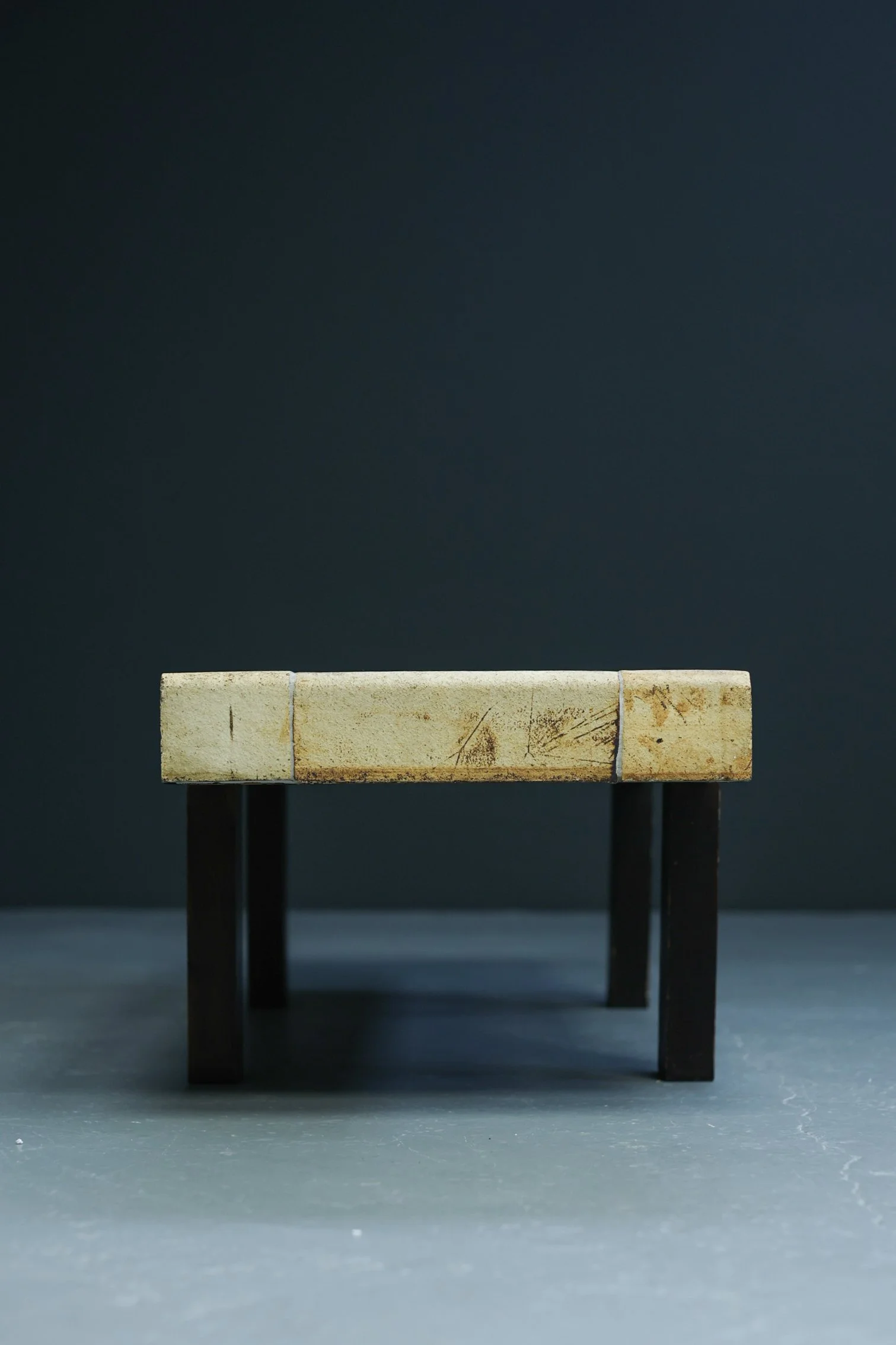
This rectangular coffee table is a quintessential example of the series. The ceramic tiles sit in a clean wooden frame, their earth-toned surfaces alive with the silhouettes of ferns, grasses, and broad-leafed plants. No two Herbarium tables are identical. The plants that Capron pressed into these particular tiles existed for a single moment in a single garden on the French Riviera — and then became permanent.
Capron settled in Vallauris in 1946, drawn by the same ceramic tradition that would later attract Picasso. By the 1970s, when this table was made, his atelier employed roughly 120 craftspeople and had won the International Grand Prize for Ceramics. The Herbarium series, with its deceptive simplicity, became one of his most recognisable and sought-after designs.
Capron's work sits at the intersection of craft and art, and the market has taken notice. His Garrigue tables — with their deeply textured, lava-like surfaces — command the highest prices, but the Herbarium series is rapidly gaining ground among collectors who appreciate its subtlety. Unlike mass-produced furniture, each table carries the literal fingerprint of its maker and the botanical signature of a specific time and place on the Côte d'Azur.
There's a quiet poetry to these tables that photographs can only partly convey. In person, you find yourself leaning in, tracing the veins of a leaf that was alive half a century ago, marvelling at the way fire transformed something fragile into something enduring. It's furniture that rewards attention — and that's increasingly rare in a world of disposable design.