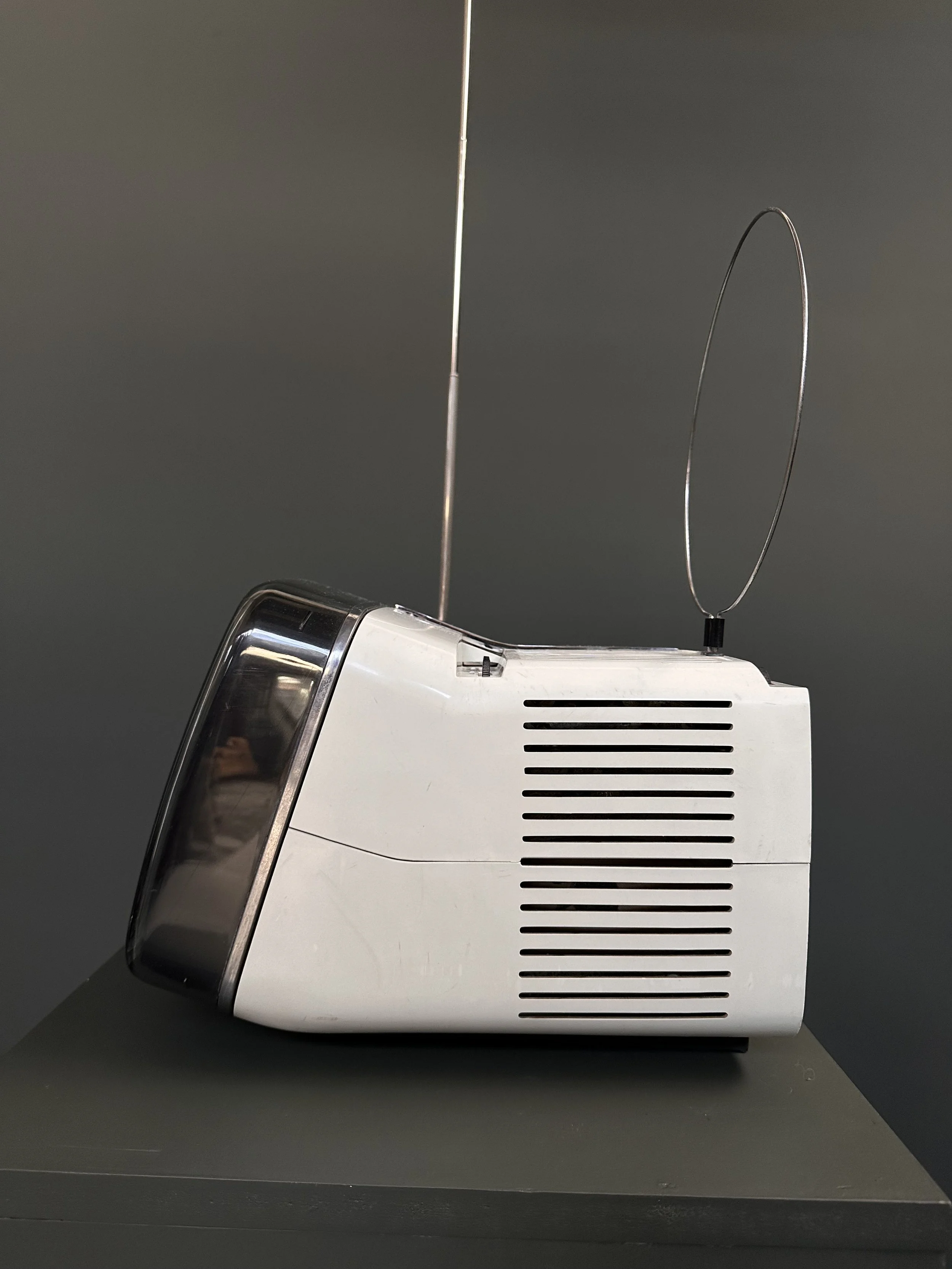
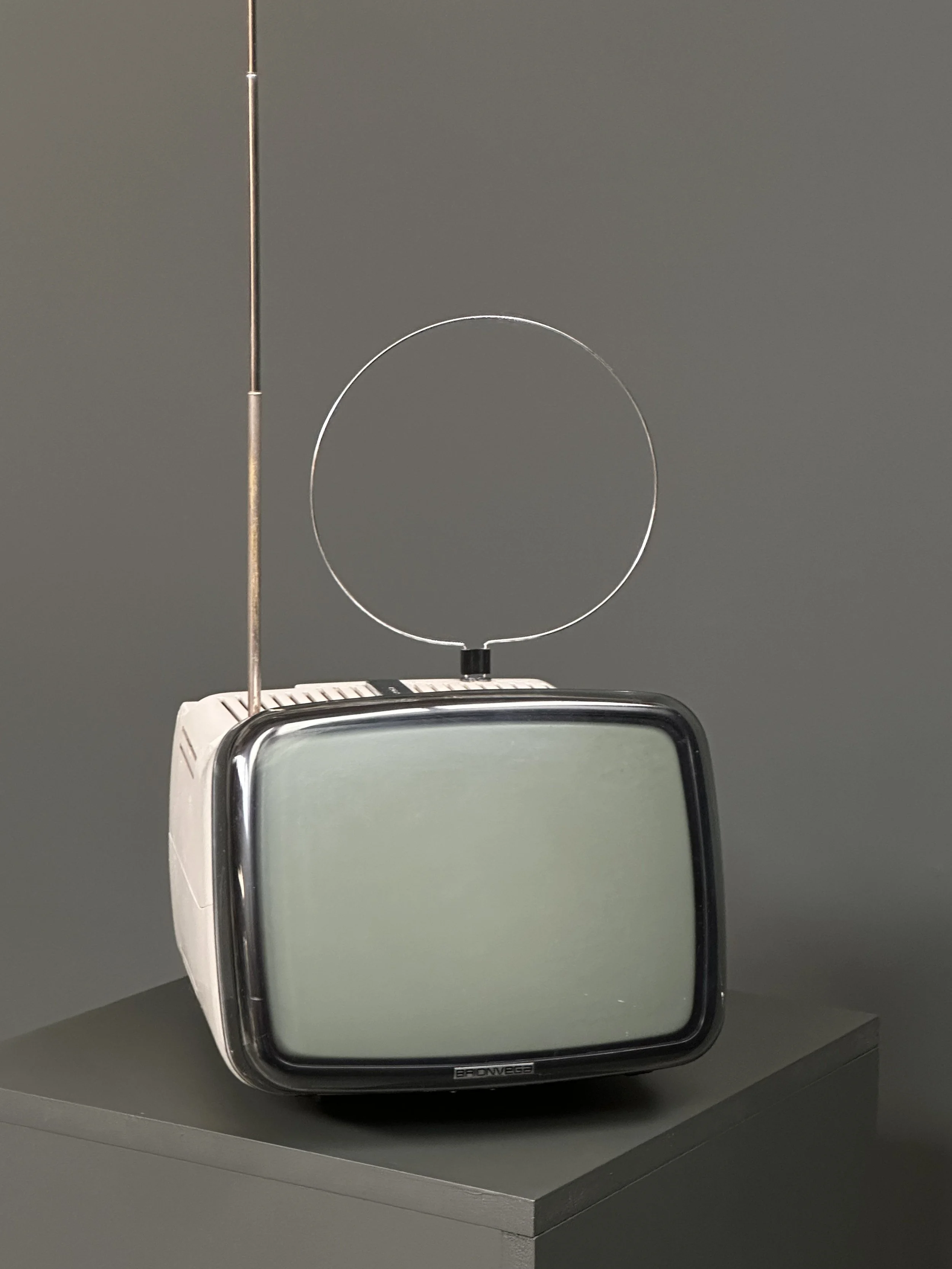
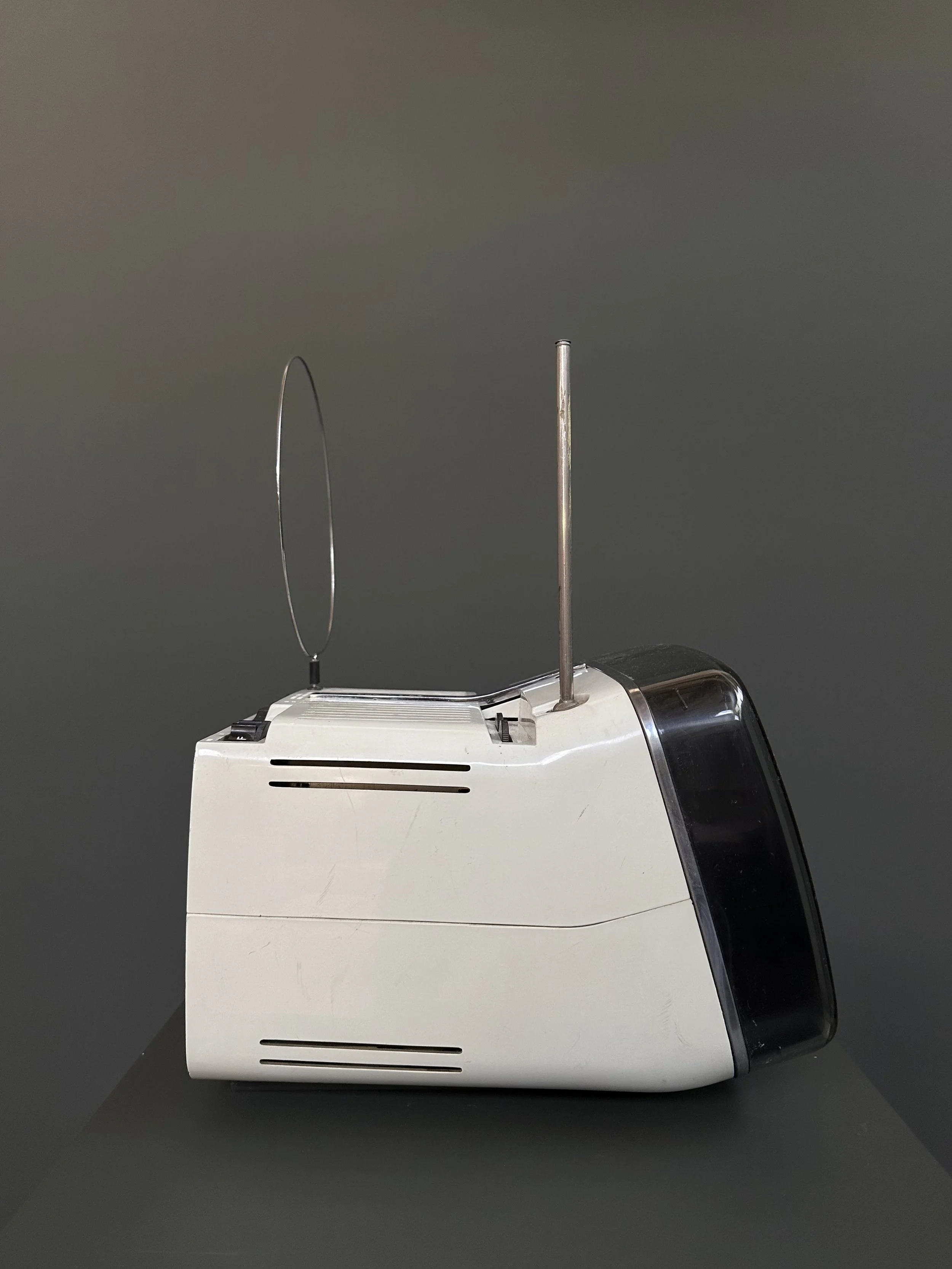
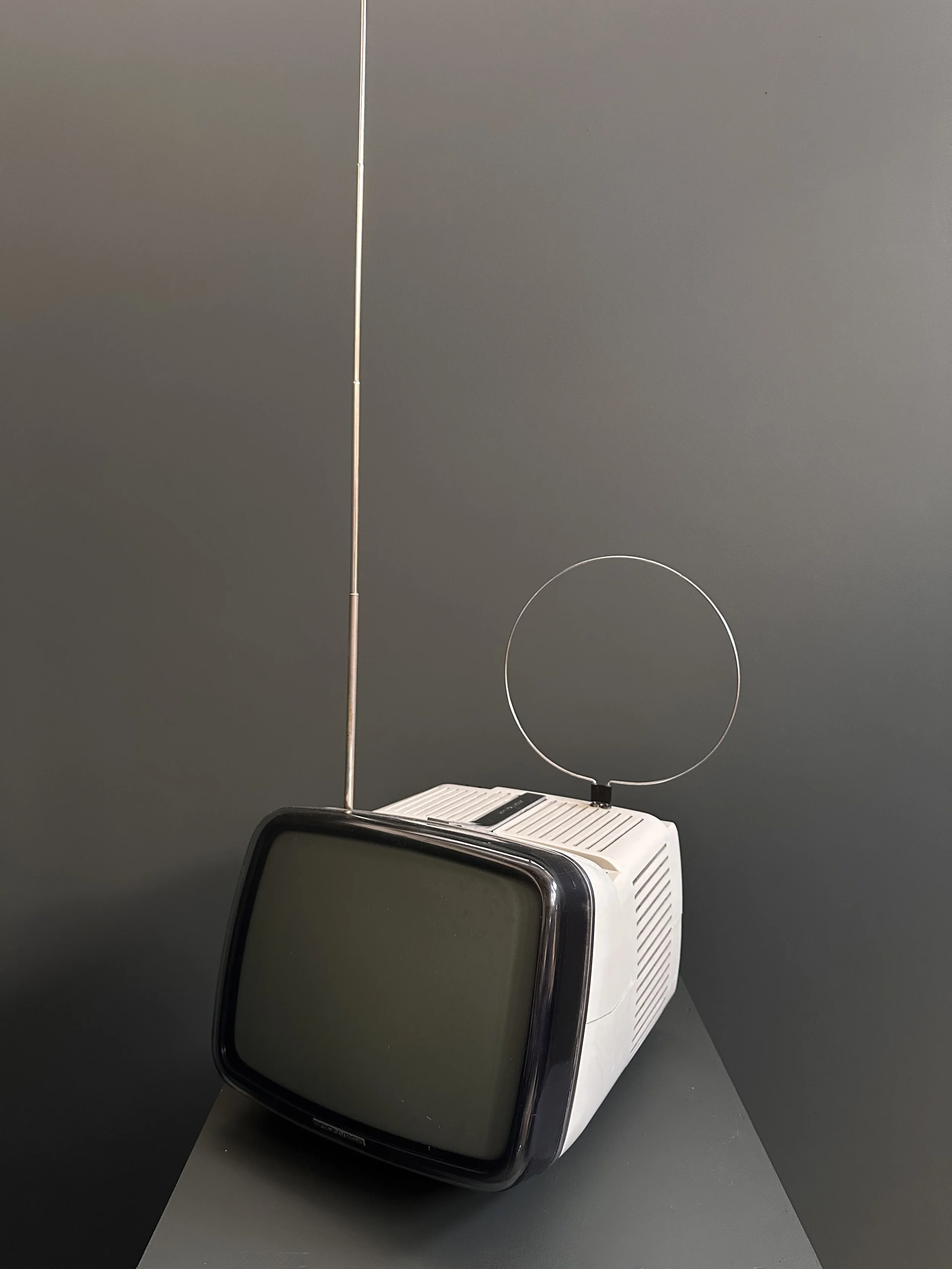
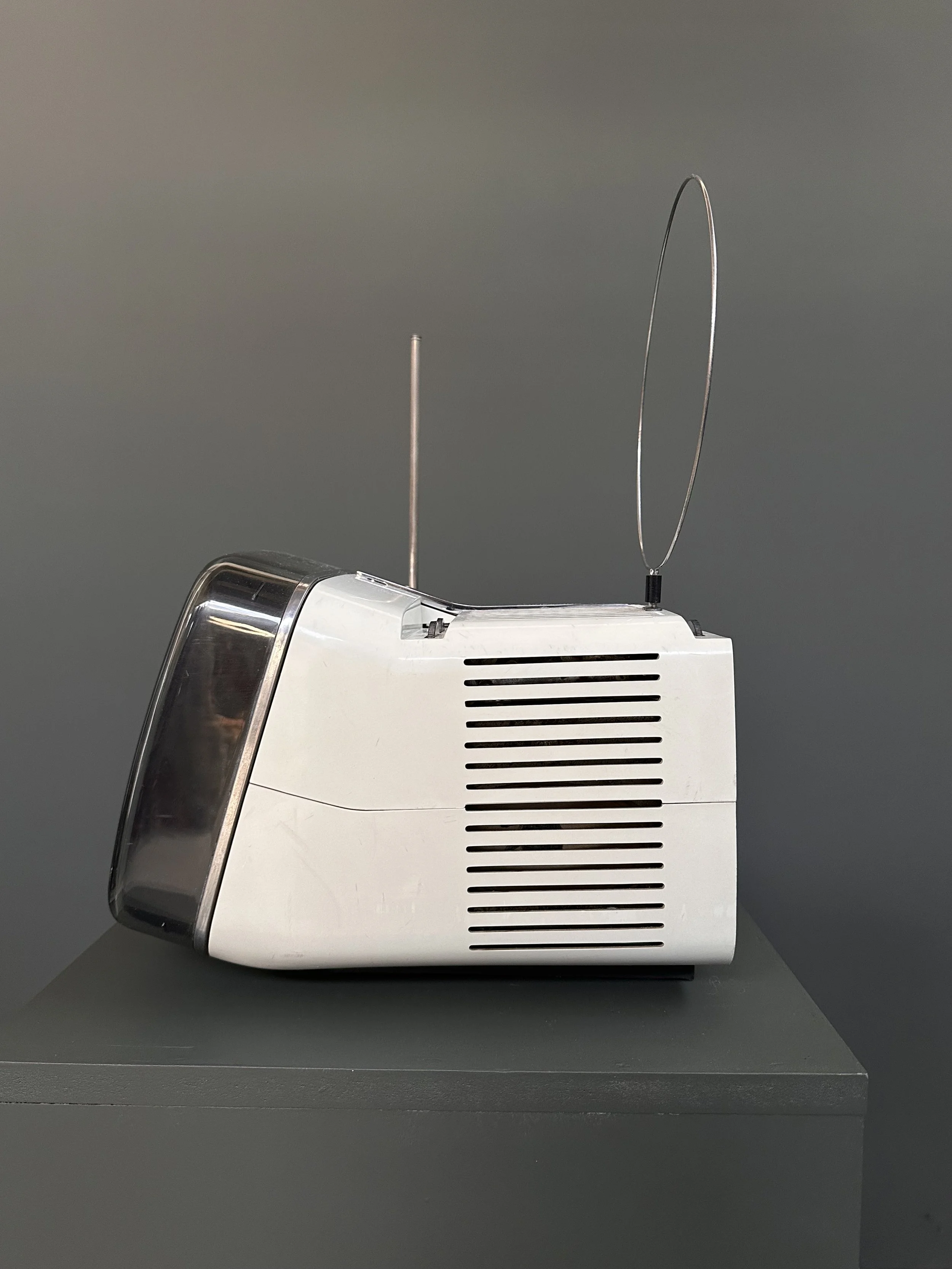
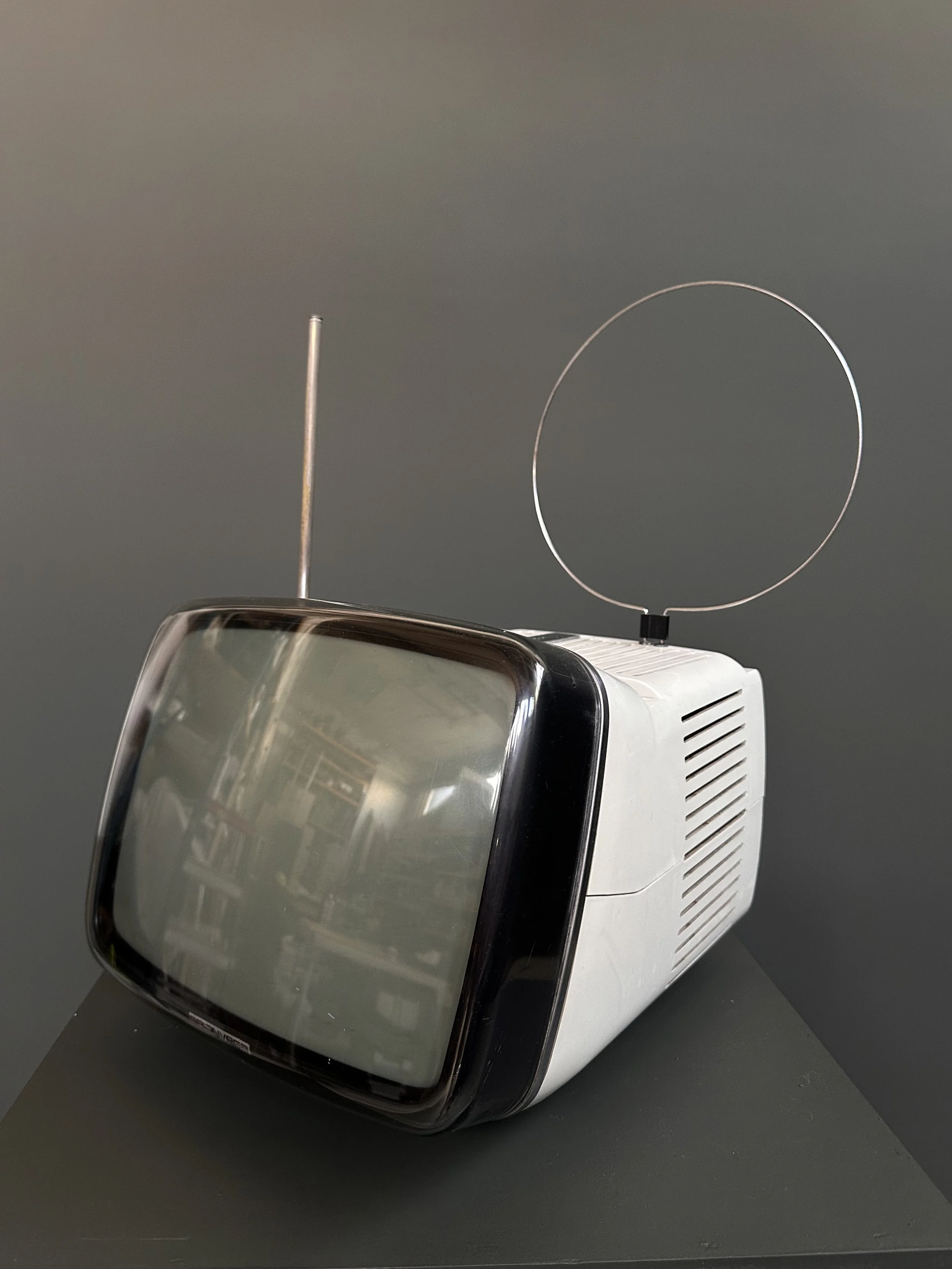
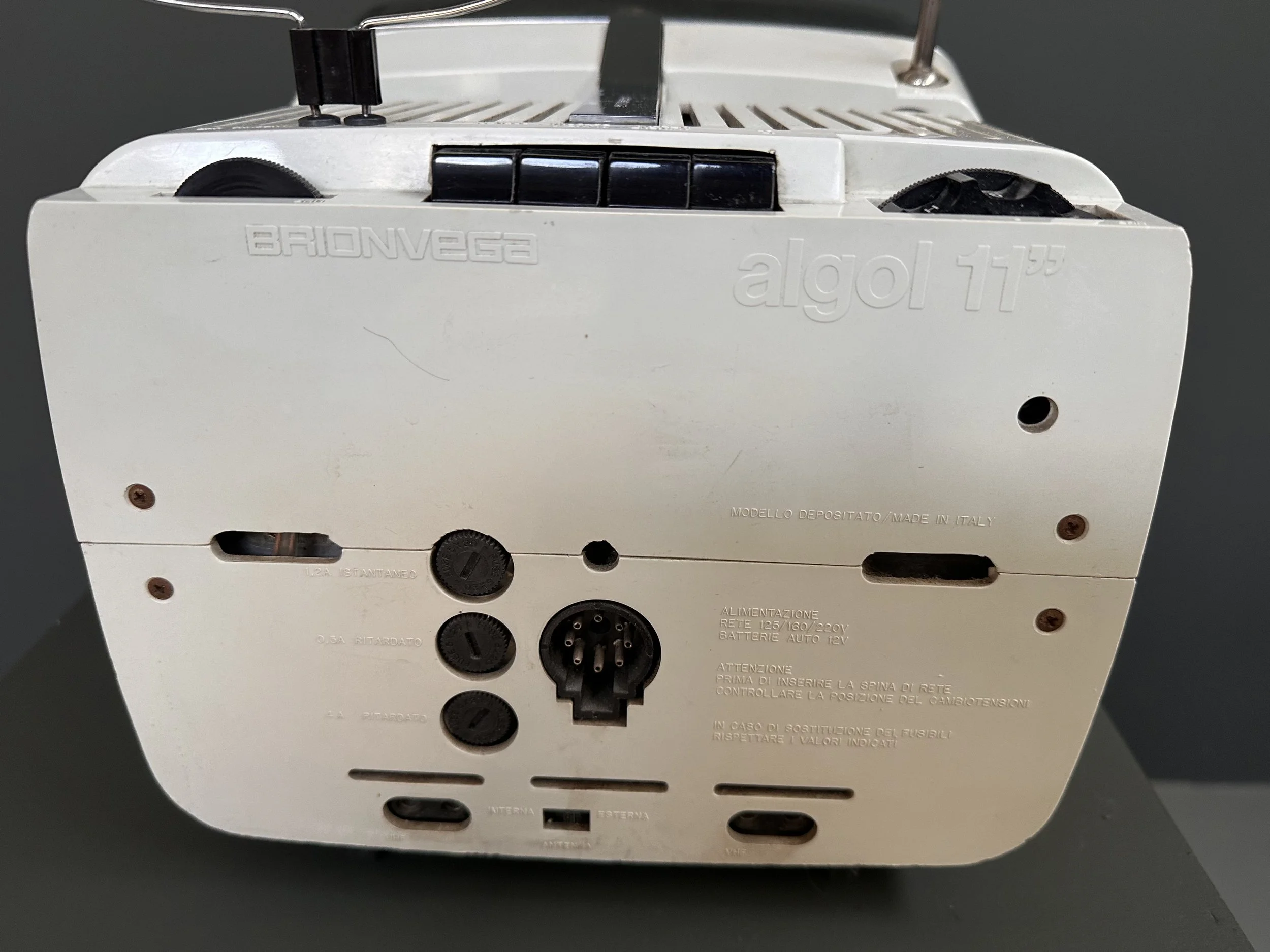
Brionvega Algol 11 Television by Marco Zanuso and Richard Sapper
Sold
★★★★★ 5.0 · 14 reviews on Etsy
Ref: A-040
- Designer
- Marco Zanuso & Richard Sapper
- Manufacturer
- Brionvega
- Period
- 1960s
- Origin
- Italy
- Materials
- ABS Plastic, Glass, Metal
- Color
- Orange
- Condition
- Good — original condition, cosmetic wear consistent with age
- Height
- 27 cm
- Width
- 26 cm
- Depth
- 7.5 cm
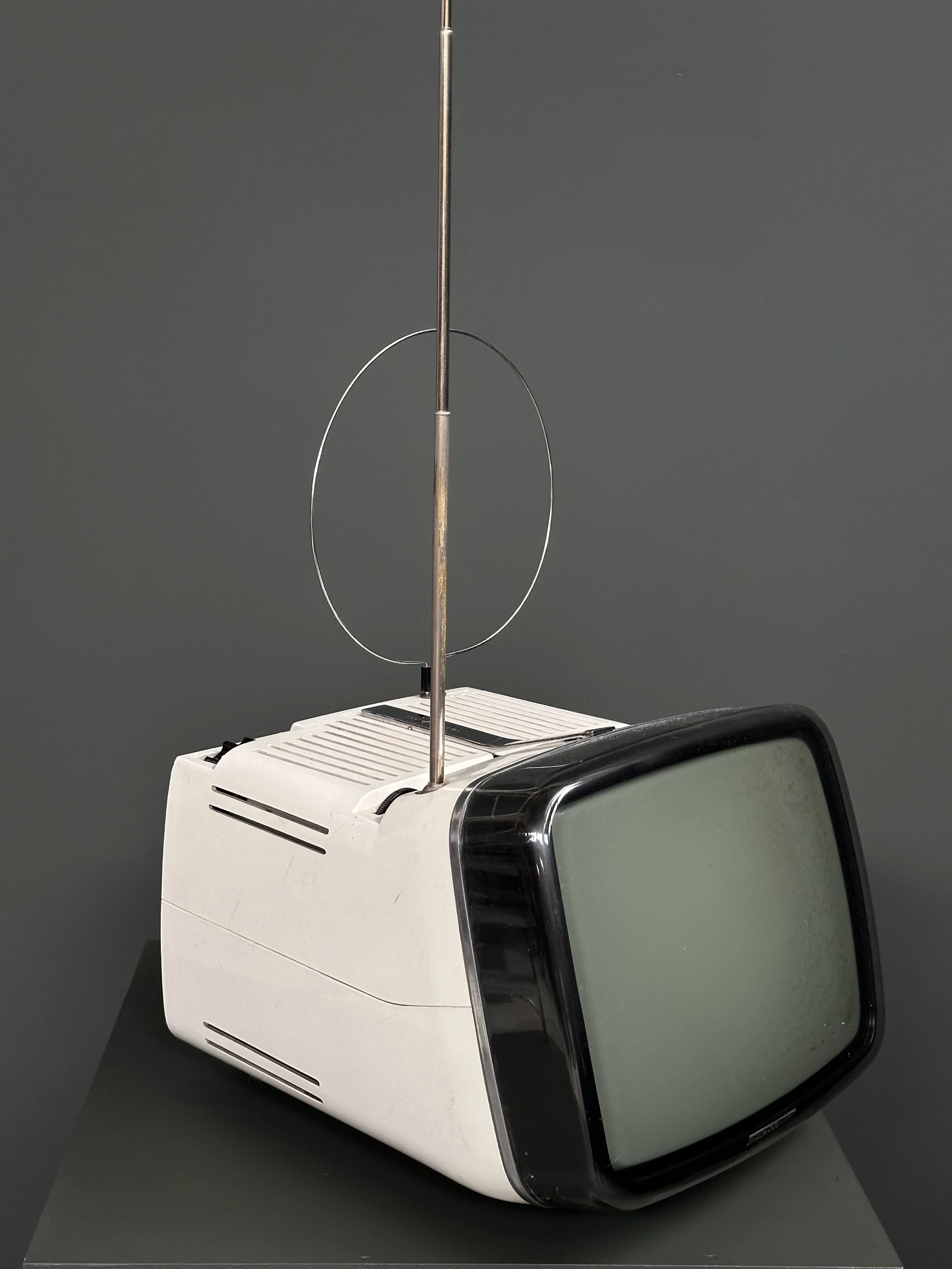
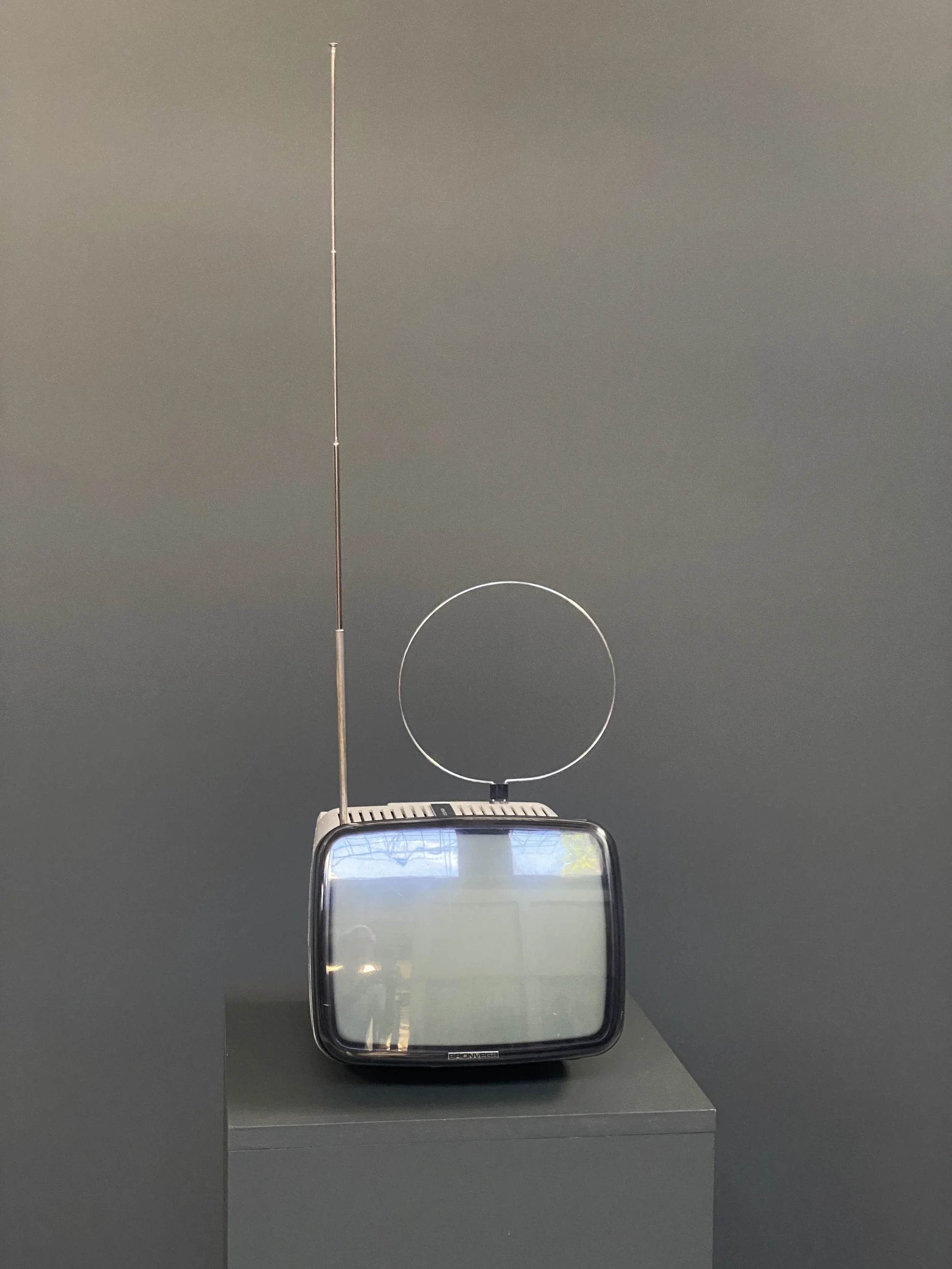
Few objects capture the optimism of 1960s Italian design quite like the Brionvega Algol 11. Designed in 1964 by Marco Zanuso and Richard Sapper for the Milanese electronics firm Brionvega, this portable television transformed a household appliance into a sculptural icon — one that now sits in the permanent collection of the Museum of Modern Art in New York.
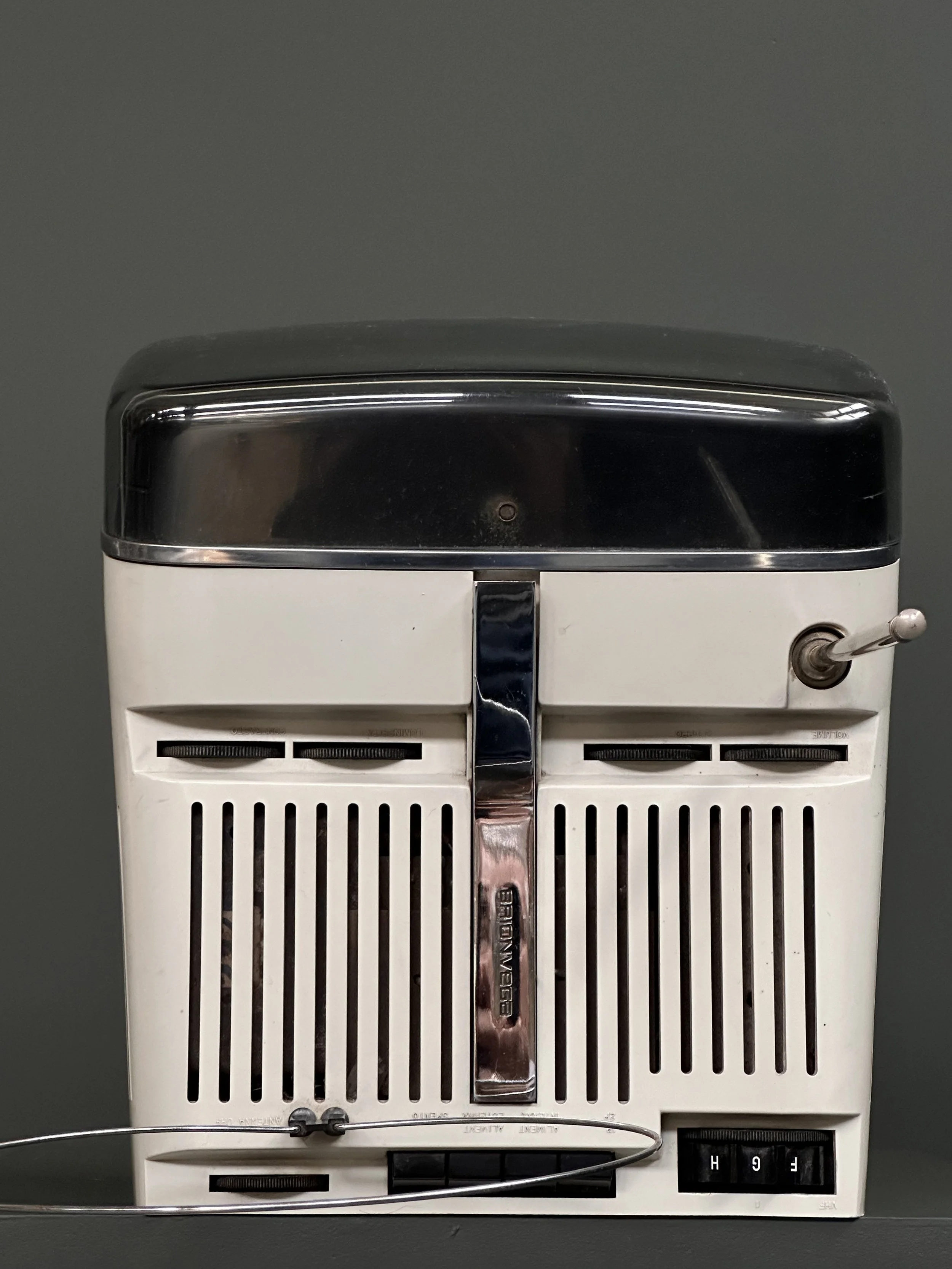
The form is unmistakable. The screen tilts slightly upward from a rounded ABS plastic body, creating a silhouette that Zanuso himself compared to a faithful dog looking up at its owner. The colored plastic shell is smooth and tactile, the metal carry handle sits flush when not in use, and the overall proportions — just twenty-seven and a half centimeters tall — give it an almost toylike charm that belies the engineering within. It was among the first televisions to use transistors instead of vacuum tubes, a technical leap that made portability possible.
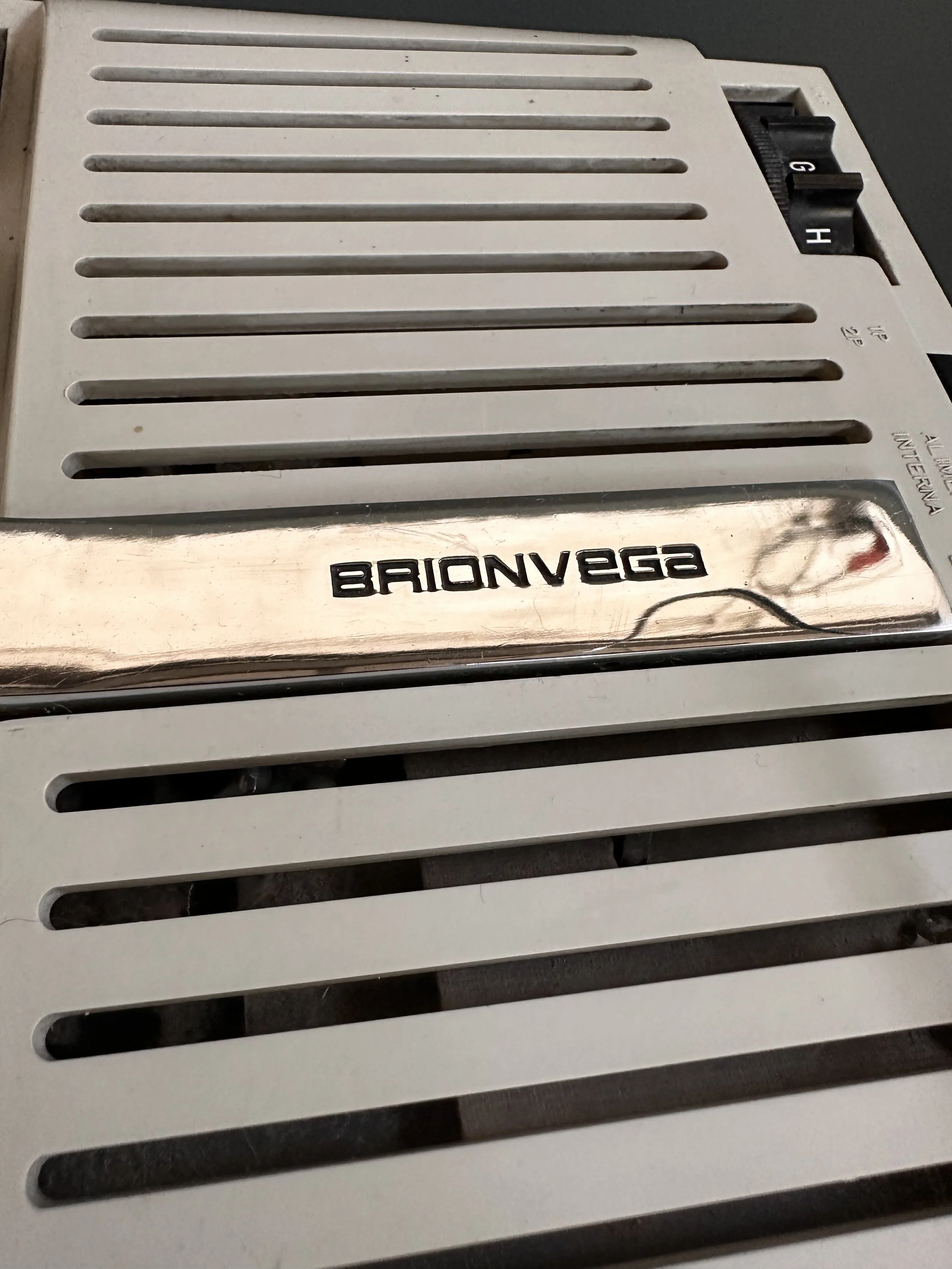
This example dates from the original 1960s production run and shows the kind of honest wear you would expect from six decades of life. The plastic retains its depth of color, the screen glass is intact, and all the mechanical details — dials, antenna housing, handle — are present and original.
Zanuso and Sapper were one of the great design partnerships of the twentieth century. Their work for Brionvega — including the TS 502 radio and the Black ST 201 television — redefined what consumer electronics could look like. The Algol sits at the intersection of Italian Radical Design and the broader Space Age movement, sharing DNA with the work of Joe Colombo, Ettore Sottsass, and the Castiglioni brothers.
As a functional television, the Algol has long been surpassed. As an object — something to place on a shelf, a credenza, a mantelpiece — it remains utterly magnetic. It is the kind of piece that makes a room feel curated rather than merely decorated.