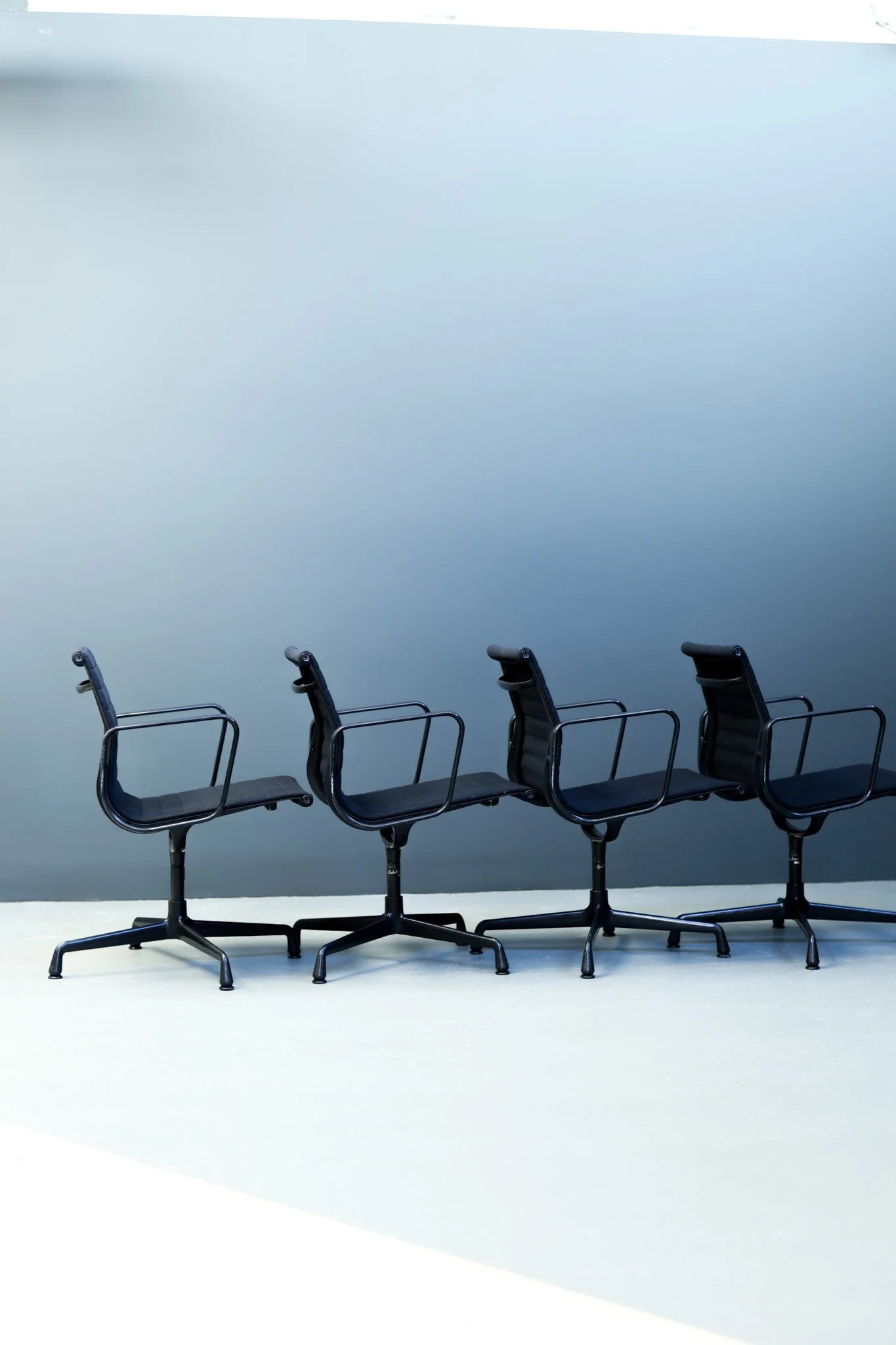
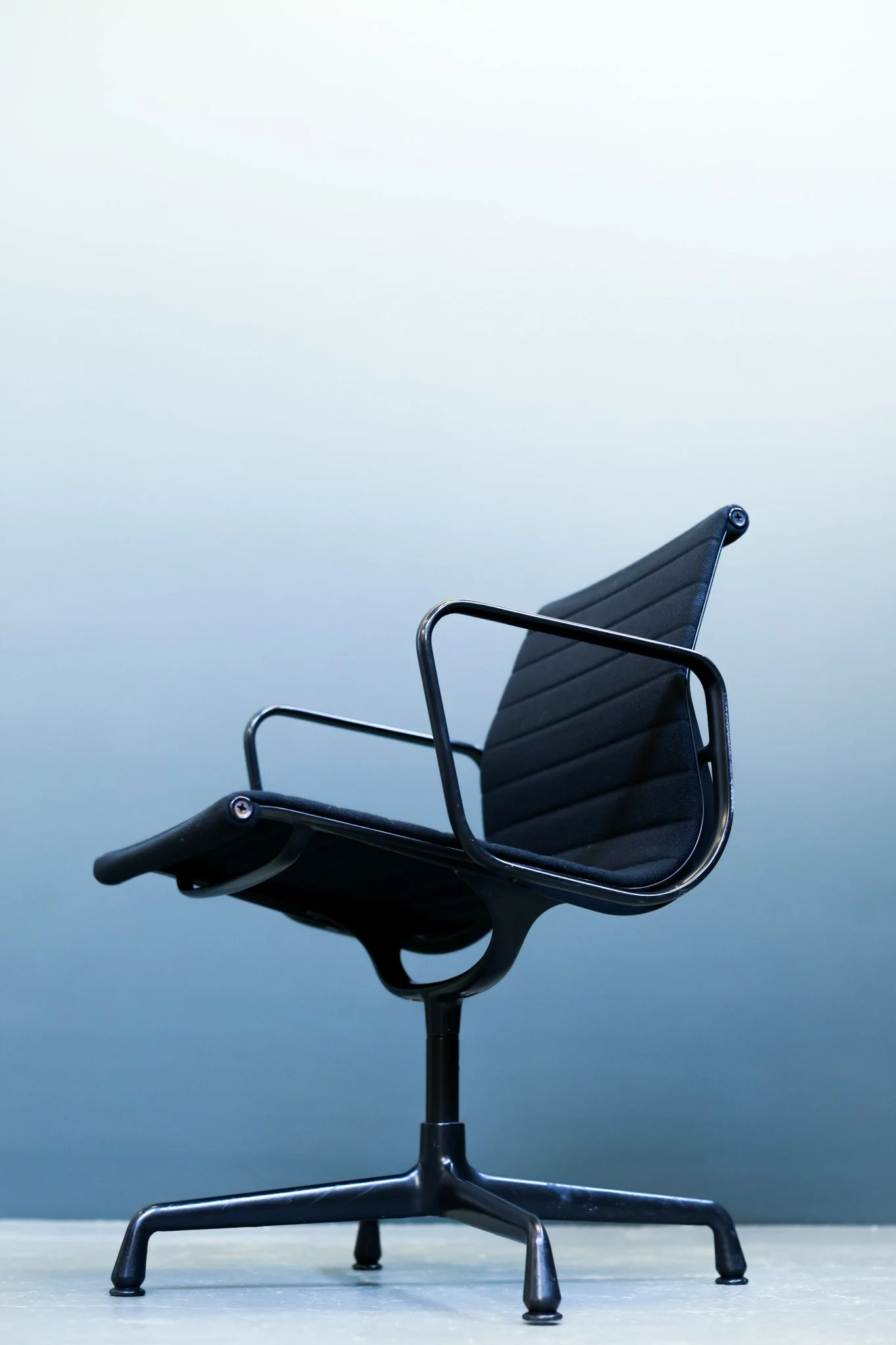
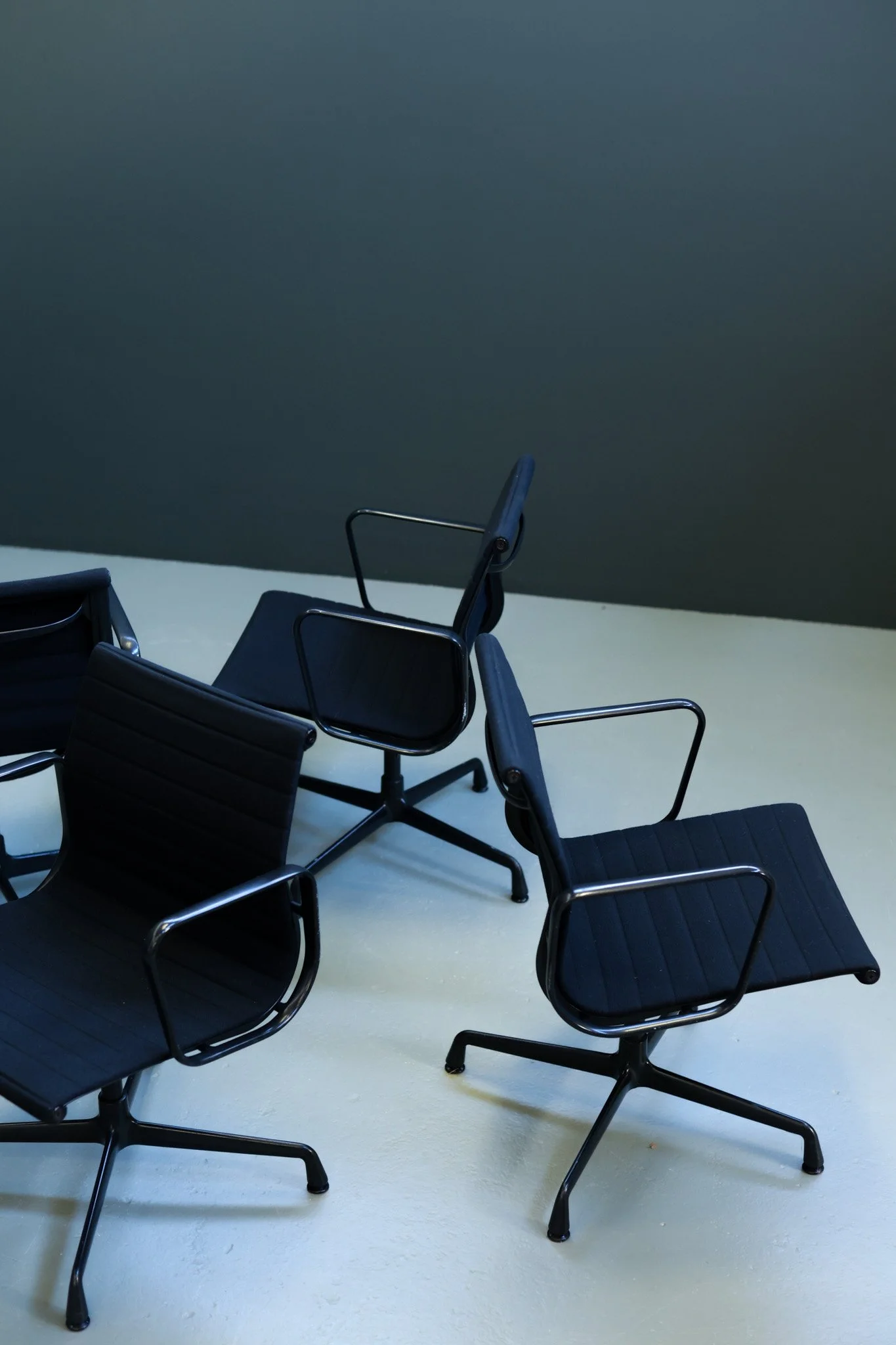
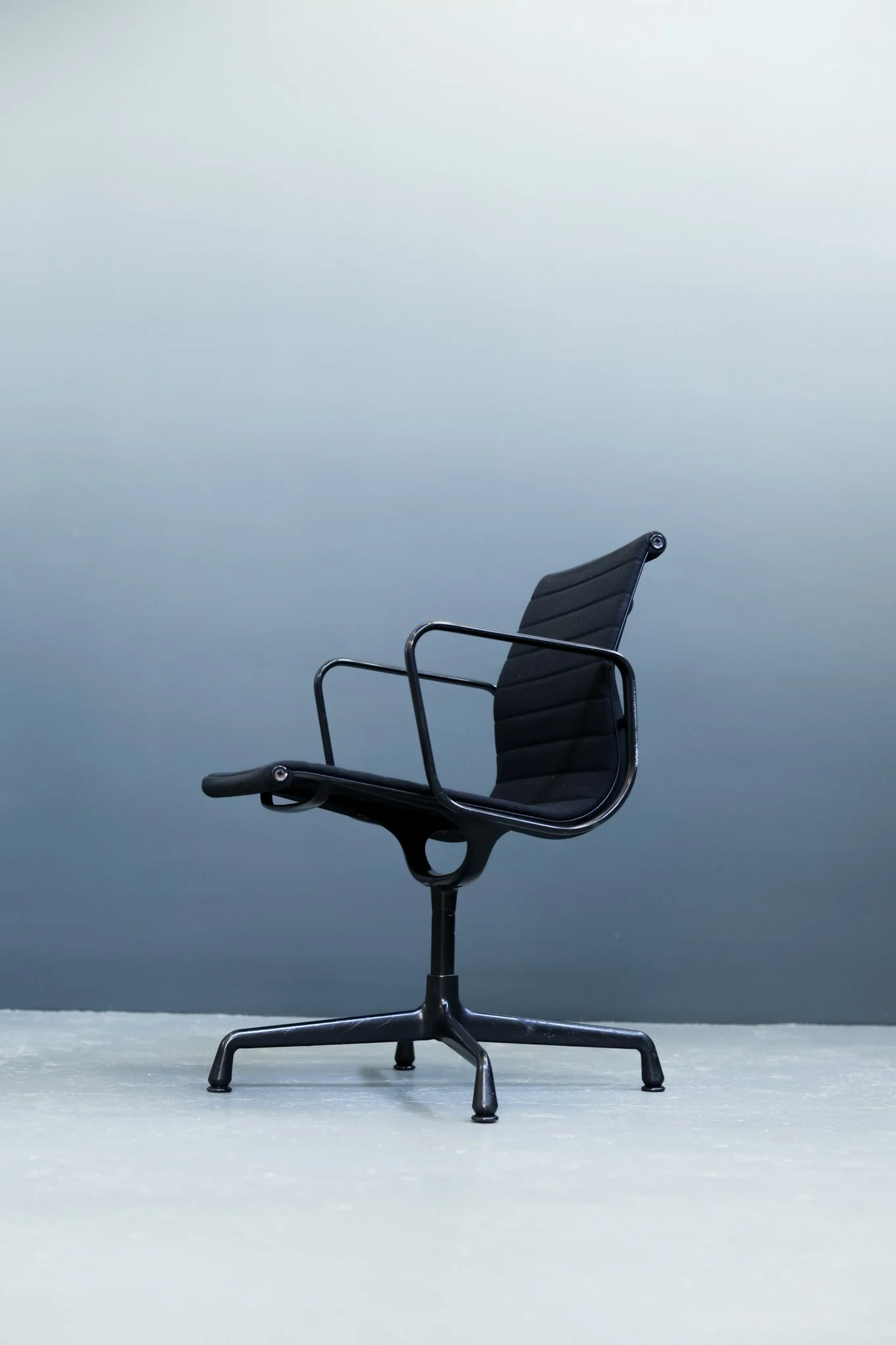
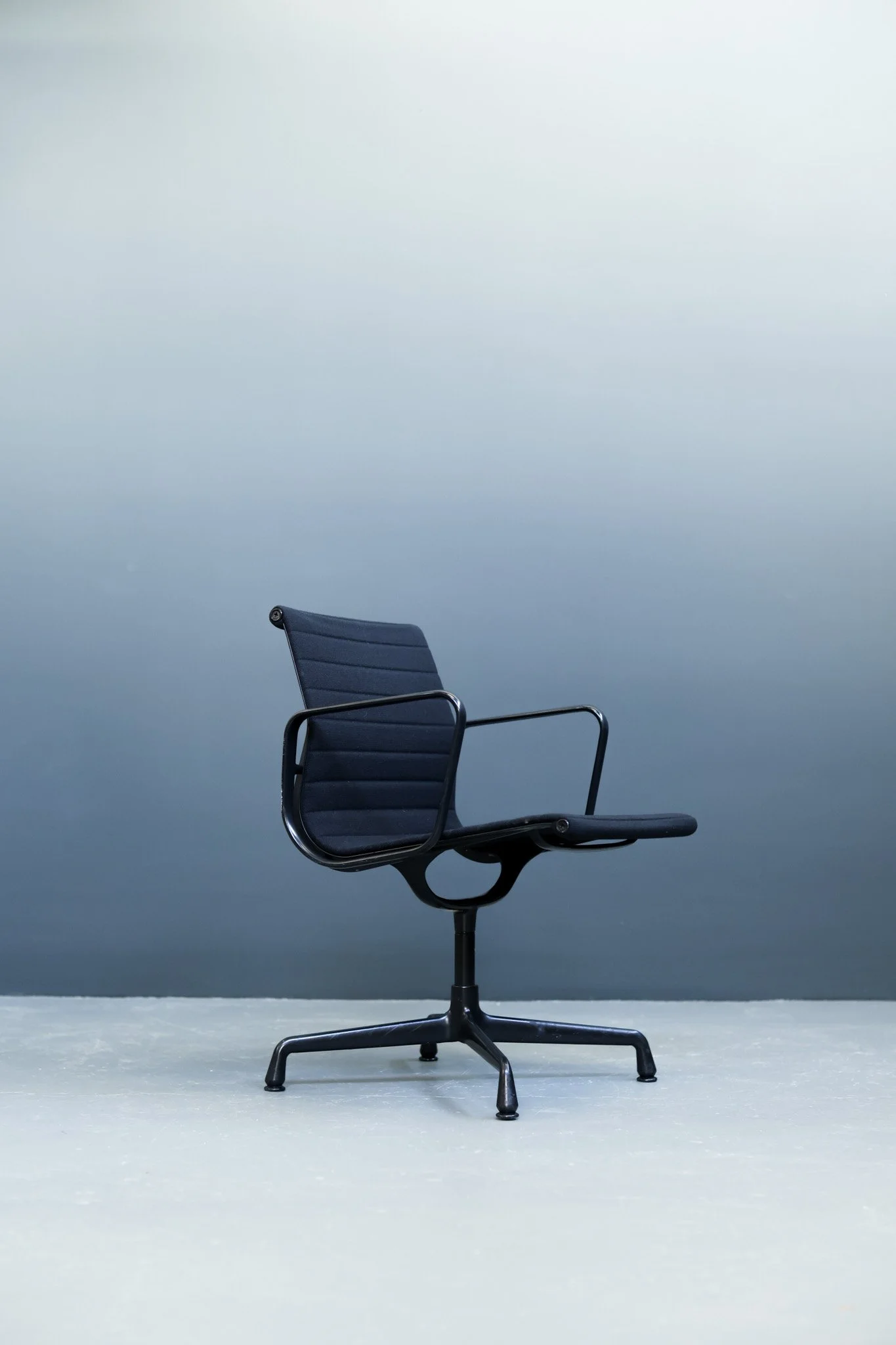
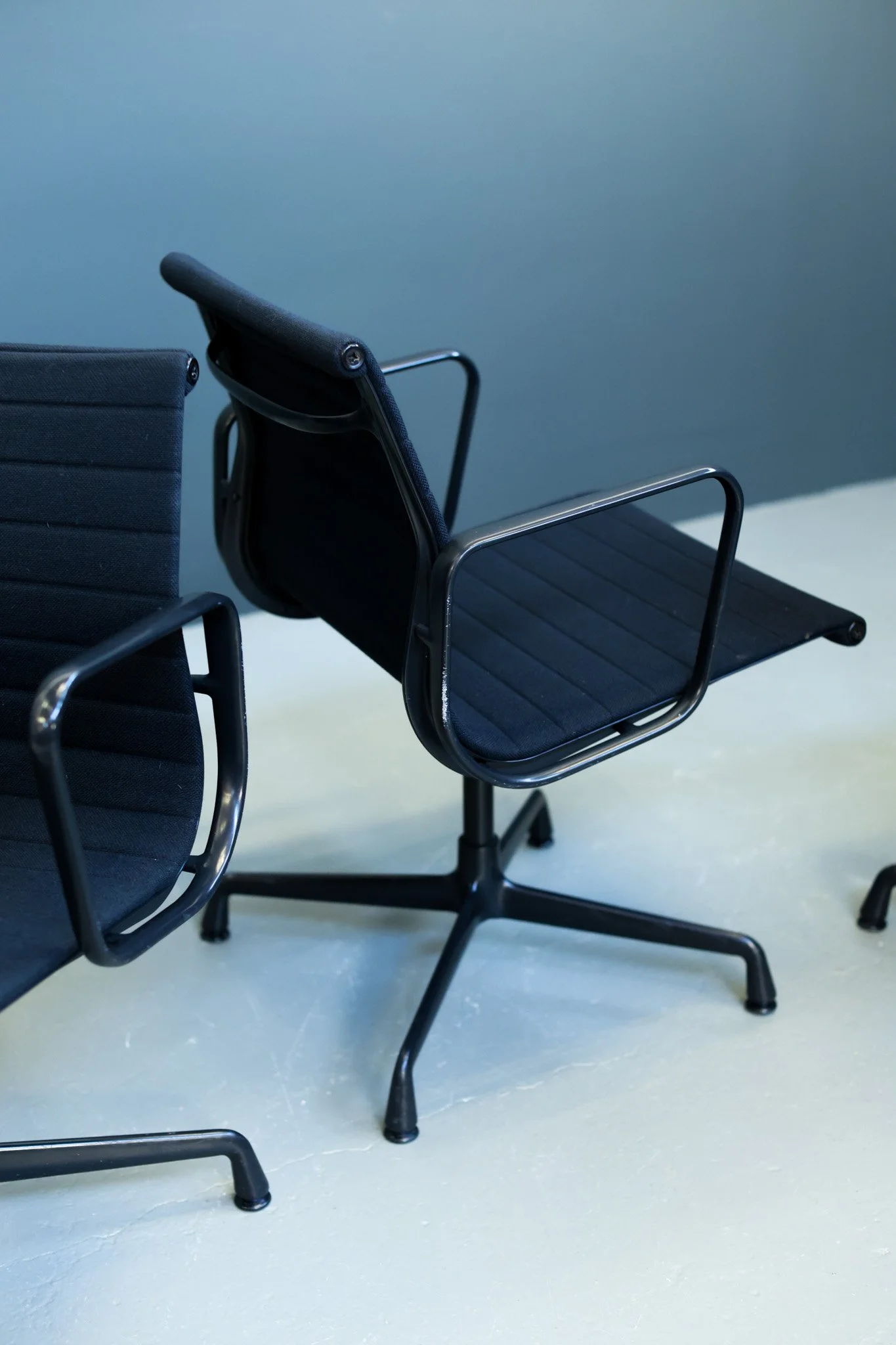
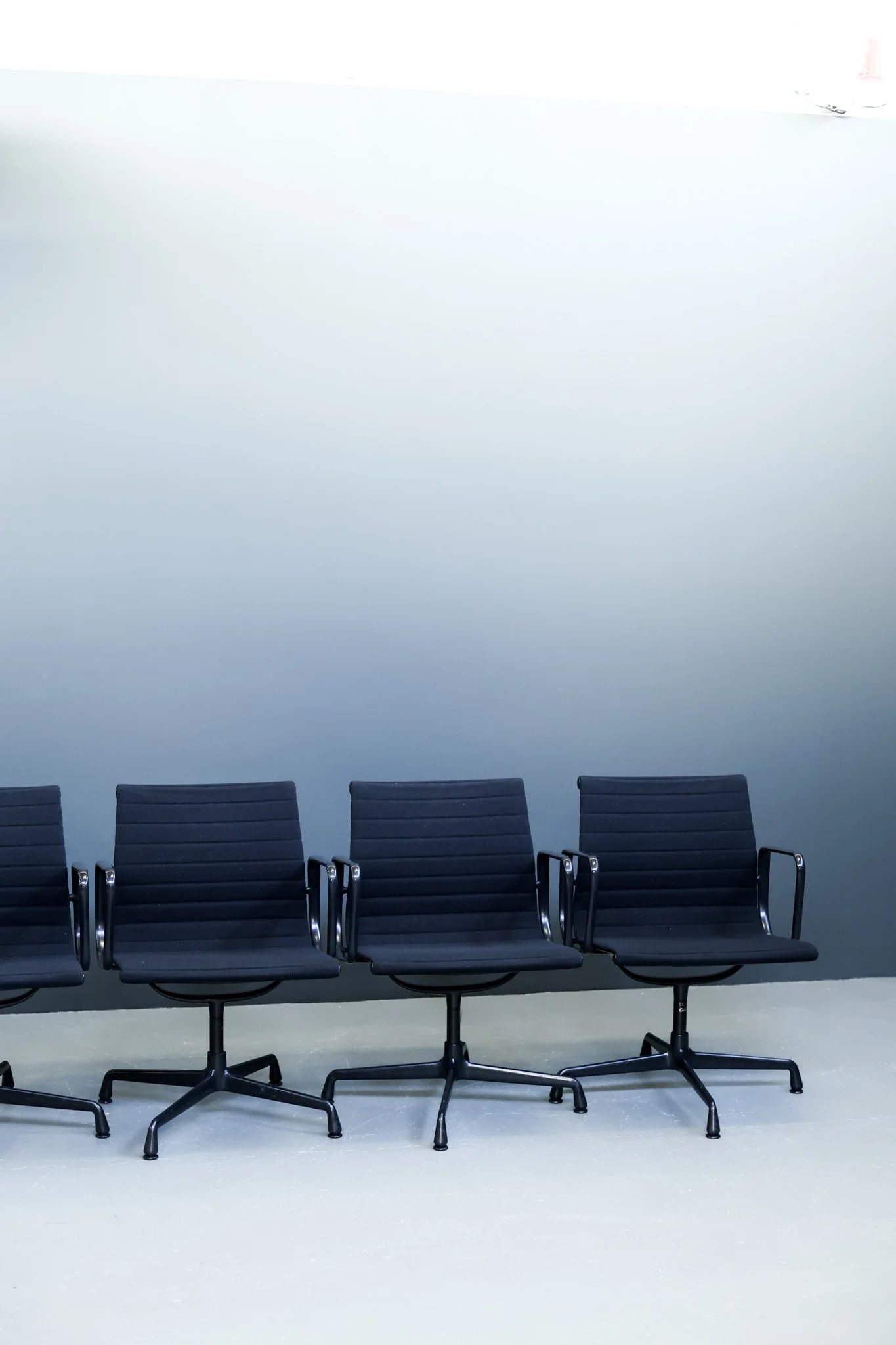
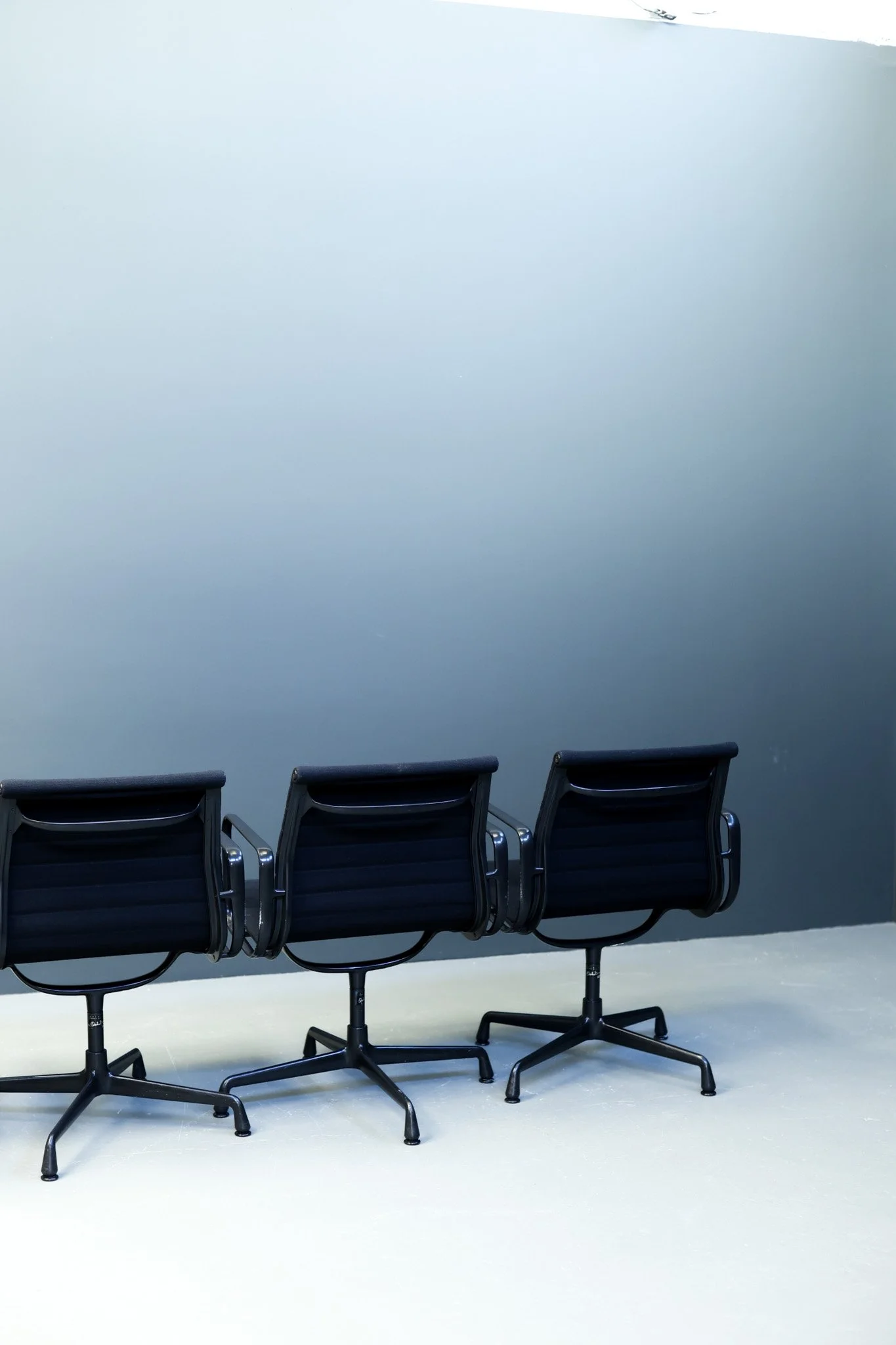
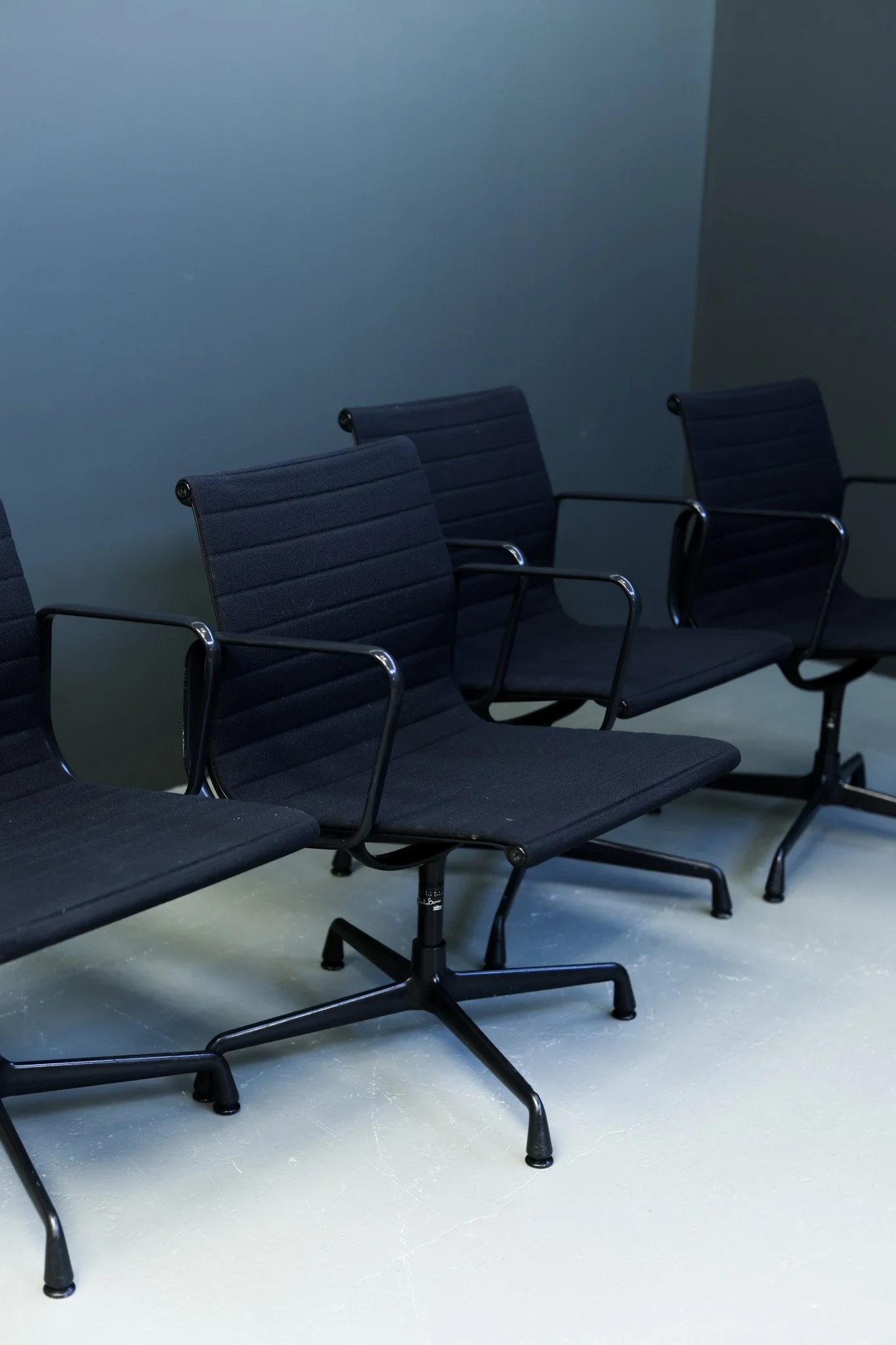

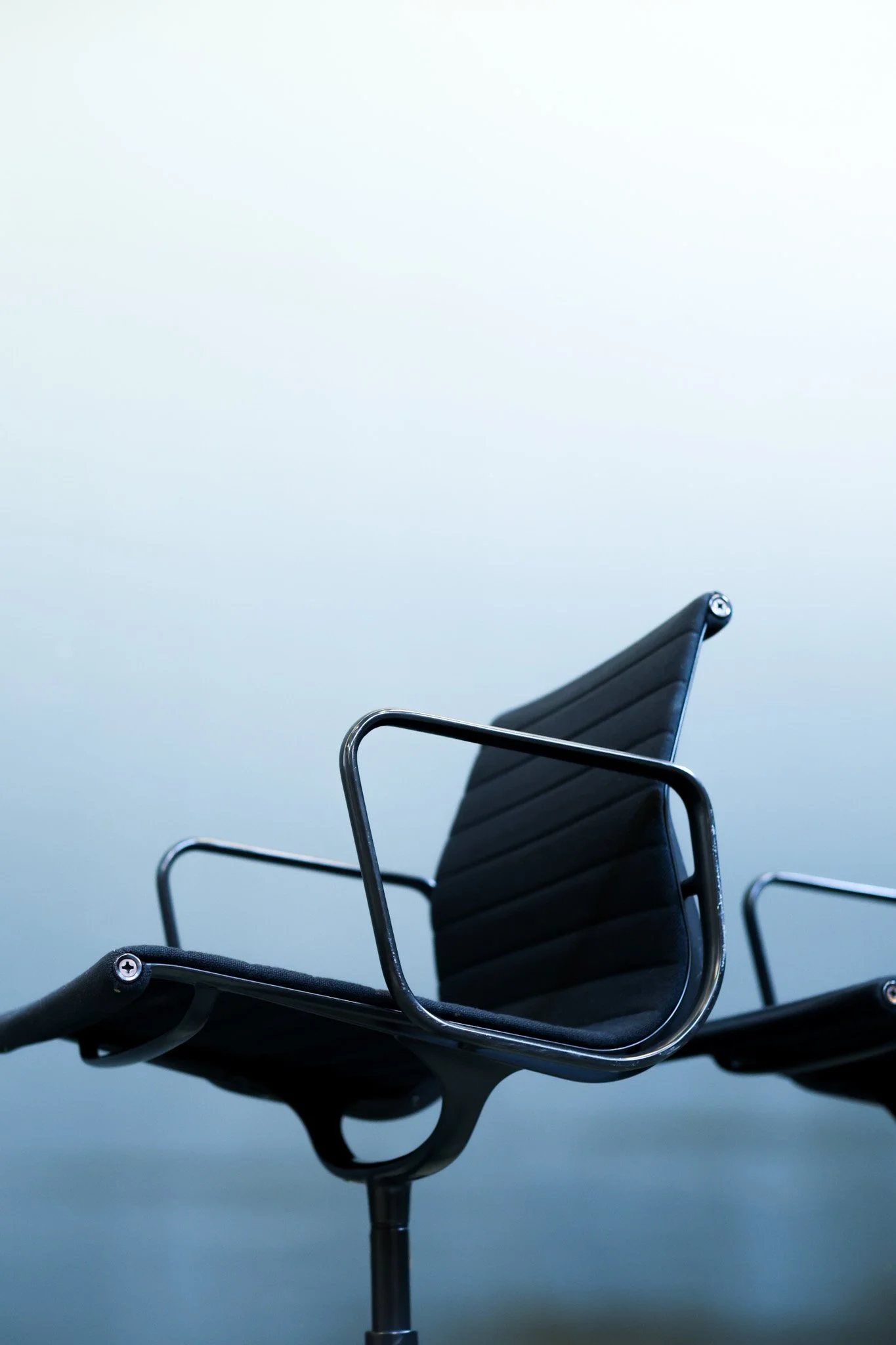

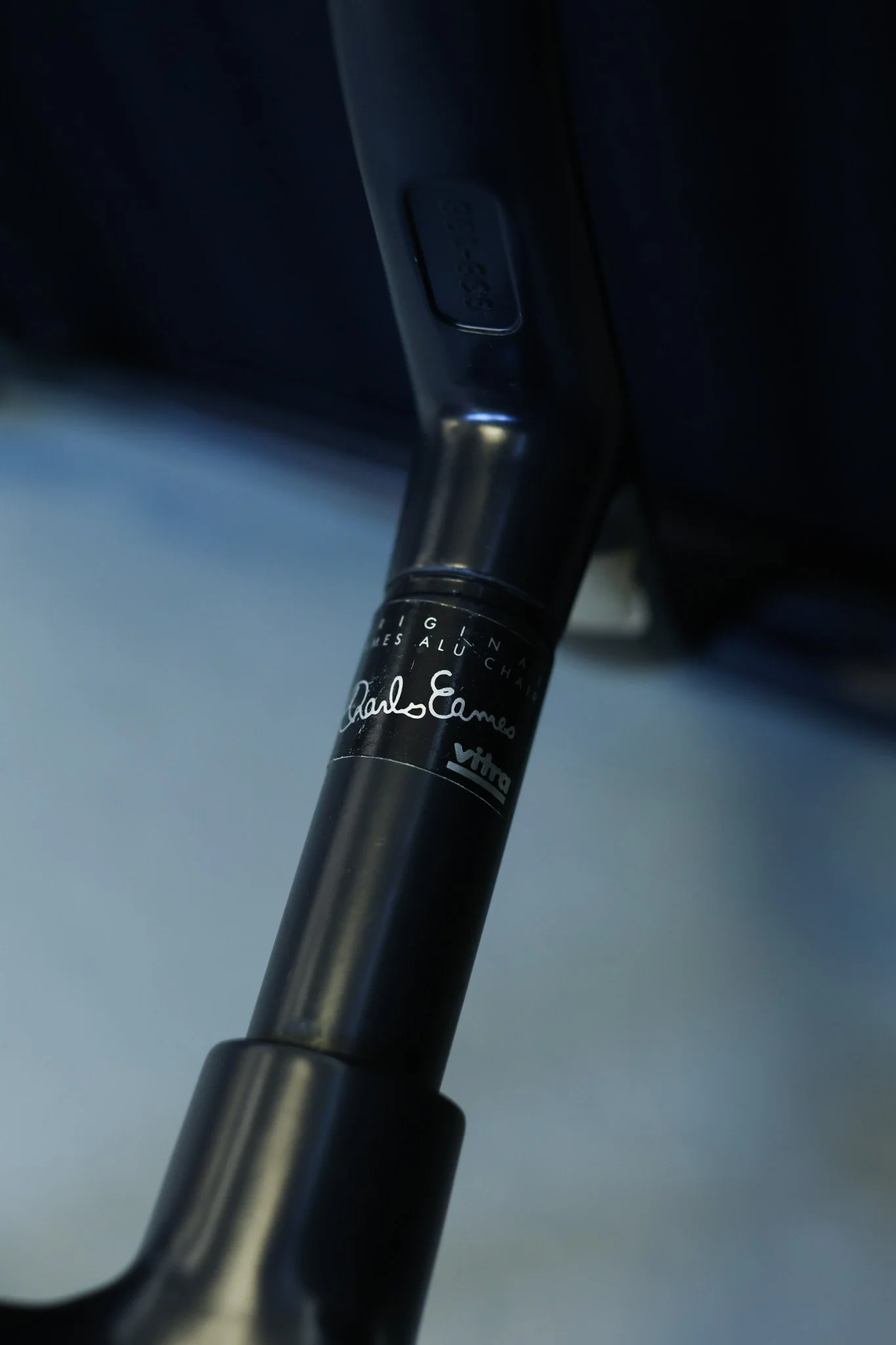
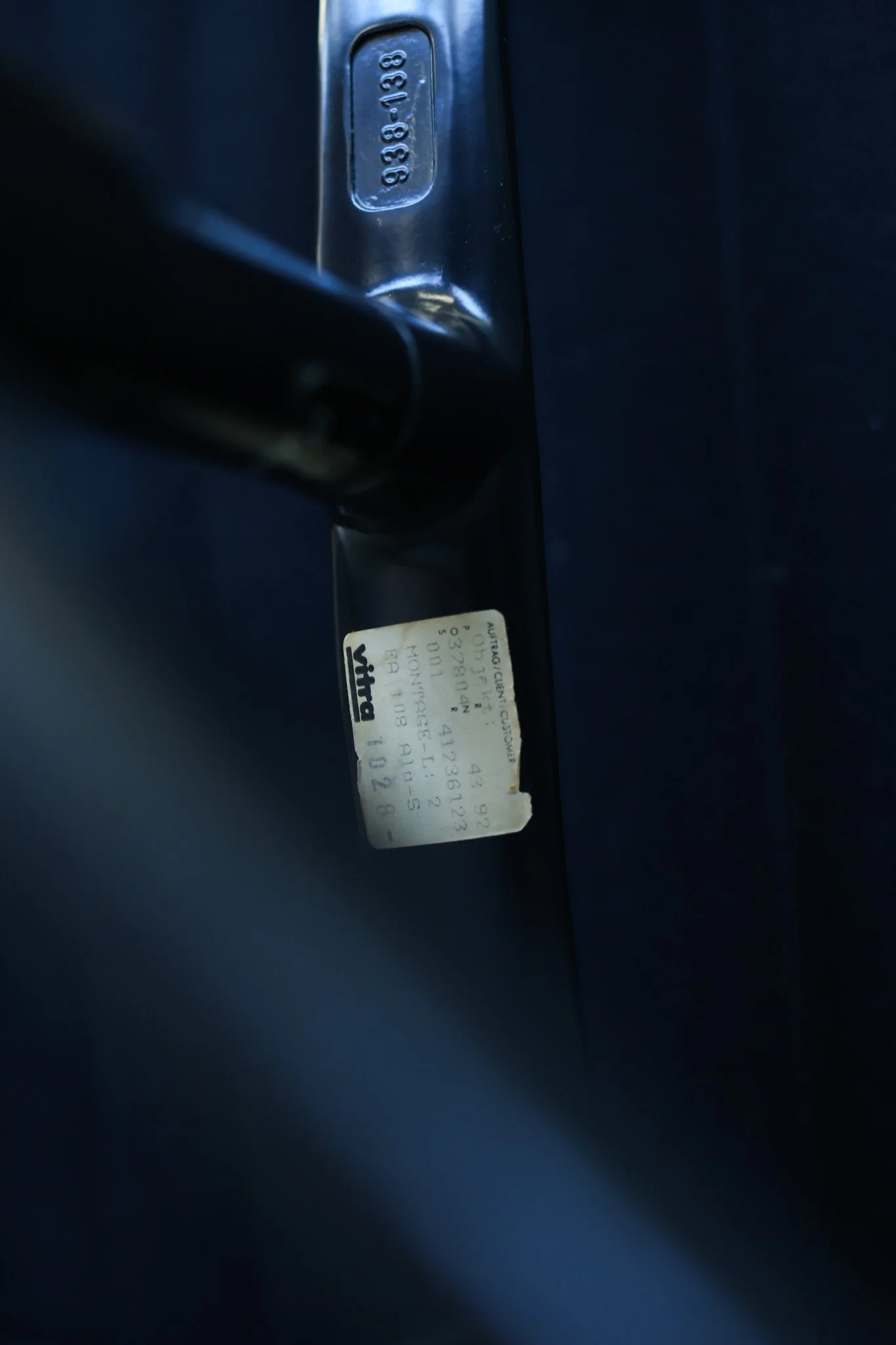
Ray and Charles Eames Aluminum Group Office Chairs for Vitra, Set of 4
Sold
★★★★★ 5.0 · 14 reviews on Etsy
Ref: B-038
- Designer
- Ray & Charles Eames
- Manufacturer
- Vitra
- Period
- 1985-1995
- Origin
- Germany
- Materials
- Aluminum, Cotton, Wool
- Color
- Black
- Condition
- Good — original upholstery in excellent condition, minor wear on aluminum edges
- Height
- 82 cm
- Width
- 57 cm
- Depth
- 57 cm
The Aluminum Group is one of those designs that has become so ubiquitous in boardrooms and executive offices that it is easy to forget how radical it was when Ray and Charles Eames first conceived it in 1958. Originally developed for the private residence of J. Irwin Miller — designed by Eero Saarinen — the chairs were meant for outdoor use, with a suspended seat slung between two cast aluminum side profiles. Herman Miller put them into production that same year, and Vitra has been manufacturing them for the European market since 1959.
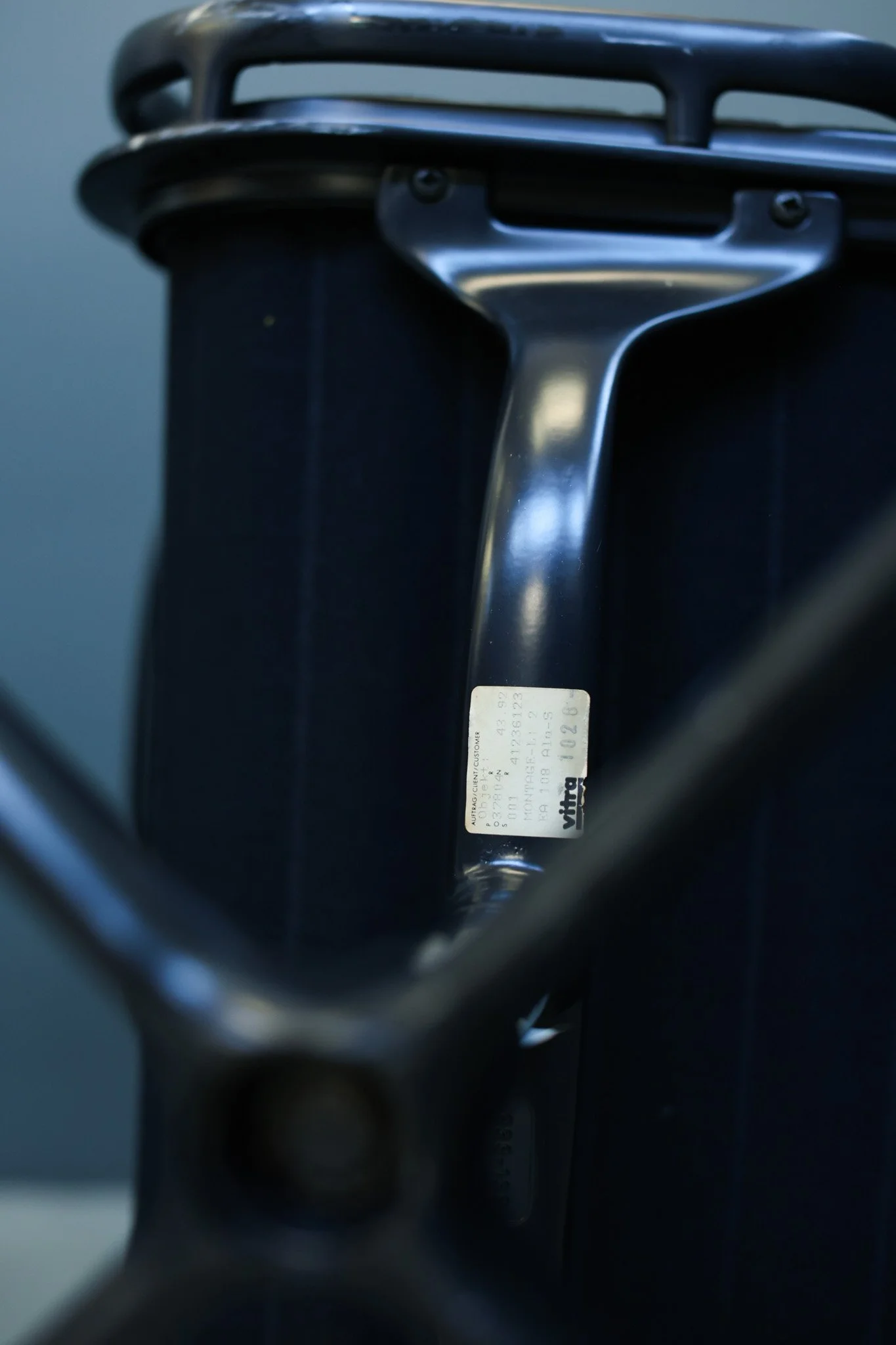
This set of four dates from the late 1980s or early 1990s, produced at Vitra's facility in Weil am Rhein, Germany. The aluminum frames are finished in a black powder coat that gives them a more contemporary edge than the polished versions, while the seats are upholstered in the original black cotton-wool blend fabric. The upholstery is in remarkably good condition — taut, clean, and free of significant wear. The aluminum frames show light use at the outer edges, the kind of honest patina that confirms these are genuine vintage production rather than recent reissues.
What makes the Aluminum Group endure is the elegance of its engineering. The seat is not attached to a rigid frame but suspended between the two aluminum side profiles, creating a slight give that responds to the sitter's movements. It is a deceptively simple mechanism — essentially a hammock principle applied to office seating — that provides surprising comfort without the bulk of traditional padding.
The Eames partnership produced some of the twentieth century's most important furniture — the Lounge Chair 670, the Molded Plywood series, the Fiberglass Shell chairs — but the Aluminum Group may be their most commercially successful design, remaining in continuous production for over six decades. Finding a matched set of four in this condition, from the same production period, is increasingly rare.
Whether around a conference table, at individual desks, or simply as sculptural objects in a living space, these chairs bring a quiet authority that needs no introduction. They are design classics in the truest sense: as relevant today as they were in 1958.