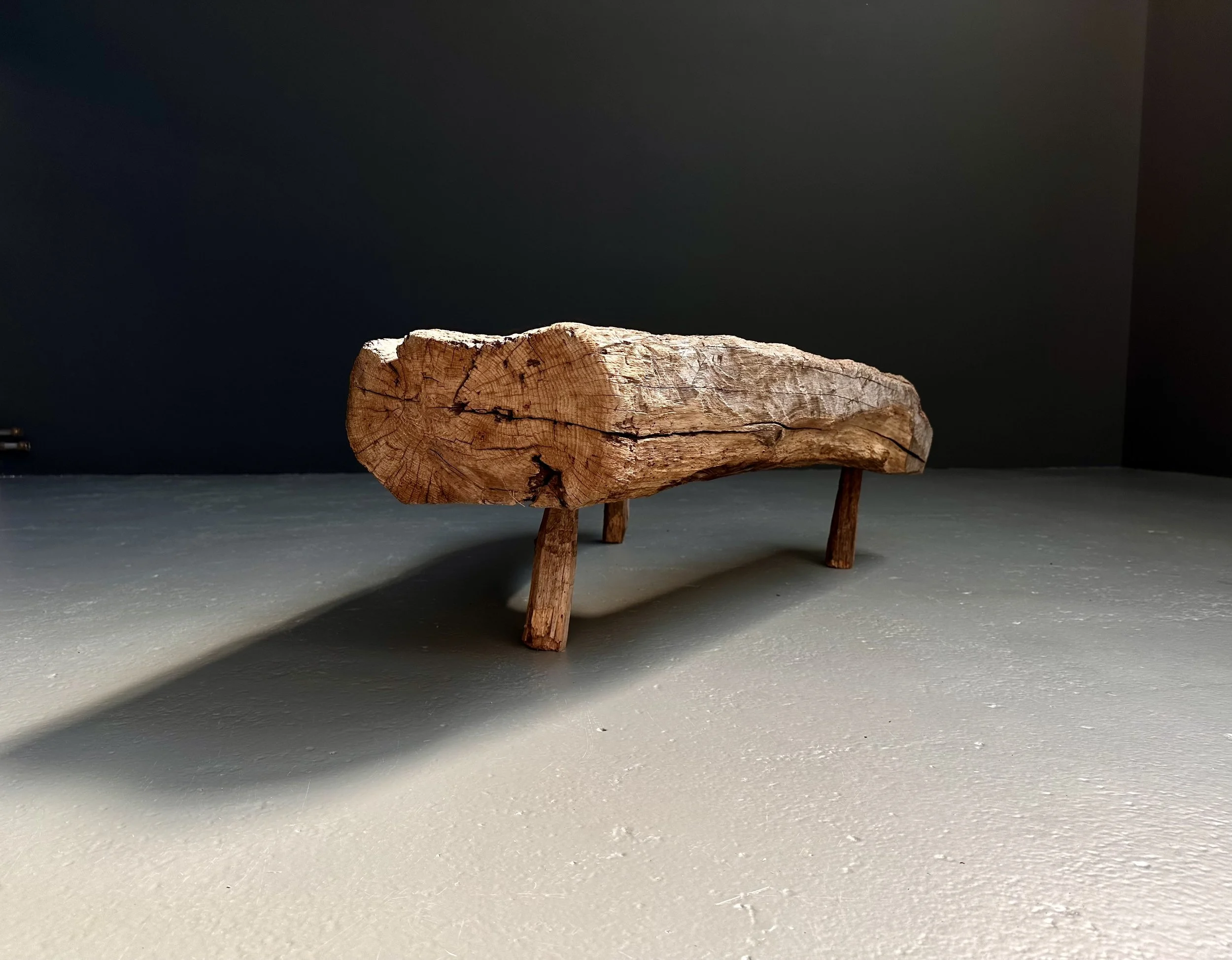
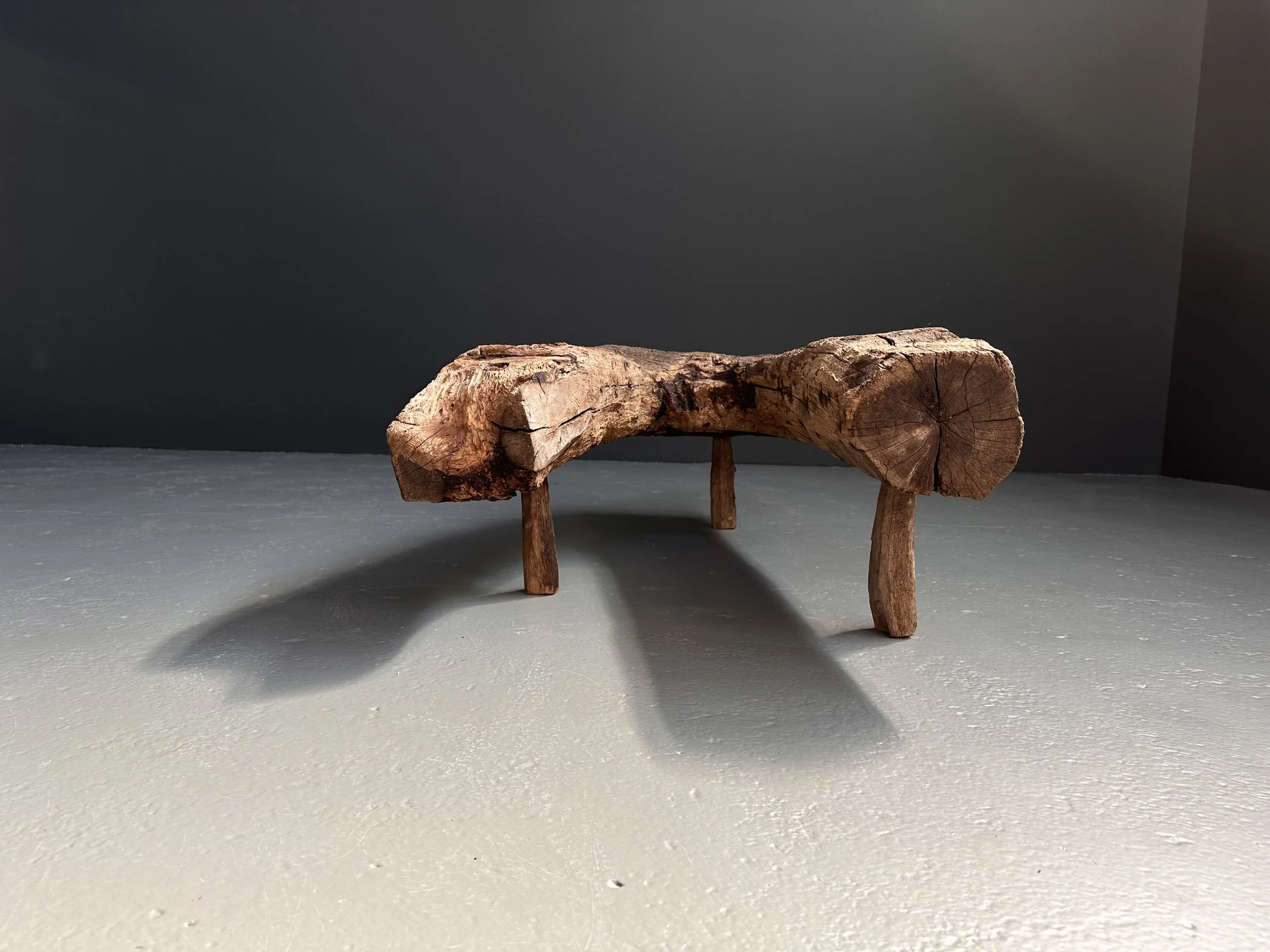
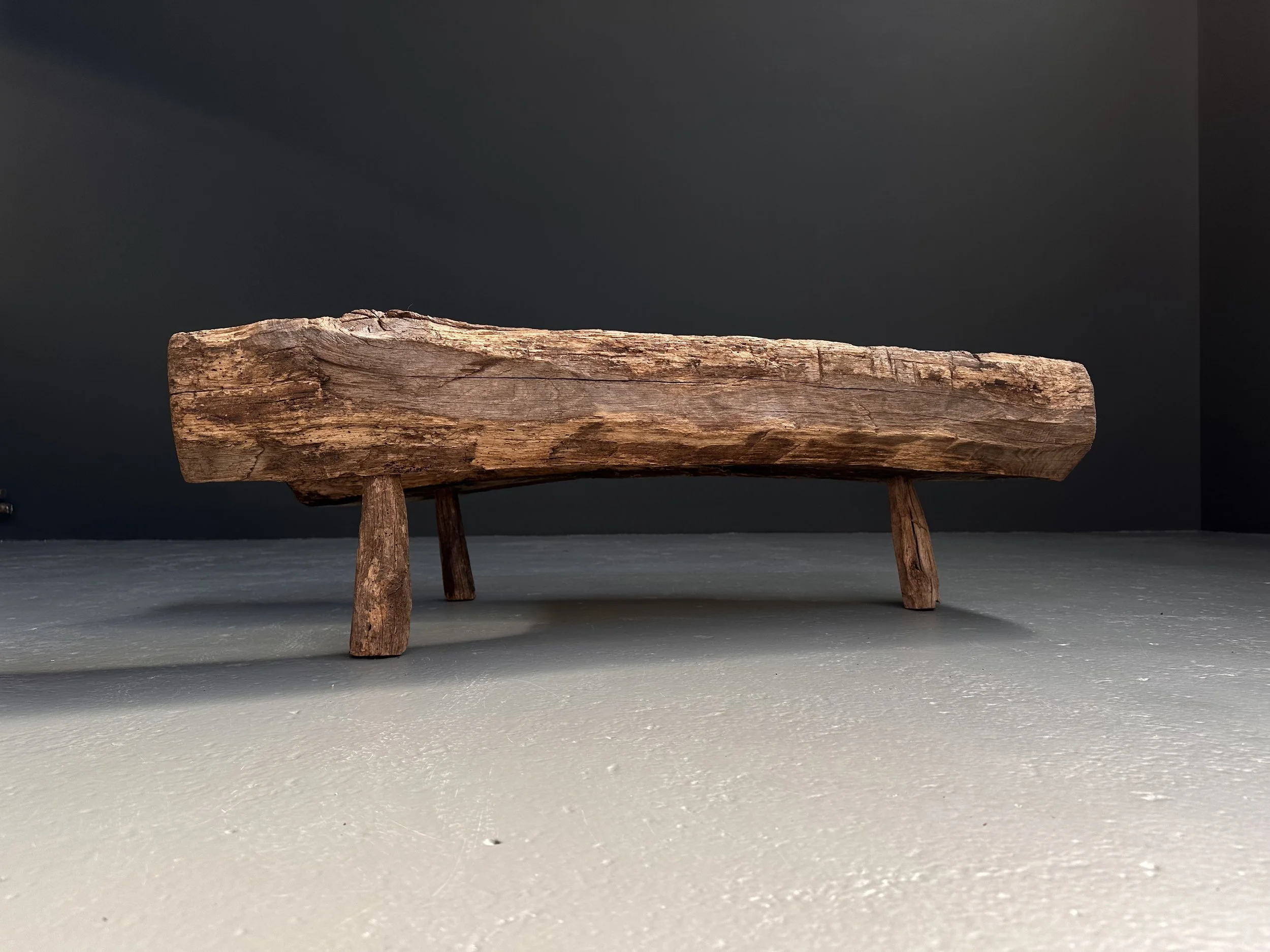
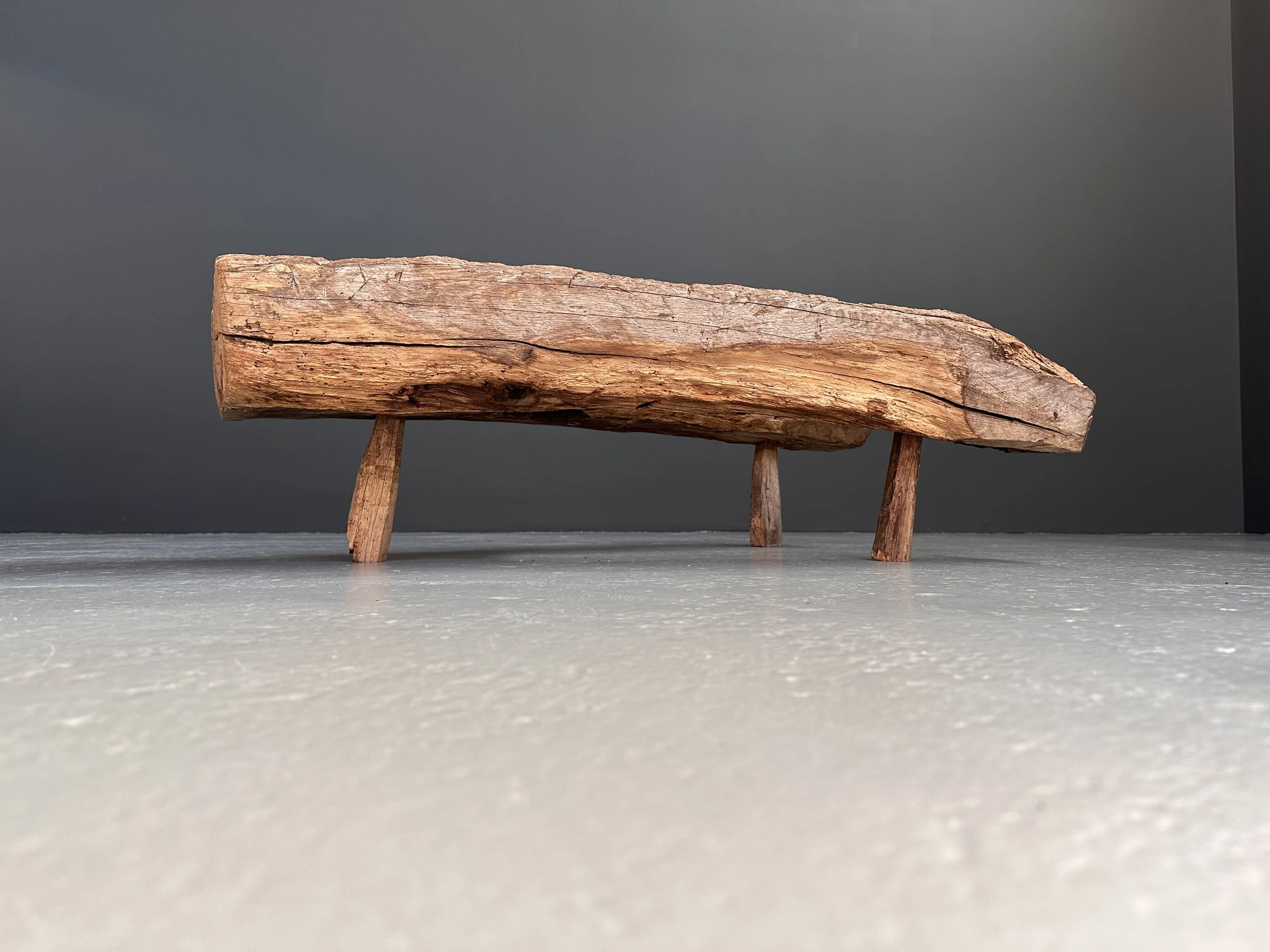
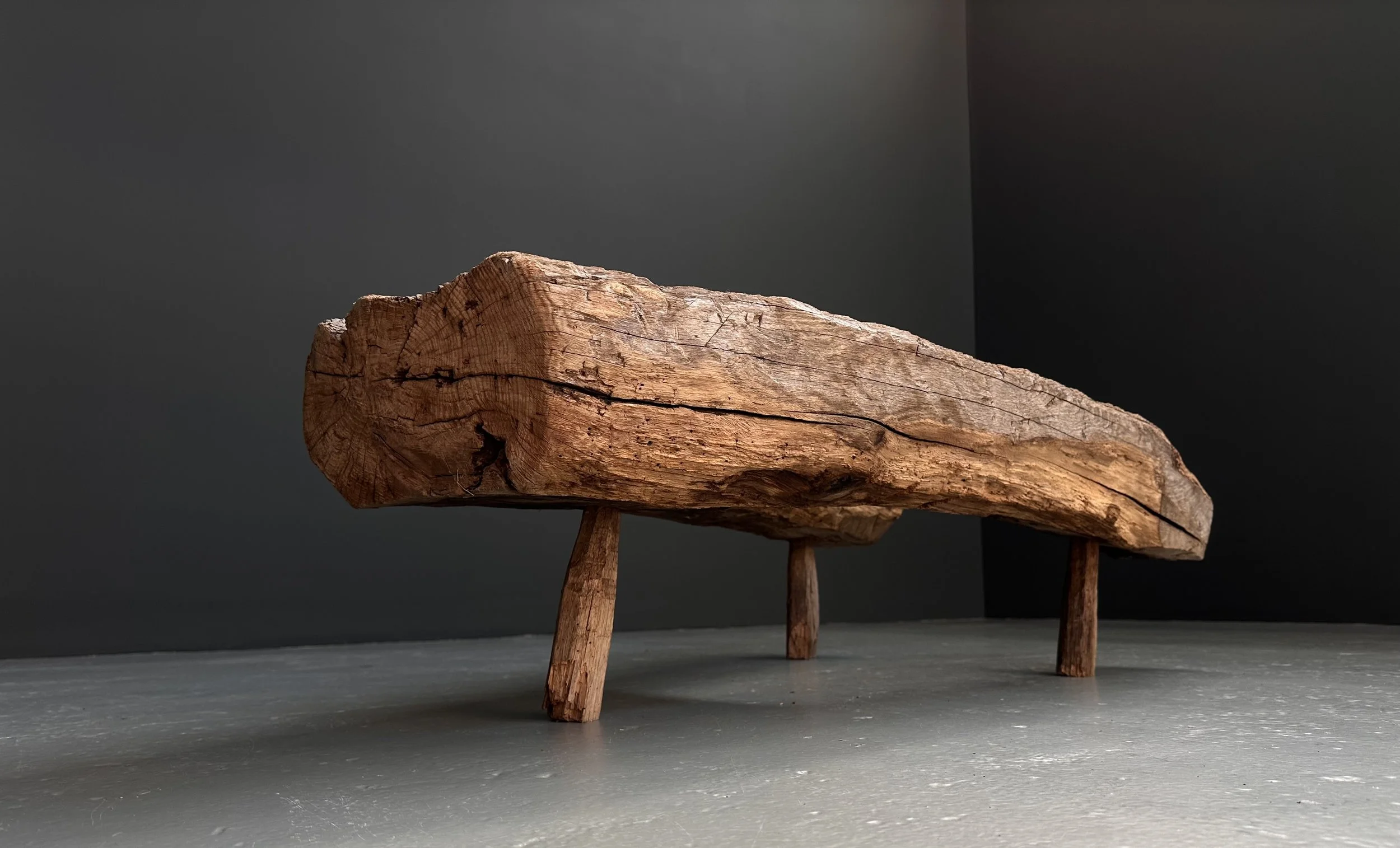
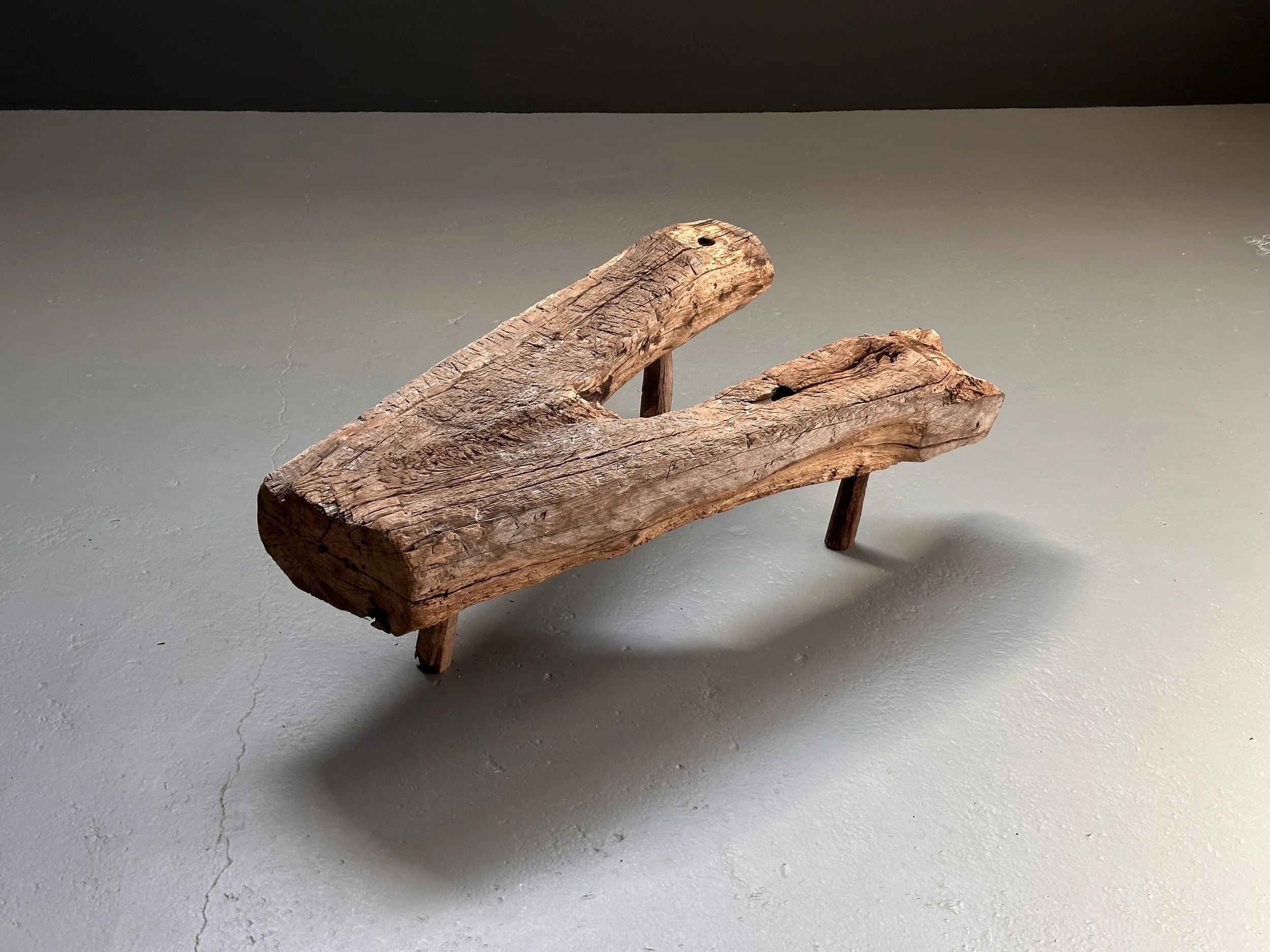
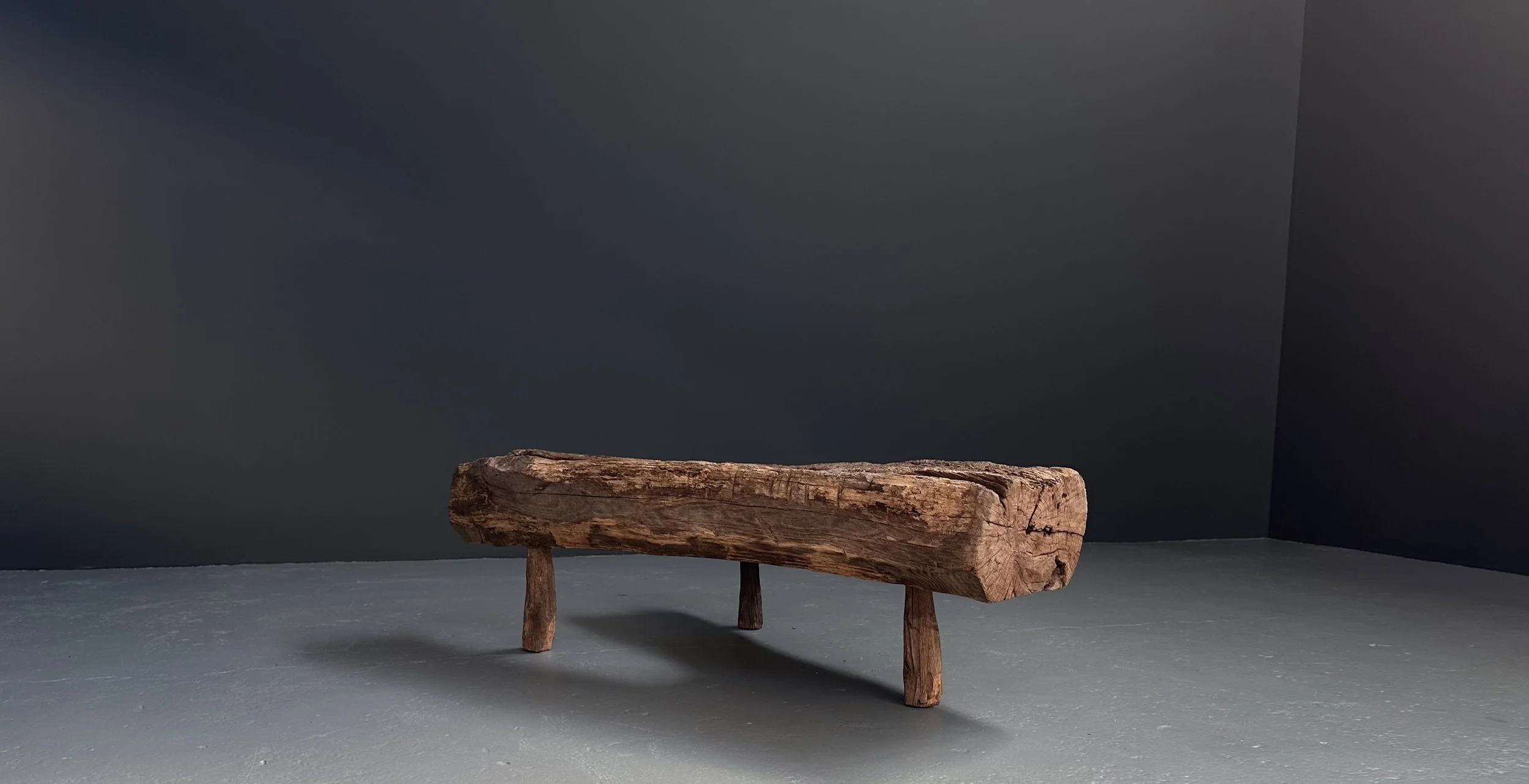
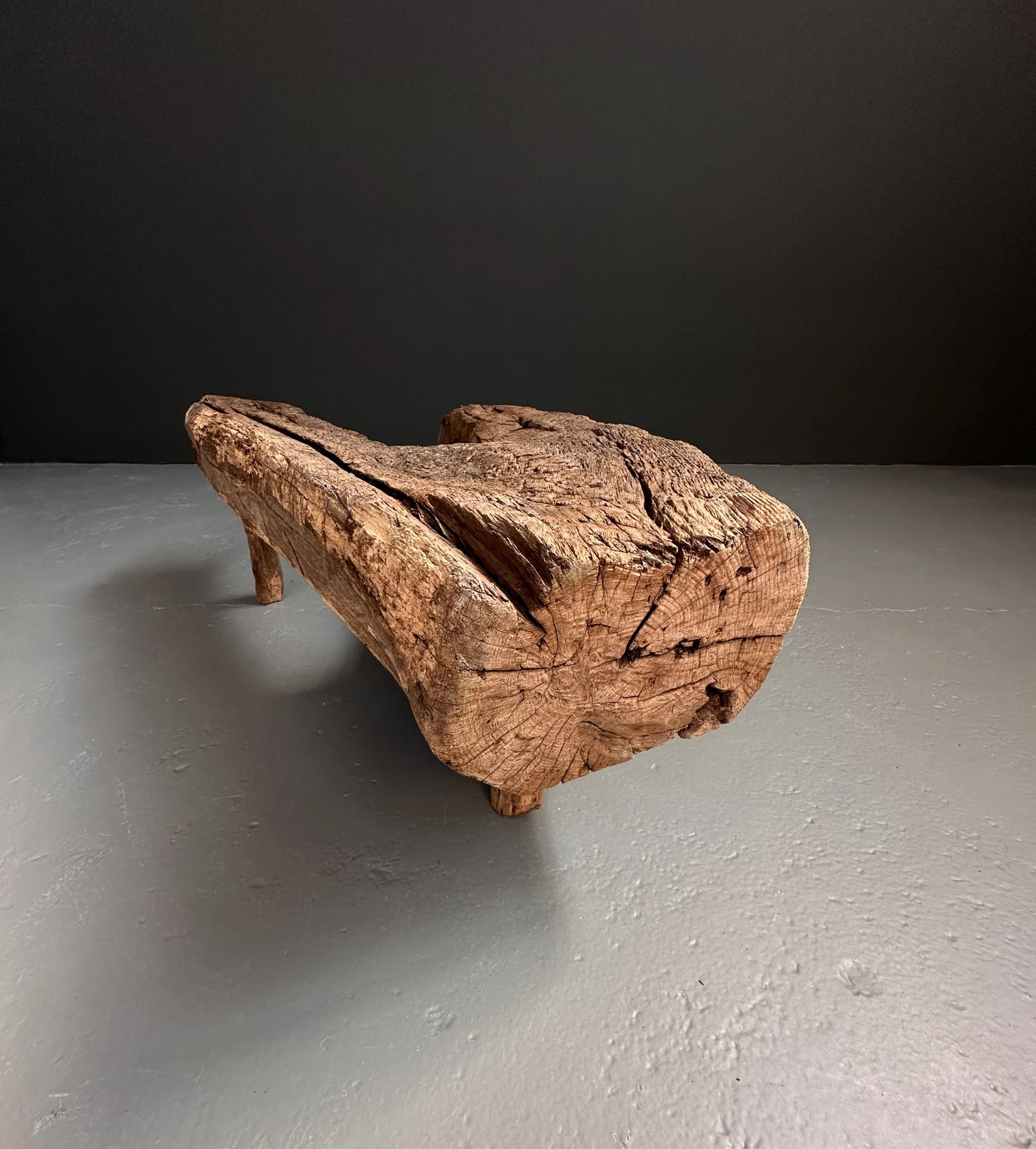
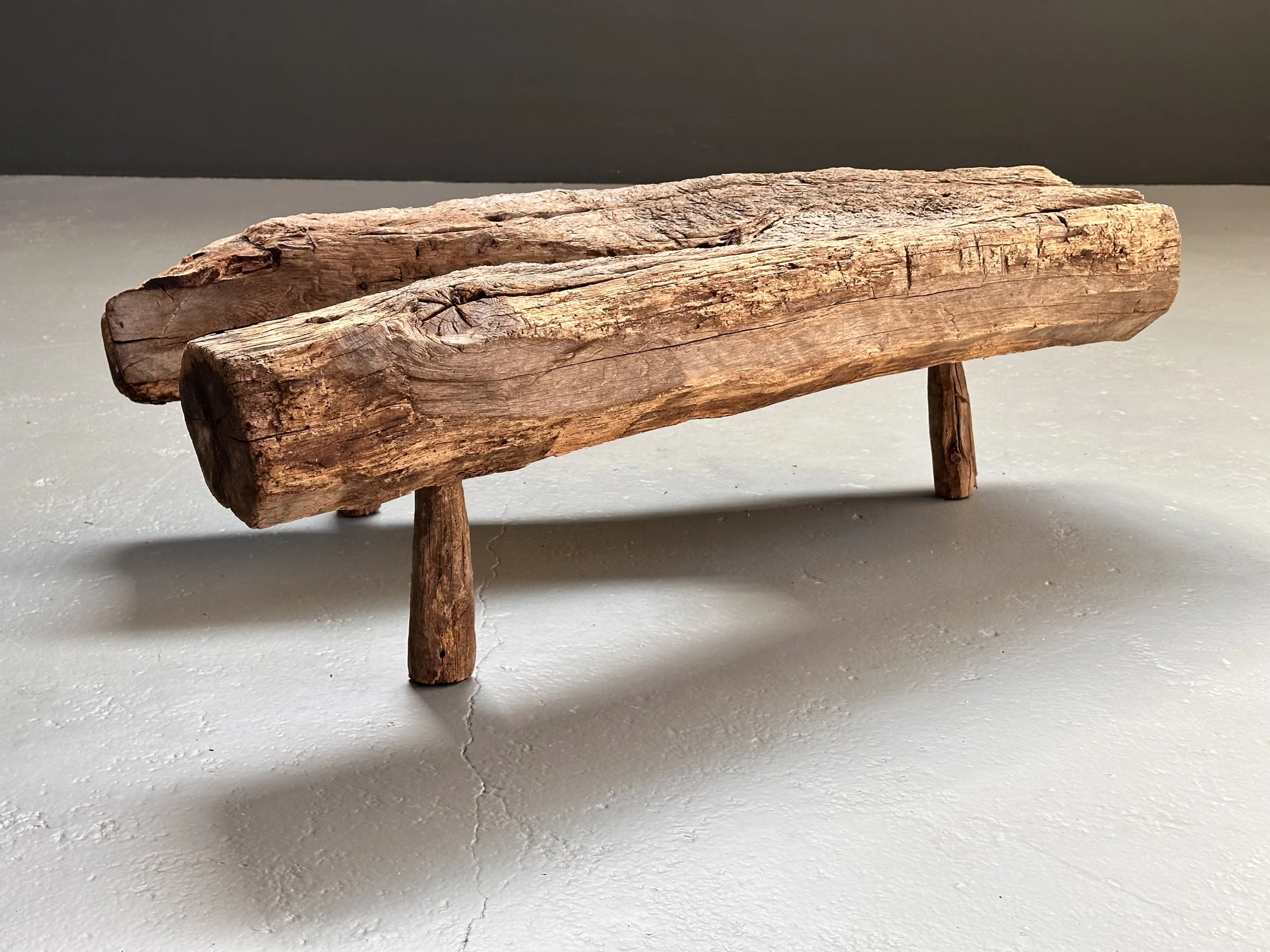
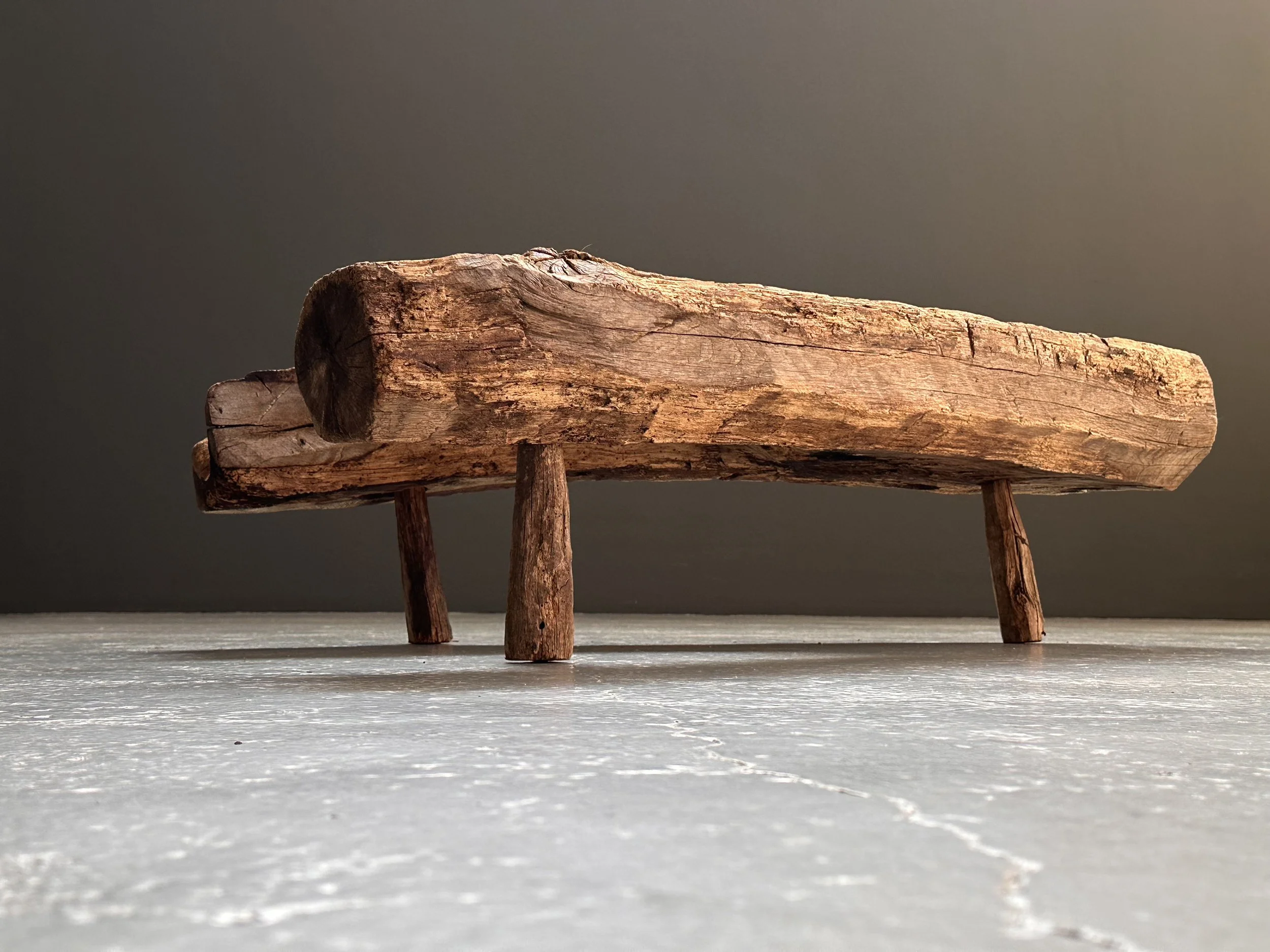
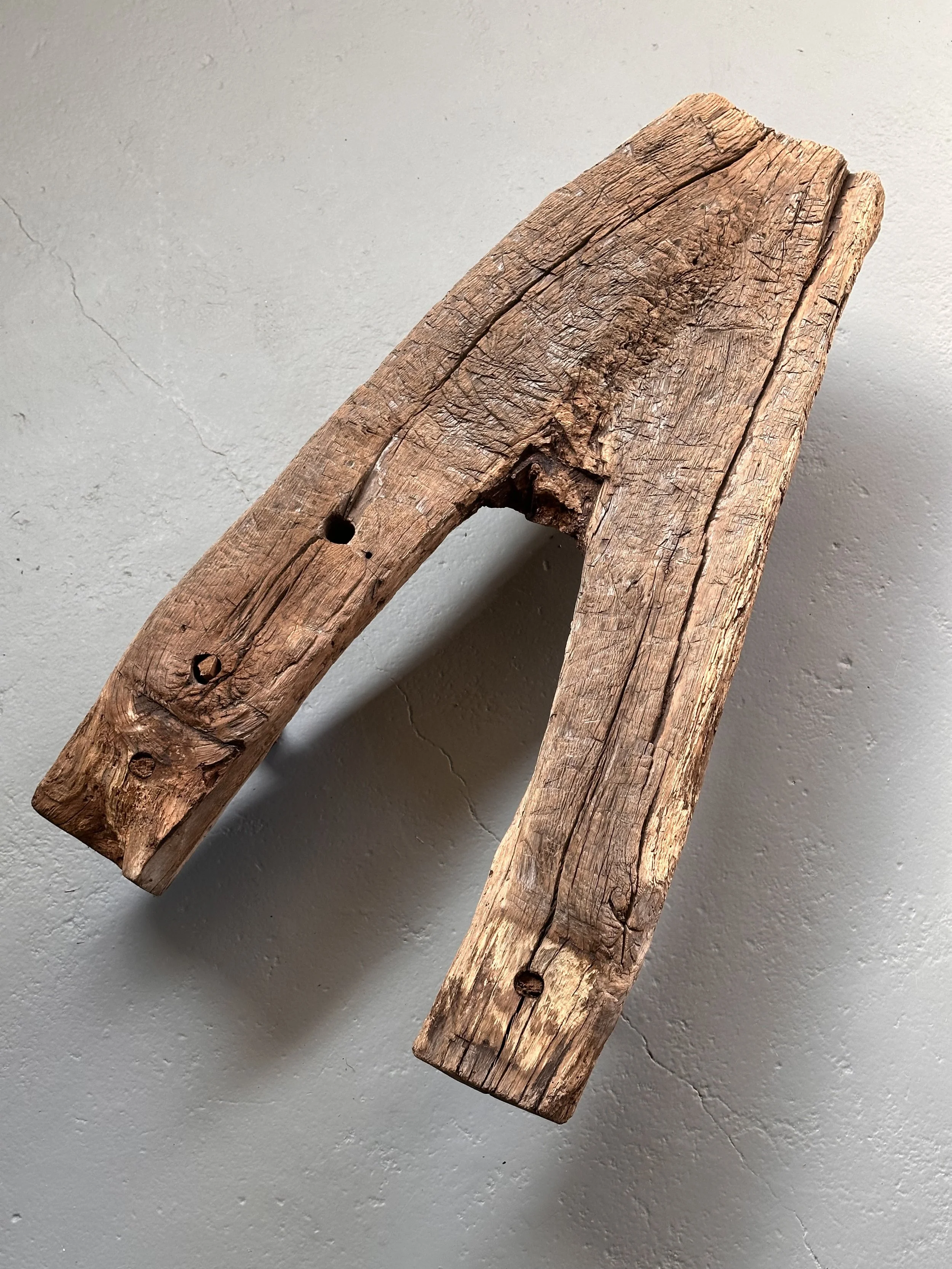
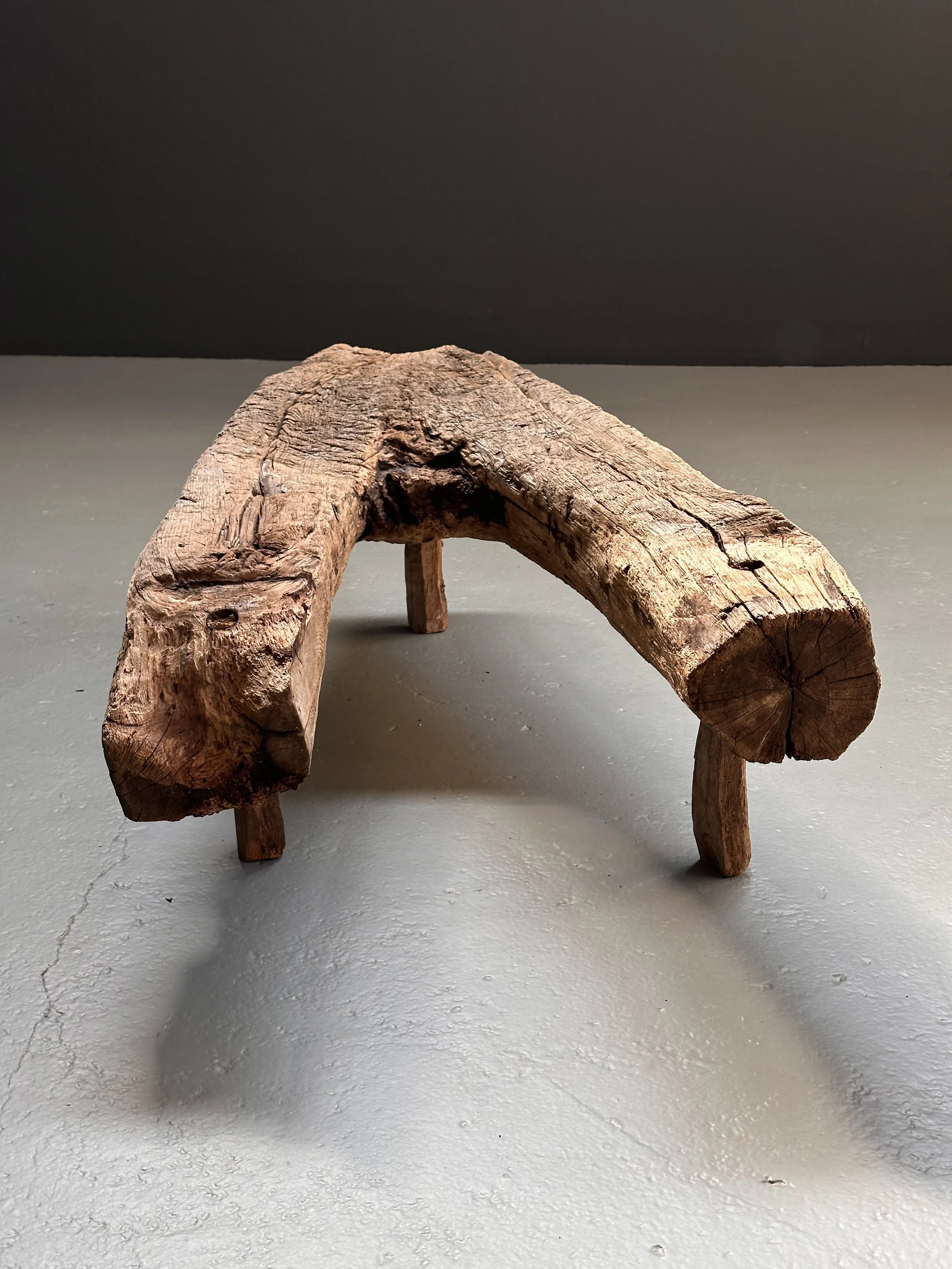
French Primitive Wood Bench Coffee Table, circa 1800
Sold
★★★★★ 5.0 · 14 reviews on Etsy
Ref: A-048
- Manufacturer
- Unknown
- Period
- 1800
- Origin
- France
- Materials
- Solid Wood
- Color
- Natural Dark Wood
- Condition
- Good — weathered surface, structurally sound, organic patina
- Height
- 36 cm
- Width
- 110 cm
- Depth
- 63 cm
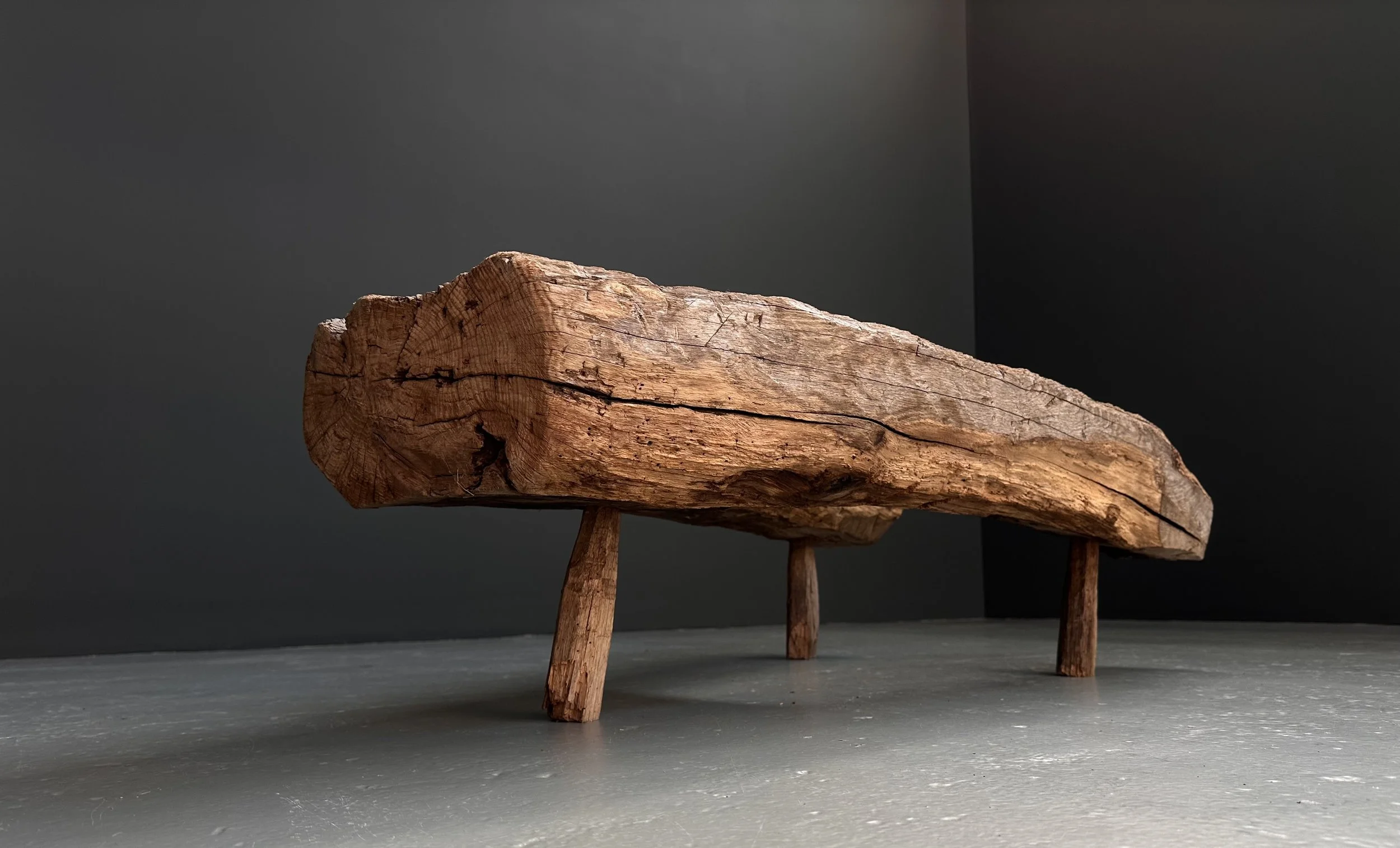
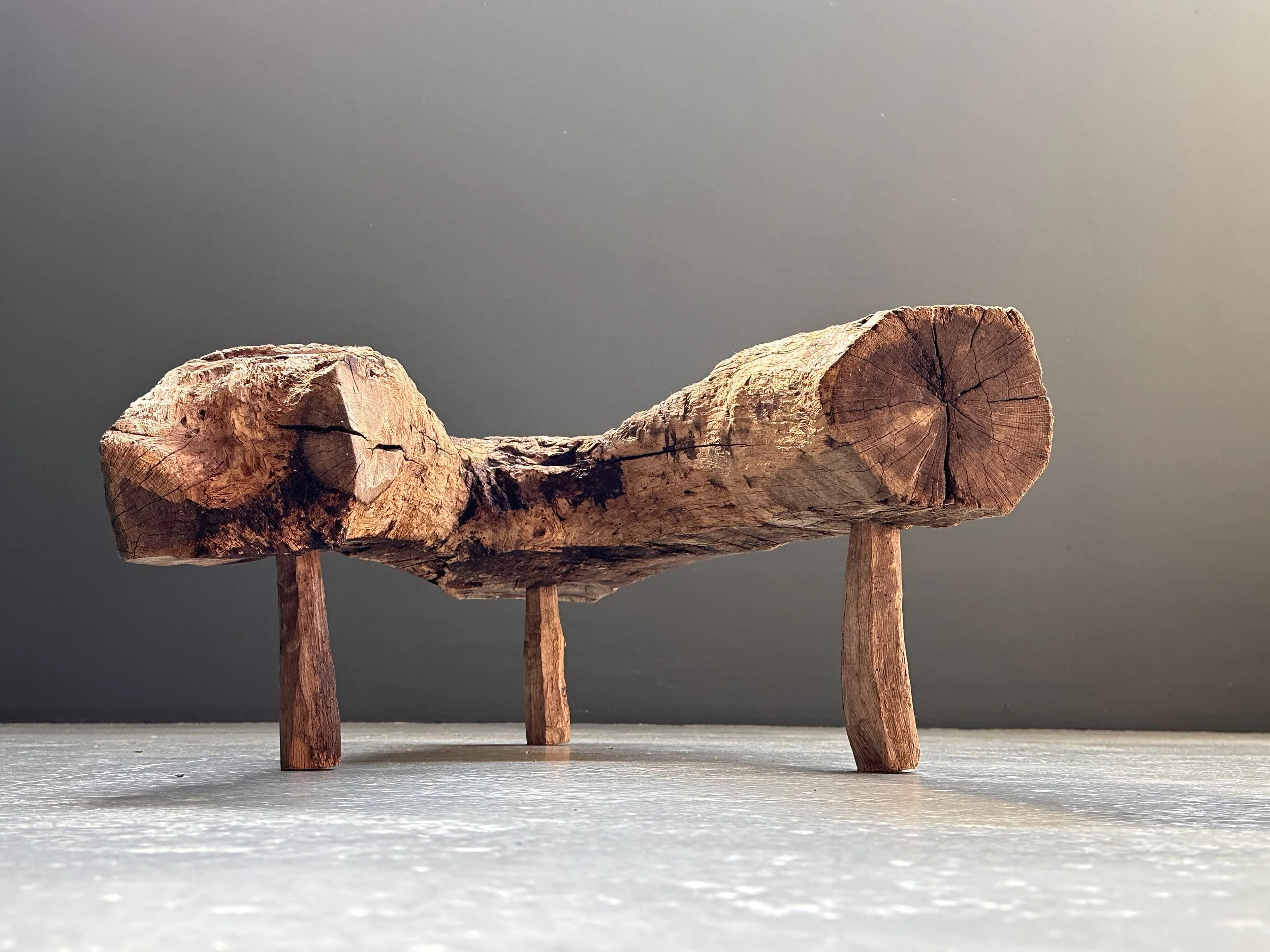
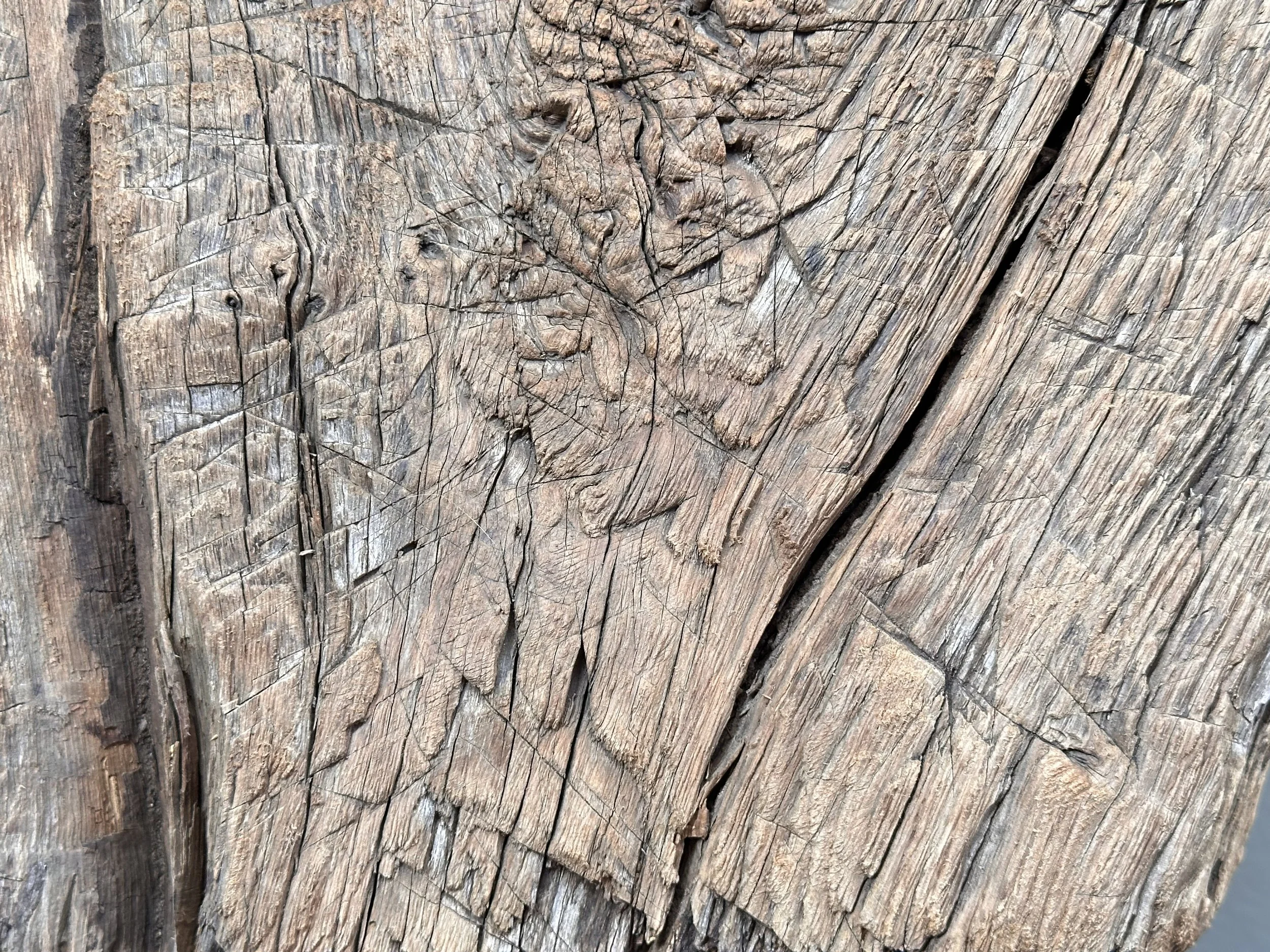
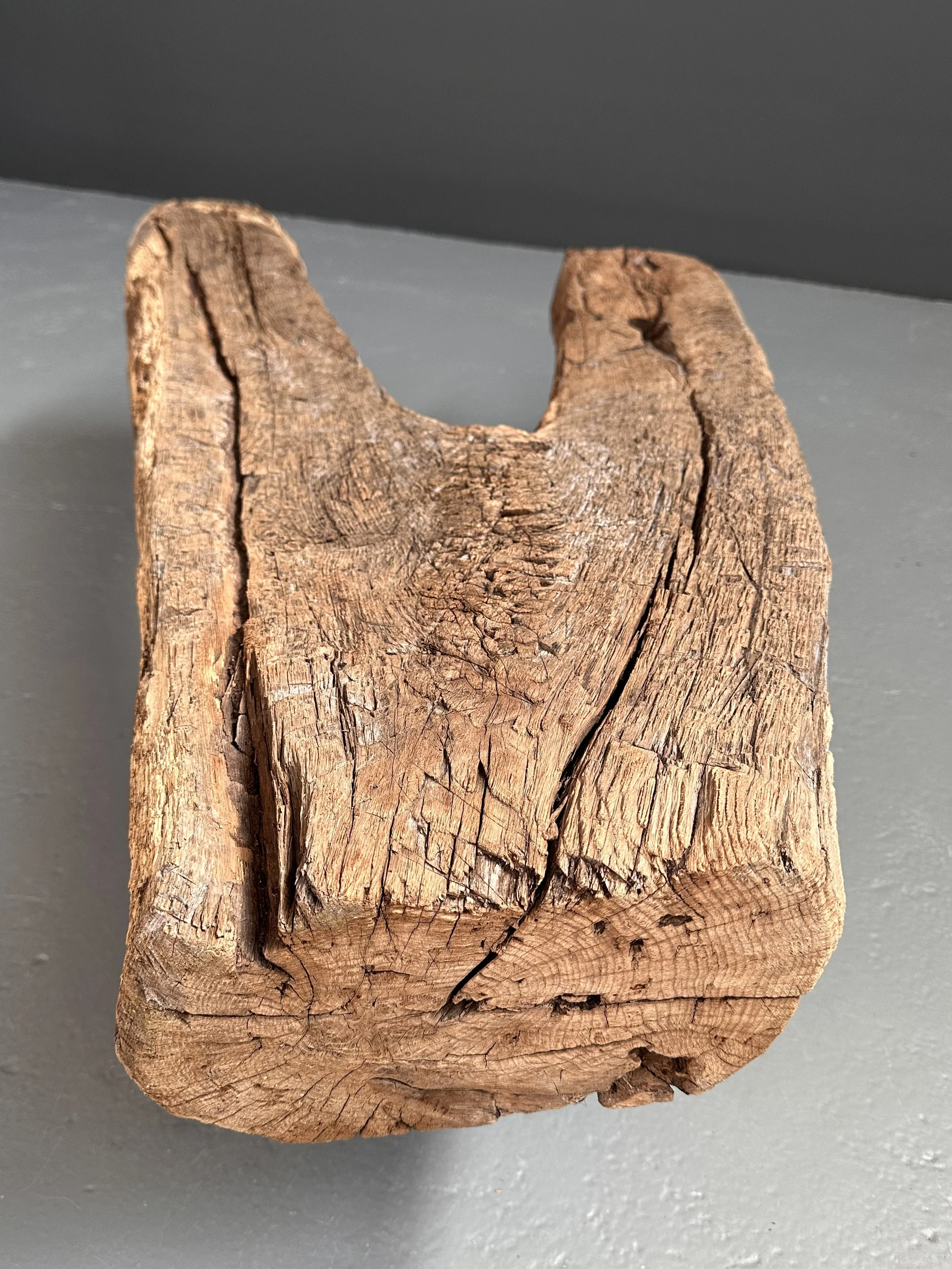
In a world saturated with precision-engineered furniture, there is something profoundly refreshing about an object that has been shaped as much by time as by human hands. This early 19th-century French primitive bench — rustic, weathered, and unpolished — is over two hundred years old, and every crack, groove, and undulation on its surface carries that history with remarkable eloquence.
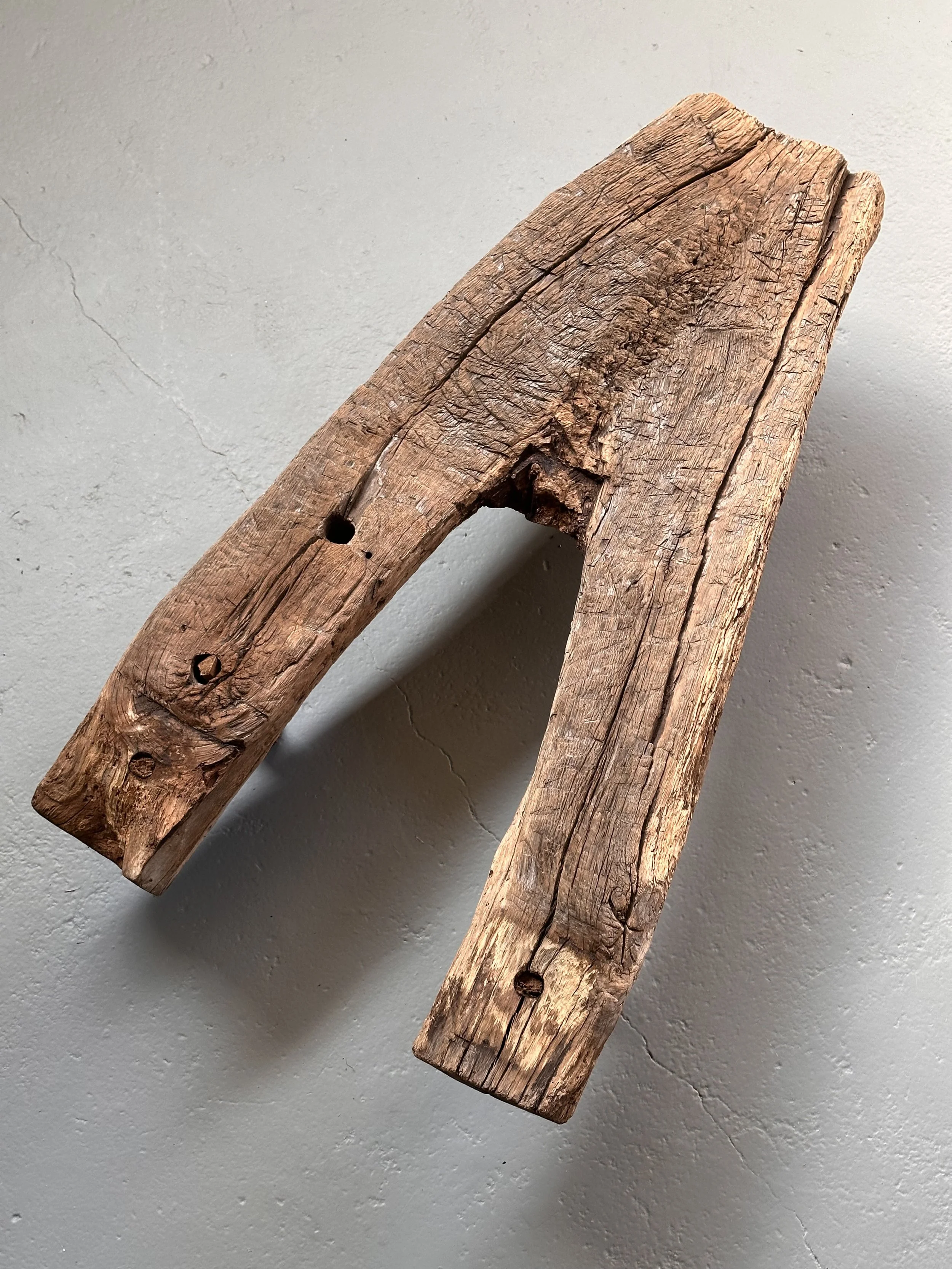
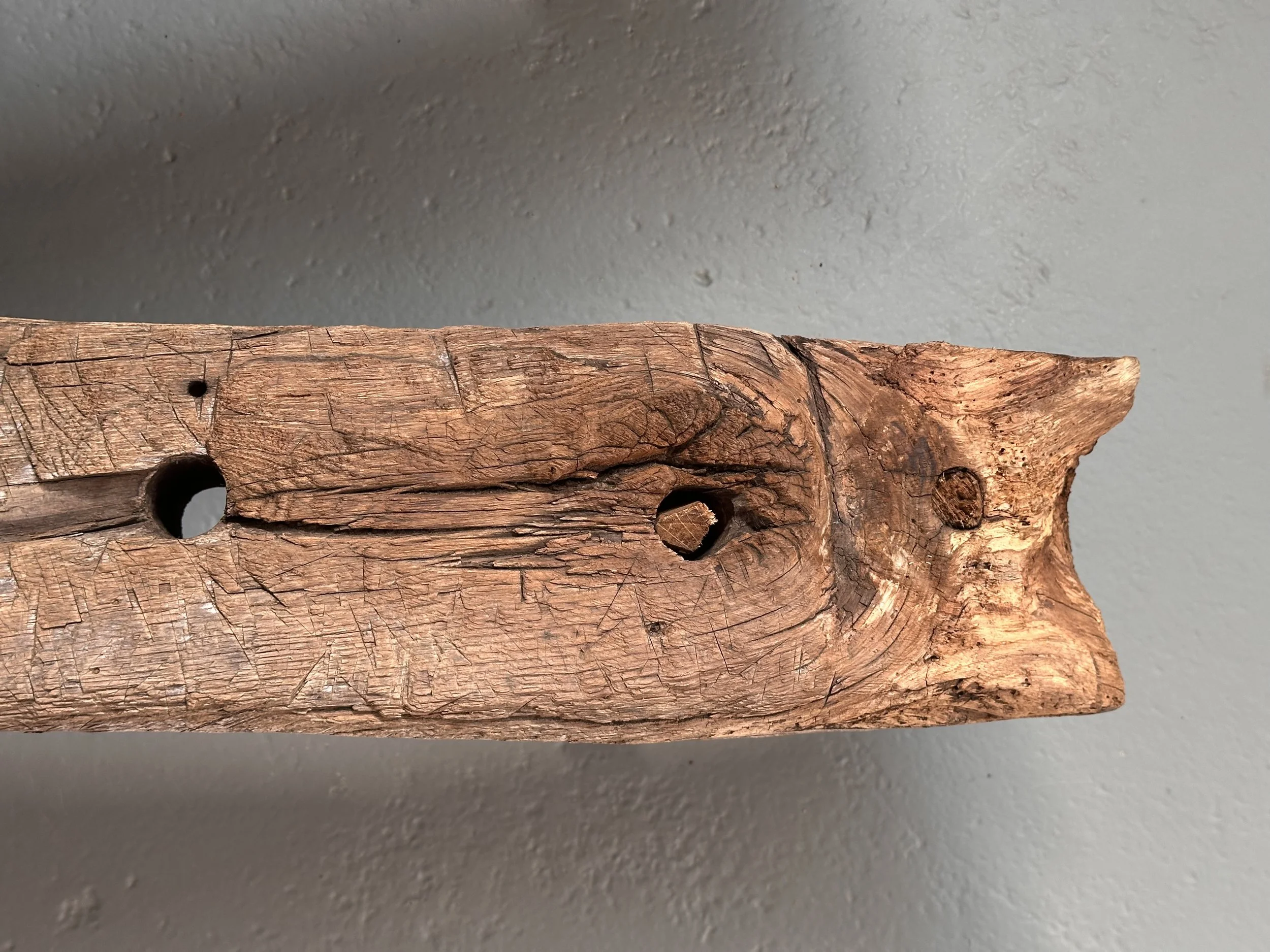
The wood is dense and dark, its surface eroded into organic contours by centuries of use and exposure. The grain has been laid bare in places, creating a tactile landscape that invites touch. The form is low and broad — one hundred and ten centimeters wide, sixty-three deep, and just thirty-six centimeters tall — making it perfectly suited for use as a coffee table in a contemporary interior. The proportions feel almost deliberately modern, though they are, of course, entirely accidental.
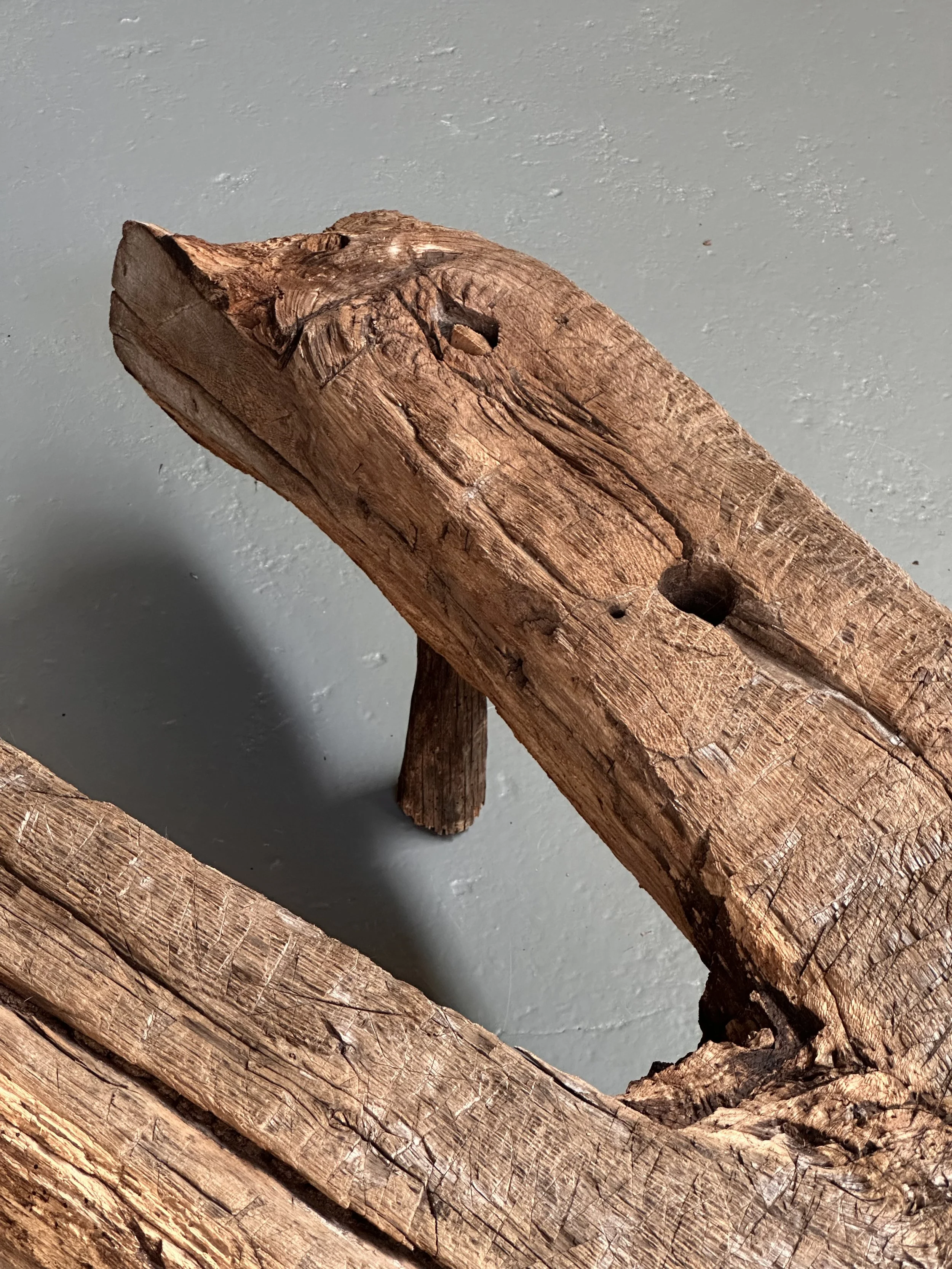
Structurally, the piece is remarkably sound for its age. The wood has hardened over two centuries into something approaching stone-like density, and the joinery — simple, functional, peasant construction — has held firm. There are no repairs, no restorations, no attempts to make it look like something it is not. What you see is exactly what two hundred years of honest life produce.
The wabi-sabi aesthetic, rooted in Japanese Buddhist philosophy, finds beauty in imperfection, impermanence, and incompleteness. While this bench predates that terminology by a century and a half and originates from rural France rather than Kyoto, it embodies those principles as naturally as any tea bowl or raku ceramic. It belongs to a growing category of objects that interior designers and collectors now recognize as "primitive modernism" — pieces that feel as contemporary as they are ancient.
Placed in a minimalist interior, this bench becomes the room's emotional center — a grounding presence among clean lines and smooth surfaces. It challenges the idea that beauty requires perfection and offers instead something rarer: authenticity that cannot be manufactured, only lived.